“My family and I are horrified seeing pictures”: How Roger Federer and Mirka’s $100M+ educational mission reached over 3.8 million children
Roger Federer and his wife, Mirka Federer, have helped bring educational opportunities to more than 3.82 million children through their foundation, which
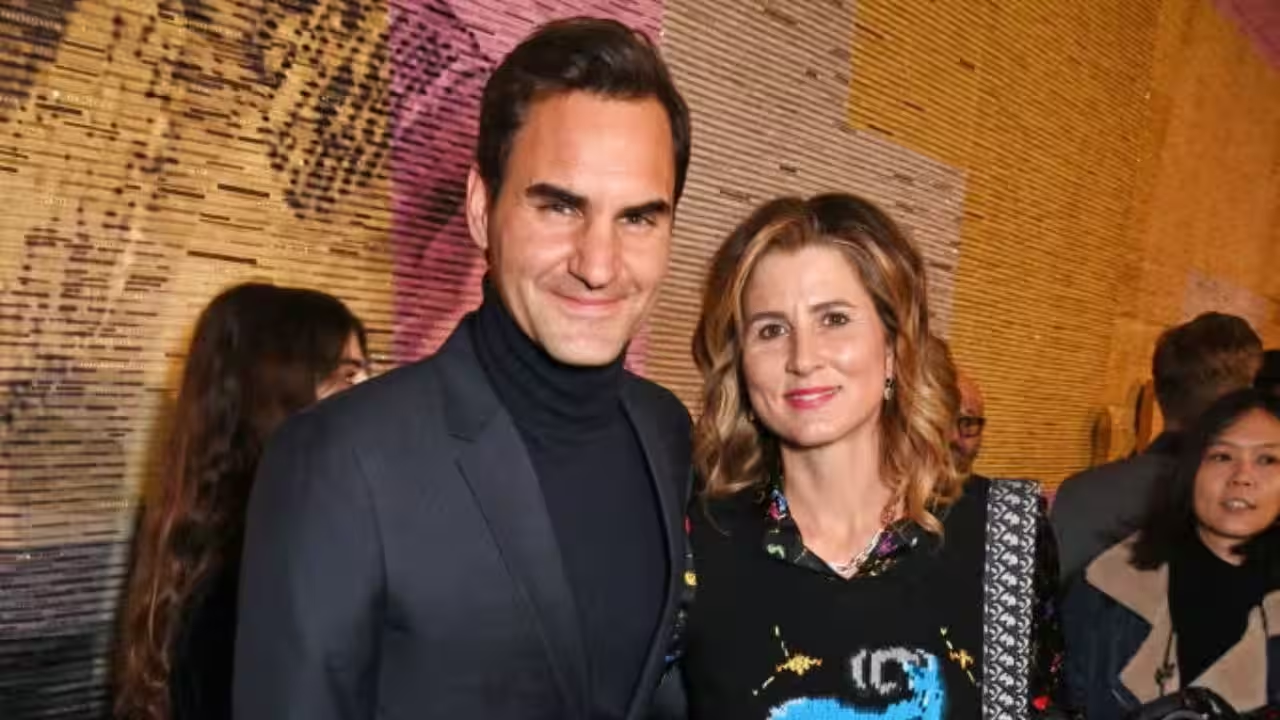
Roger Federer and his wife, Mirka Federer, have helped bring educational opportunities to more than 3.82 million children through their foundation, which was established in 2003. By the end of 2025, the organisation had also strengthened 18,445 educational institutions and supported training for more than 72,000 teachers. Its work focuses on early childhood education in Southern Africa and Switzerland, helping children develop basic learning skills before entering primary school. In April 2026, the organisation adopted the name Federer Foundation as it began a new five-year strategy.How did Roger Federer and Mirka Federer begin their educational mission?Roger Federer established the foundation on December 24, 2003, shortly after winning his first Wimbledon singles title that summer. At just 22, he was building a career that would eventually bring him 20 Grand Slam singles titles. However, his plans for helping children began long before he became one of tennis’s biggest names.Federer’s connection to Southern Africa came partly through his mother, Lynette Federer, who grew up in South Africa. His visits to the region helped him understand the difficulties faced by children who lacked access to quality education. Rather than waiting until his playing career ended, he decided to support children while continuing to compete.His wife, Mirka Federer, a former professional tennis player, also became involved in the foundation’s development. She is now a member of its board of trustees, alongside Roger and his mother. The organisation’s early work included helping individual children with school fees, meals, uniforms and sports coaching. Over time, its focus shifted towards improving early education systems and helping entire communities.The foundation now works across Southern Africa and Switzerland. Its main focus is to give young children the chance to learn, play and develop skills that will help them as they move through school.According to the Federer Foundation, its work is built around cooperation with governments, local organisations and communities rather than running a separate education system of its own.Why does Roger Federer’s foundation focus on early childhood education?The foundation concentrates on children in their early years, particularly those between the ages of three and eight. This is when children begin to develop language, social skills, confidence and the ability to learn. If they miss out on these early experiences, they may find it harder to keep up when they start primary school.Its work covers South Africa, Namibia, Zambia, Zimbabwe, Malawi and Lesotho, alongside education and inclusion projects in Switzerland. By the end of 2025, the foundation had reached 3.82 million children and strengthened 18,445 educational institutions. It had also supported the training of more than 72,000 teachers. These figures show how its work has grown from helping individual students to supporting education across entire communities.One of its major programmes is the School Readiness Initiative, which helps preschools prepare children for primary school. In South Africa, the programme works with community-based early learning centres, including small preschools that may not have the same resources as larger institutions.The aim is to improve the quality of teaching and make sure children have the support they need before entering Grade 1. Teachers receive guidance on how young children learn, while local partners work to improve learning spaces and classroom activities.Food is another part of the effort. Children who arrive at school hungry can struggle to focus, so feeding programmes and community gardens help address a problem that can affect both attendance and learning. The idea is to make it easier for children to attend preschool regularly and take part in classroom activities.The foundation also works with local organisations and public authorities to help keep these programmes running over time. Communities have a role in the process, helping build local ownership instead of relying entirely on outside support. This approach is intended to make improvements last beyond the period covered by a particular grant.How did Roger Federer’s Match in Africa raise millions for children?Federer has also used his popularity as a tennis star to raise money for children’s education. His Match in Africa exhibition series brought together well-known names from sport and entertainment, with the proceeds supporting the foundation’s work.The biggest edition took place on February 7, 2020, at Cape Town Stadium in South Africa. Federer faced his longtime rival Rafael Nadal in an exhibition match, while philanthropist Bill Gates and comedian Trevor Noah took part in the doubles match before it.The event drew 51,954 spectators, setting a world record for attendance at a tennis match at the time. It also raised $3.5 million for the foundation, with the net proceeds directed towards educational programmes in the region. The event gave fans an opportunity to watch two leading players compete while helping raise money for children who needed better access to early learning.The exhibition was more than a tennis match. It brought attention to the education challenges facing children in the region and showed how a major sporting event could help fund work outside the court.Federer’s connection to the cause also extended beyond the stadium. His foundation’s programmes focus on children in local communities, where access to preschool education and trained teachers can make a real difference. The money raised through the event helped support that wider effort.The Match in Africa became an important example of how Federer combined his sporting career with charitable work. Instead of keeping his public profile separate from the foundation, he used it to bring supporters and funding to a cause he had backed since his early years as a professional player.How did Roger Federer support Ukrainian children during the war?The foundation’s work has also extended beyond its long-term education programmes in Africa. In March 2022, after Russia launched its full-scale invasion of Ukraine, Federer announced a $500,000 donation to help children affected by the war continue their education.The money was pledged through War Child Holland, an organisation that supports children affected by conflict. The donation was intended to help Ukrainian children access continued schooling during a period when many had been forced to leave their homes.Federer explained his concern in a message about the situation, saying:“My family and I are horrified seeing pictures from Ukraine and heartbroken for the innocent people who have been so terribly affected,” Federer wrote. “About six million Ukrainian children are currently out of school… we would like to support them.”The donation reflected the foundation’s wider aim of helping children continue learning when circumstances make education difficult. While its main programmes focus on Southern Africa and Switzerland, the support for Ukrainian children showed that Federer was also prepared to help during an international crisis.The $500,000 pledge was a separate response to the war, rather than part of the foundation’s regular early learning programmes. Its purpose was to help children whose education had been disrupted by the conflict.For Federer, the issue was not limited to getting children into classrooms. It was also about helping them continue learning during a frightening and uncertain period in their lives.The foundation’s broader work continues to focus on building stronger early education systems. In April 2026, it introduced a new strategy for 2026 to 2030 and adopted the name Federer Foundation. Its stated goals include helping more children access education and improving learning outcomes, with a focus on stronger partnerships with governments and local communities.Stay updated with the latest Asian Games 2026 news, check the Asian Games medal tally and complete Asian Games schedule.Get the latest Sports News and Live updates. Download the TOI app.
Topics in this story
Gathered from external sources. Rights to this text belong to whoever originally published it.