Yankees could lose two regulars as free agency unfolds
The Yankees could face a two-position problem this winter if Jazz Chisholm Jr. and Trent Grisham both leave in free […]
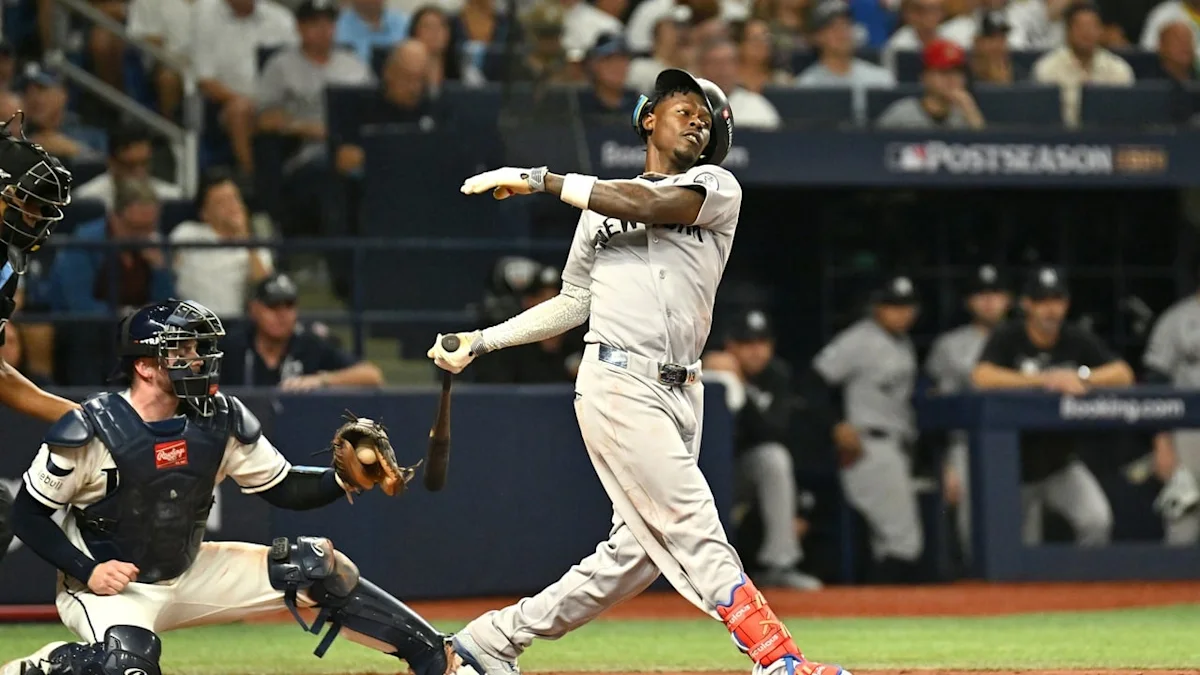
The Yankees could face a two-position problem this winter if Jazz Chisholm Jr. and Trent Grisham both leave in free agency. ESPN's Jorge Castillo has already outlined why that outcome is possible, and the resulting roster decisions would extend well beyond replacing two names in the lineup.
Sleeper MLB shared the outlook on Monday, attributing it to Castillo. In an October 8 offseason assessment for ESPN , Castillo wrote that the two were likely to land multiyear deals elsewhere, with his Chisholm projection conditional on a qualifying offer and the player's response.
That was a projection, not confirmation of either player's destination. Both are free agents, and a return to New York remains possible until a deal says otherwise.
The Yankees would lose different kinds of production
Chisholm hit .231/.312/.399 with 19 home runs and 41 stolen bases in 2026. His power dropped from 31 homers the previous year, but his speed still gave the lineup an element that is difficult to replace by simply finding another second baseman.
Grisham finished at .211/.308/.395 with 18 homers, down from 34 in 2025. His center-field experience matters, too, even if New York decides the cost of a multiyear deal is too high.
Together, the pair accounted for 37 regular-season home runs this year. The Yankees should not assume they can replace that power and Chisholm's speed with one internal promotion.
Castillo identified Anthony Volpe and Jose Caballero as possible options at second base, with Spencer Jones a potential answer in center field. Those are reasonable starting points, not guarantees. Using a young player in center could solve one problem while creating a new evaluation of his defense and everyday workload.
My preference is to prioritize a reliable center-field plan first, then hold an open competition at second base while keeping an external addition on the table. That gives New York a way to protect the outfield without treating a competition as a proven replacement for Chisholm's production.
The alternative is to re-sign one of the incumbents and spend the remaining resources elsewhere. Until the asking prices and the Yankees' other moves become clear, neither path is automatic. What matters is evaluating the two decisions together rather than leaving both positions to untested assumptions.
Topics in this story
Gathered from external sources. Rights to this text belong to whoever originally published it.