Insert Title
Intro
Team: Penn State Nittany Lions Sport: College Football Venue: Beaver Stadium
Origin Story: The 1948 Cotton Bowl carried significance beyond just the result on the field, as Penn State was asked to leave its two Black players—Wally Triplett and Dennie Hoggard—at home for the matchup with SMU in Dallas, Texas. The Nittany Lions refused, with team captain Steve Suhey reportedly saying "We're Penn State" to illustrate the team's unity. The game moved forward, and Triplett and Hoggard became the first Black players to appear in the Cotton Bowl.
Modern Role: In the mid-1970s, the Penn State cheerleading squad created the modern call-and-response of "We Are..." and "...Penn State," though it took years to catch on and become the stadium-wide chant that it is today. It has effectively transcended the football team and sports in general to become the universal greeting of Penn State alumni.
Team: Nashville Predators Sport: NHL Venue: Bridgestone Arena
Origin Story: During the Predators' inaugural 1998-99 season, local bar owner Bob Wolf wanted a Tennessee-inspired version of the Detroit Red Wings' octopus toss for the fledgling franchise. Wolf reportedly bought a nine-pound catfish, wrapped it in newspaper and smuggled it into the arena under a baggy jersey, hurling it onto the ice when the Predators scored their first goal.
Modern Role: The catfish toss has been a franchise staple since 2003, though etiquette surrounding it has evolved. It is now mostly reserved for the postseason and rivalry games, and catfish are generally thrown after the national anthem and before the puck is dropped to avoid potential delay of game penalties for the Predators. Bridgestone Arena even features a live catfish tank, as the team has fully embraced the tradition.
Origin Story: Cowbells found their way into Mississippi State athletics sometime during the 1930s and 1940s. Legend has it a cow wandered onto the field during a Mississippi State victory over arch-rival Ole Miss and quickly became a good-luck charm. Cows were brought to subsequent games until that practice was scrapped in favor of the cowbell, and the tradition grew in the 1960s when long-handled cowbells became a staple in the university bookstore.
Modern Role: In 1974, the SEC voted 9-1 to ban artificial noisemakers from sporting events. That ban held until 2010, when the topic was revisited and an exception was made for the Mississippi State cowbells, with strict rules. They can be rung during pregame, halftime, timeouts and immediately following scoring plays, with violations resulting in a potential fine to the university.
Team: Ole Miss Rebels Sport: College Football Venue: University of Mississippi campus
Origin Story: The Grove is a 10-acre plot of land in the center of the Ole Miss campus, and in the 1950s it started to become a popular tailgating spot ahead of football games. Until 1991, fans drove vehicles into the area as they would any other tailgating spot, but a significant rain storm turned the area into a swampy mess and vehicles were officially banned.
Modern Role: The vehicle ban transformed the tradition into a unique village of pop-up tailgating tents, and standard tailgating has been scrapped in favor of Sunday-best attire and upscale cuisine. The "Walk of Champions" is the pinnacle of the tailgating event. Roughly two hours before the game, the entire football team makes its way through the crowd along a designated brick path, a tradition that began in 1983 with head coach Billy Brewer.
Team: Auburn Tigers Sport: College Football Venue: Jordan-Hare Stadium
Origin Story: In 1962, Sewell Hall opened as the new residence hall for the Auburn football team. As players walked the path from their dorm to the stadium, kids began lining the route to ask for autographs. The tradition shifted in 1989, when rival Alabama played the Iron Bowl on-campus at Auburn for the first time after previously meeting at a neutral site. The Tiger Walk path was lined with an estimated 20,000 fans, and the tradition was changed forever.
Modern Role: Auburn players and coaches are now taken by bus to the corner of Donahue and Samford at 2.5 hours before kickoff for the Tiger Walk. It is widely regarded as the gold standard of a pregame tradition that has become a staple across college football, and Tiger Walk Plaza further highlights the longstanding tradition.
Team: Cincinnati Reds Sport: MLB Venue: Great American Ball Park
Origin Story: The 1869 Cincinnati Red Stockings were the first professional baseball team, and to honor that legacy, Major League Baseball generally scheduled the Reds to host the first game and throw the first pitch of each new MLB season. In 1920, merchants at Findlay Market held a celebration of the team's 1919 World Series title, and organized a one-mile march to Redland Field to await the first pitch of the 1920 season.
Modern Role: The Findlay Market Opening Day Parade is now an annual tradition, drawing over 100,000 annual spectators, and it has turned into an unofficial holiday in the surrounding area. Modern scheduling often means the Reds don't throw the official first pitch of the season, but they still almost always open the year with a home series.
Team: Arkansas Razorbacks Sport: College Football Venue: Donald W. Reynolds Razorback Stadium
Origin Story: A group of farmers attending an Arkansas football game in the 1920s began squealing like hogs to try to encourage a struggling team, and when they pulled out the victory a tradition was born. The next game, a more organized chant was developed, and the "Woo Pig Sooie" cheer was born.
Modern Role: The cheer is now accompanied by precise choreography, as fans start with an eight-second "Woooo" while raising their hands over their head, drop them and form a fist for "Pig" and raise their fist into the air for "Sooie" with that cadence repeated three times before the "Razorbacks" closer.
Team: New Orleans Saints Sport: NFL Venue: Caesars Superdome
Origin Story: The phrase "Who dat?" has roots in 19th century vaudeville shows, and later in early jazz and big band music. On Sept. 1, 1983, local New Orleans sports anchor Ron Swoboda aired a high-energy clip of local high school team St. Augustine chanting "Who dat talkin' bout beatin' St. Aug?" and three days later the chant spontaneously broke out at the Superdome in the Saints' season opener.
Modern Role: Saints head coach Bum Phillips fully embraced the cultural phenomenon during the 1983 season, and it quickly became a rallying cry for the Saints. The chant took on more formal mechanics during the Drew Brees era, and now before every home game kickoff, a designated player or celebrity guest leads the chant at midfield.
Team: Chicago Cubs Sport: MLB Venue: Wrigley Field
Origin Story: WGN Radio director Dan Fabian asked folk singer Steve Goodman to record a song for the station's 1984 broadcast of Cubs games. The catchy, upbeat tune played throughout the '84 season, which culminated in the team's first trip to the playoffs since 1945. The team would rotate through a variety of different victory songs in the years that followed.
Modern Role: The song was dusted off during the team's back-to-back division titles in 2007 and 2008, becoming a post-game singalong tradition at Wrigley Field following every Cubs win. Almost a decade later, it became indelibly linked to the long-awaited 2016 World Series title, and continues to play after every Wrigley Field victory.
Team: Texas A&M Aggies Sport: College Football Venue: Kyle Field
Origin Story: Yell Practice began as a post-dinner activity at Texas A&M in 1913, but it was not until 1931 that the midnight aspect was introduced. A group of freshmen gathered at Puryear Hall decided to meet late at night to practice their cheers ahead of a matchup with rival Texas. Senior yell leaders were informed, and while they could not authorize it, they hinted that they might show up anyway. Word spread throughout campus and Midnight Yell Practice was born.
Modern Role: Now held at midnight on Friday night before every home game at Kyle Field, roughly 25,000 fans regularly attend Midnight Yell Practice for what is quite literally a rehearsal. The 30-minute event ends with stadium lights being shut off and attendees kissing their dates for good luck.
Venue: Gaylord Family Oklahoma Memorial Stadium
Origin Story: The origins of the terminology date back to the 1889 Oklahoma Land Run, as "boomers" were the people petitioning the government to open up the territory for settlement, while "sooners" were those who snuck across the border illegally in advance to claim the best land before it was officially opened up. In the early 1900s, the terms were set to music with a fight song created by mashing up Yale's "Boola Boola" and North Carolina's "I'm a Tar Heel Born" reworked with Oklahoma-centric lyrics.
Modern Role: The marching band now plays "Boomer Sooner" constantly during home games, while the crowd volleys a call-and-response of "Boomer!" and "Sooner!" back and forth across the stadium.
Team: Duke Blue Devils Sport: College Basketball Venue: Cameron Indoor Stadium
Origin Story: Since the mid-1980s, the Duke student section has taken a more organized approach to heckling the opposition than perhaps any other fan base in sports. Early iterations of the "dirt sheets" on the opposing roster were no holds barred, but the university and head coach Mike Krzyzewski eventually intervened and a more academic approach was adopted.
Modern Role: With the rise of the internet in the late 1990s and early 2000s, digging up dirt on the opposition and getting the student section organized became significantly easier. Before tipoff, students are given a printed research packet of information and the contents are deployed as needed throughout the game when a player steps to the free throw line or approaches the sidelines.
Team: Sacramento Kings Sport: NBA Venue: Golden 1 Center
Origin Story: Inspired by the large halo illuminated by the Los Angeles Angels after home wins, Kings president of business operations John Rinehart pitched the concept of a similar victory illumination to owner Vivek Ranadivé. They ultimately landed on a high-powered RGB laser projection system that could project a purple beacon hundreds of feet into the air.
Modern Role: The concept was unveiled to the public on Sept. 16, 2022, and the laser was officially activated for the first time on Oct. 29, 2022, following a victory over the Heat. The lighting of the beam has now become a post-game tradition after victories, with a chosen player, coach or celebrity given the honor of pressing a giant, glowing button as the laser is activated.
36. "Take Me Out to the Ball Game" Guest Conductor
Origin Story: Legendary Cubs broadcaster Harry Caray spent years leading a stadium-wide sing-along of "Take Me Out to the Ball Game" during the seventh-inning stretch of games at Wrigley Field. Following his passing in February 1998, the Cubs wanted to preserve the tradition and lined up a series of celebrities and local figures to serve as guest conductors. His widow, Dutchie Caray, was the first guest conductor on Opening Day in 1998.
Modern Role: A long list of celebrities and athletes have taken their turn as guest conductors, though the Cubs eventually shifted to focusing mostly on people with a concrete tie to the city of Chicago or the Cubs organization. In lieu of a guest conductor, they also occasionally play clips of performances from Caray on the video board.
Team: Miami Hurricanes Sport: College Football Venue: Hard Rock Stadium
Origin Story: The University of Miami used a green block "M" with an orange outline as its primary athletics logo from 1928 until 1973 when they unveiled the iconic "Split U" logo. It was not until 1992 that cheerleader Bill Tigano was credited with popularizing the actual gesture of throwing up the U, as a response of sorts to Florida's "Gator Chomp" and Florida State's "Tomahawk Chop" to give Miami its own visual symbol.
Modern Role: The popularity of Miami football and the long list of former players who went on to prominence in the NFL have helped the symbol transcend college football game day. From fans in the stands to the surrounding Miami community, it stands as one of the most recognizable and iconic gestures in all of sports.
Team: Buffalo Bills Sport: NFL Venue: Digital
Origin Story: On New Year's Eve 2017, Bengals quarterback Andy Dalton threw a game-winning touchdown pass against the Ravens, and in the process punched the Bills' ticket to the postseason. To show their appreciation, Bills fans flooded the Andy and Jordan Dalton Foundation with $17 donations to match the 17-year playoff drought he had helped snap. The grassroots campaign ended up raising more than $400,000, and the charity blitz idea was born.
Modern Role: Subsequent charity blitzes have been run for a variety of reasons, including one in support of Lamar Jackson's preferred charity Blessings in a Backpack after he suffered a concussion against Buffalo in the playoffs. They also raised millions of dollars for the Chasing M's Foundation in the wake of Damar Hamlin's on-field cardiac arrest.
Team: Philadelphia Eagles Sport: NFL Venue: South Philadelphia
Origin Story: After incidents stemming from light pole climbing and a downed traffic signal during the Phillies' run to a World Series title in 2008, Philadelphia city officials began greasing poles with petroleum jelly to deter climbers the following year. Not just celebratory hijinks, pole-climbing actually has deep roots in the area, as the South 9th Street Italian Market Festival has featured a 30-foot greased pole climb that dates back to the 1960s.
Modern Role: The pole-greasing took center stage during the Eagles' Super Bowl run in 2018, with shortening and hydraulic fluid applied to poles ahead of the NFC Championship Game and Super Bowl. It has ultimately had the opposite of the intended impact, serving as an enticing challenge rather than a deterrent to would-be climbers.
Team: Duke Blue Devils Sport: College Basketball Venue: outside Cameron Indoor Stadium
Origin Story: On Feb. 27, 1986, a group of Duke students decided to get a jump on securing seats to the upcoming basketball game against rival North Carolina by pitching tents outside Cameron Indoor Stadium. The game was not until March 2, but they stuck it out, and Duke coach Mike Krzyzewski unofficially endorsed the act when he brought them pizza. One of the students taped a hand-written "Krzyzewskiville" sign to a post, and a fledgling tradition had a name.
Modern Role: From chaotic, free-for-all beginnings, Krzyzewskiville has become a finely-tuned machine with a full set of rules and regulations. It has also swelled from that initial three-night campout to a multi-tiered system that is a six-week rite of passage for some. The tradition has survived beyond Coach K's retirement, but the tent city will forever be Krzyzewskiville.
Team: Cleveland Browns Sport: NFL Venue: Huntington Bank Field
Origin Story: During training camp in 1985, Browns cornerbacks Hanford Dixon and Frank Minnifield started barking at each other whenever the defense would record a sack or force an incompletion. The practice spread throughout the defense and eventually into the stands, as fans started barking along. Prior to the start of the preseason, Dixon and Minnifield painted a sign that read "Dawg Country, No Cats Allowed" and hung it in front of the east bleachers at Cleveland Municipal Stadium.
Modern Role: The fans sitting in the east bleachers were quickly deemed The Dawg Pound, and they gained a reputation as some of the most dedicated fans in football. Barking, dog masks and comically large bones are all staples. The tradition continues at the team's new stadium, with Sections 118-122 and Sections 317-323 making up the current Dawg Pound.
Team: Green Bay Packers Sport: NFL Team: Ray Nitschke Field
Team: New York Yankees Sport: MLB Venue: X
Team: Army/Navy/Air Force Sport: College Football Venue: X
Team: Boston Red Sox Sport: MLB Venue: X
23. World's Largest Outdoor Cocktail Party
Team: Florida Gators vs. Georgia Bulldogs Sport: College Football Venue: X
Team: Philadelphia Eagles Sport: NFL Venue: X
Team: Minnesota Vikings Sport: NFL Venue: X
Team: Las Vegas Raiders League: NFL Venue: X
Team: West Virginia Mountaineers Sport: College Football Venue: X
Team: Kansas Jayhawks Sport: College Basketball Venue: X
Team: Auburn Tigers Sport: College Football Venue: X
Team: Florida Gators Sport: College Football Venue: X
Team: Tennessee Volunteers Sport: College Football Venue: X
Team: Virginia Tech Hokies Sport: College Football Venue: X
Team: Penn State Nittany Lions Sport: College Football Venue: X
Team: Iowa Hawkeyes Sport: College Football Venue: X
Team: Detroit Red Wings Sport: NHL Venue: X
Team: Green Bay Packers Sport: NFL Venue: X
Team: San Francisco Giants Sport: MLB Venue: X
Team: Texas Longhorns Sport: College Football Venue: X
Team: Alabama Crimson Tide Sport: College Football Venue: X
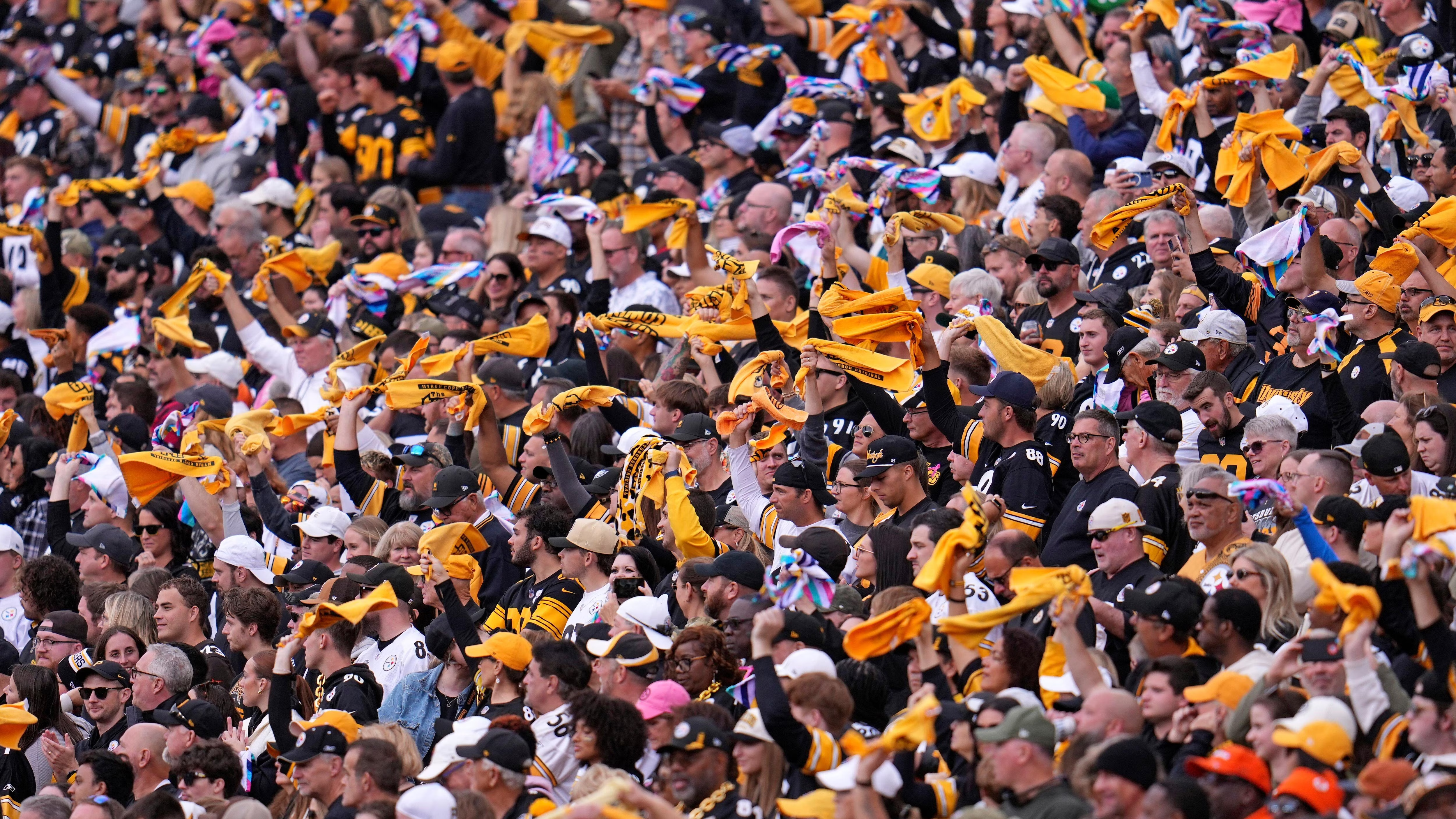
Team: Pittsburgh Steelers Sport: NFL Venue: X
Topics in this story
Gathered from external sources. Rights to this text belong to whoever originally published it.