Robert Wolk Spent 30 Years Racing at the Limit. Parking Lot Road Rage Killed Him.
Robert Wolk built a three-decade career out of deliberately running out of grip in controlled conditions, and he survived all of it. On Wednesday, 16 Septemb...
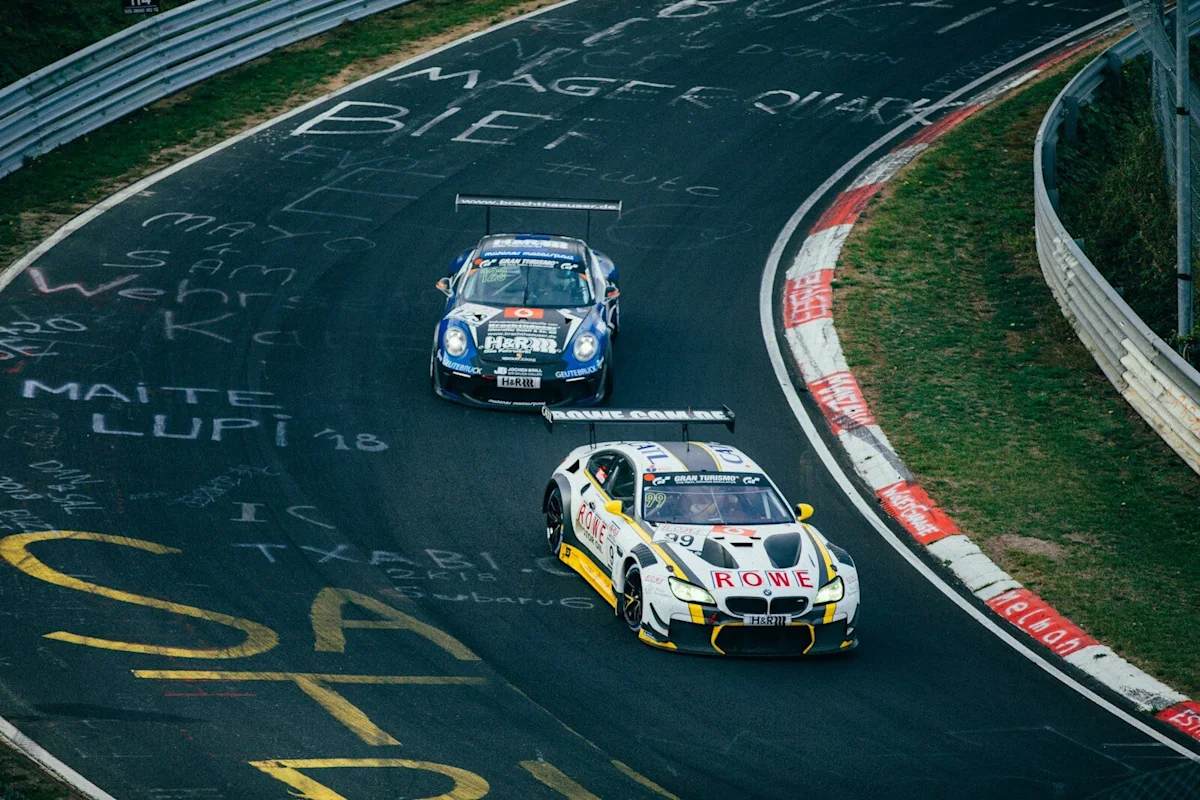
Robert Wolk built a three-decade career out of deliberately running out of grip in controlled conditions, and he survived all of it. On Wednesday, 16 September, he was killed on a suburban corner in Kempton Park at something close to walking pace, after a bump minor enough that he got out of his Audi to look at the damage. He was 41, he was on his way to the airport, and he had a race entry waiting for him in Cape Town.
Motorsport South Africa confirmed the death and described a career that ran from junior karting in the mid-1990s to a national touring car title in 2024. Sport, Arts and Culture Minister Gayton McKenzie, in a government statement issued on Saturday, called the killing "an act of senseless violence, on our roads." Three men were in custody by the end of that week.
What police say happened on Camwood Street
Gauteng police place the shooting at the corner of Camwood Street and Portland Drive in Esther Park, a quiet residential pocket of Kempton Park a short drive from OR Tambo International. According to police spokesperson Colonel Dimakatso Nevhuhulwi, Wolk's Audi was involved in a minor collision. He got out to assess and photograph the damage, an argument followed, a firearm was produced, and he was declared dead at the scene. A murder docket was opened, and the sequence was captured on CCTV, footage that has since been passed around social media by people who should know better. We are not linking it.
There is a bitter detail buried in that account. Photographing damage at the scene is exactly what every insurer, every broker and every fleet policy tells you to do. Wolk was following the script.
Three accused, and why a first appearance matters more than it looks
Police made one arrest on Thursday, 18 September, and two more on Friday, 19 September. The three men are aged between 24 and 33. A firearm and a vehicle were seized for forensic and ballistic work, and all three were due before the Kempton Park Magistrates' Court on Monday, 21 September, on a charge of murder.
A first appearance in South Africa is mostly procedural: charges are put, legal representation is sorted, and the matter is usually postponed for further investigation. The real fight is bail, and South African bail law is structured in a way most people outside the system do not appreciate. Murder is a Schedule 5 offence under the Criminal Procedure Act, which inverts the ordinary presumption and puts the burden on the accused to show that release serves the interests of justice. If the State alleges the killing was planned or premeditated, or that the accused acted in furtherance of a common purpose, the matter climbs to Schedule 6, where the accused must prove exceptional circumstances. With three men charged over one shooting, common purpose is on the table from day one.
Sentencing follows the same fork. Under the minimum sentencing regime introduced by the Criminal Law Amendment Act of 1997, murder that is premeditated or committed in execution of a common purpose carries life imprisonment as the prescribed starting point. Murder outside that bracket carries a 15-year minimum for a first offender, unless a court finds substantial and compelling reasons to go lower. Which is why the seized pistol matters so much: ballistics linking a specific weapon to the fatal round is usually what converts a group arrest into individual liability.
Wolk's record reads like three different drivers' careers stapled together. He took South African Junior GP karting titles in 1995 and 1997, collected multiple Formula Ford championships, won the SA Formula Volkswagen crown in 2013 and the SA Formula 1600 title in 2015, then went back-to-back in SA GTC in 2021 and 2022 before adding the SA Touring Cars championship in 2024. He received Junior Protea Colours in 1998 and Senior Protea Colours in 2022.
That spread is far harder than a list of trophies makes it look. Formula Ford and Formula 1600 are momentum cars: skinny tyres, almost no downforce, and a driving style built on refusing to scrub speed. Braking is a suggestion. GTC machinery is the opposite animal, a tube-frame silhouette racer wearing a showroom shell over a purpose-built chassis, with real aero load, real slick grip and a braking technique that punishes anyone still driving like a single-seater hero. Plenty of quick drivers cross that divide and look ordinary for a full season while they recalibrate. Wolk kept winning through the switch, in a national structure where testing budgets are thin and there is no simulator programme waiting to bail you out.
This was not a veteran winding down. In May he won his second King of the Hill title at the Simola Hillclimb in Knysna, an event run on roughly two kilometres of closed public road where the scenery consists of stone, banks and trees, one car goes at a time, and the margin for a misjudged entry is measured in centimetres. In June he came back to SA Touring Cars and won at Aldo Scribante outside Gqeberha. He was entered at Killarney International Raceway in Cape Town for the weekend of his death.
Circuit racing has spent a century engineering its way out of killing people, with barrier research, halo devices, fire suppression, extraction crews and medical response times that most public health systems would envy. It is not perfect, as the rescue of Ollie Millroy from a burning Ferrari in Shanghai made uncomfortably clear. But it is a system, and it improves every decade. None of it applies on a residential corner on a Wednesday morning.
The part every driver should actually take from this
South Africa's National Road Traffic Act sets out what you owe after a crash: stop, check for injuries and damage, give your name, address and vehicle particulars to anyone with a reasonable interest, and report the incident at a police station within 24 hours if those details were not exchanged. Nothing in that obliges you to conduct a roadside negotiation with a stranger, and nothing in it requires you to stand in the road while you do it.
If nobody is hurt, you are generally allowed to move the vehicles. Use that. If the other party's body language reads wrong, stay belted in with the doors locked, photograph through the glass, and drive to the nearest police station or a busy, well-lit forecourt to swap details there. A dual-channel dash cam with parking mode costs less than one panel respray and is the only witness that never changes its story. The pattern is depressingly consistent across jurisdictions, whether it is a drive-through queue dispute that ends with a fatal shooting , an Indianapolis confrontation that escalates in seconds , or a parking-lot argument that only ends well because of a steel-toed boot . The trigger is almost never the crash. It is the conversation afterwards.
There is an insurance wrinkle worth knowing too. The Road Accident Fund exists to compensate loss arising from the driving of a motor vehicle. A deliberate shooting that happens after a collision is a criminal act, not driving, so it generally falls outside that safety net entirely. Families in these cases are usually left with private life cover, whatever a civil claim against the accused might yield, and the cold reality that most defendants have nothing to attach. If you drive for a living or commute through high-risk corridors, that gap is an argument for checking the fine print on your personal accident and life cover rather than assuming the state backstop applies.
An empty slot on the Killarney entry list
Killarney's organisers had him on the entry for the weekend, and Motorsport South Africa's statement described a gap in the sport that will not be filled quickly. Both are true and neither is much comfort. South African national racing is a small, self-funded, tight-knit paddock where the same faces have been showing up with the same trailers for twenty years, and losing a two-time reigning hillclimb winner and a recent touring car champion is not an abstraction there. It is a missing car, a stalled team programme and a set of empty seats at scrutineering.
Motorsport has always asked its people to accept a level of risk that outsiders find irrational, and the sport has spent generations earning the right to make that risk smaller. Wolk had every reason to expect that the dangerous part of his week would begin at a green flag. Racing loses figures to illness and to age often enough, as it did with Lancia rally stalwart Alex Fiorio , and the paddock has learned how to absorb those. This is a different category of loss. He died standing still, on a public road, over a dented panel. Three men are now answering for it.
Topics in this story
Gathered from external sources. Rights to this text belong to whoever originally published it.