Naomi Osaka reveals “long bouts of depression” as tennis superstar makes powerful stand for her wellbeing
International Sports News: In May 2021, Naomi Osaka made a decision that shook the tennis world. The four-time Grand Slam champion withdrew from the French Open after refusing p.
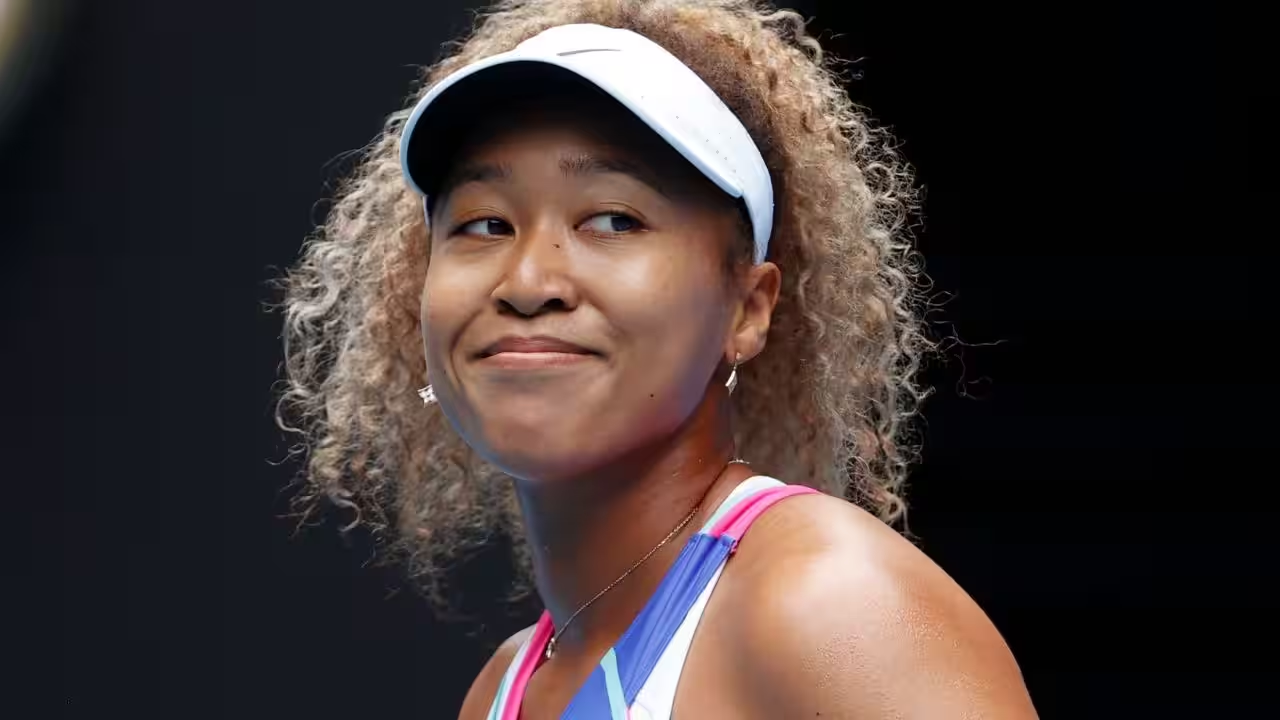
In May 2021, Naomi Osaka made a decision that shook the tennis world. The four-time Grand Slam champion withdrew from the French Open after refusing post-match media conferences, saying she was protecting her mental health. What followed was a wider debate about athletes, media duties and the pressure that comes with competing under a global spotlight.Naomi Osaka and the French Open controversyThe controversy began before Osaka even played her opening match at Roland Garros. The Japanese star announced that she would not attend news conferences during the tournament because of the anxiety she experienced around speaking to the media.After beating Romania’s Patricia Maria Tig in straight sets, Osaka was fined $15,000 for skipping her post-match media duties. The situation escalated when the four Grand Slam organisers warned that continued refusal could result in heavier fines and possible suspension.Osaka then chose to leave the tournament.Her decision was not simply about avoiding questions after matches. In her statement, she explained the personal struggle behind it."The truth is I have suffered long bouts of depression since the US Open in 2018 and I have had a really hard time coping with that."She also described how social anxiety affected her around tournaments."Anyone that knows me knows I am introverted and anyone that has seen me at tournaments will notice that I'm often wearing headphones as that helps dull my social anxiety."Those words changed the tone of the conversation. What had initially looked like a dispute over media obligations became a much larger discussion about the emotional demands placed on elite athletes.Naomi Osaka’s mental health message drew supportOsaka acknowledged that her timing could have been better, but she stood by her decision to put her wellbeing first.I never wanted to be a distraction and I accept my timing was not ideal and my message could have been clearer. More importantly, I would never trivialise mental health or use the term lightly."The truth is I have suffered long bouts of depression since the US Open in 2018 and I have had a really hard time coping with that."Anyone that knows me knows I am introverted and anyone that has seen me at tournaments will notice that I'm often wearing headphones as that helps dull my social anxiety."Though the tennis press has always been kind to me (and I want to apologise to all the cool journalists who I may have hurt), I am not a natural public speaker and get huge waves of anxiety before I speak to the world's media."I get really nervous and find it stressful to always try to engage and give you the best answers I can."So here in Paris I was already feeling vulnerable and anxious, so I thought it was better to exercise self-care and skip the press conferences. I announced it preemptively because I do feel like the rules are quite outdated in parts and I wanted to highlight that."I wrote privately to the tournament apologising and saying that I would be more than happy to speak with them after the tournament as the Slams are intense."I'm going to take some time away from the court now, but when the time is right I really want to work with the Tour to discuss ways we can make things better for the players, press and fans."Get the latest Sports News and Live updates. Download the TOI app.
Topics in this story
Gathered from external sources. Rights to this text belong to whoever originally published it.