“My wages will go over to a local children's charity”: How David Beckham turned his PSG farewell into a charitable pledge
David Beckham has spent more than two decades supporting children through his work with UNICEF, from helping families affected by disasters to backing
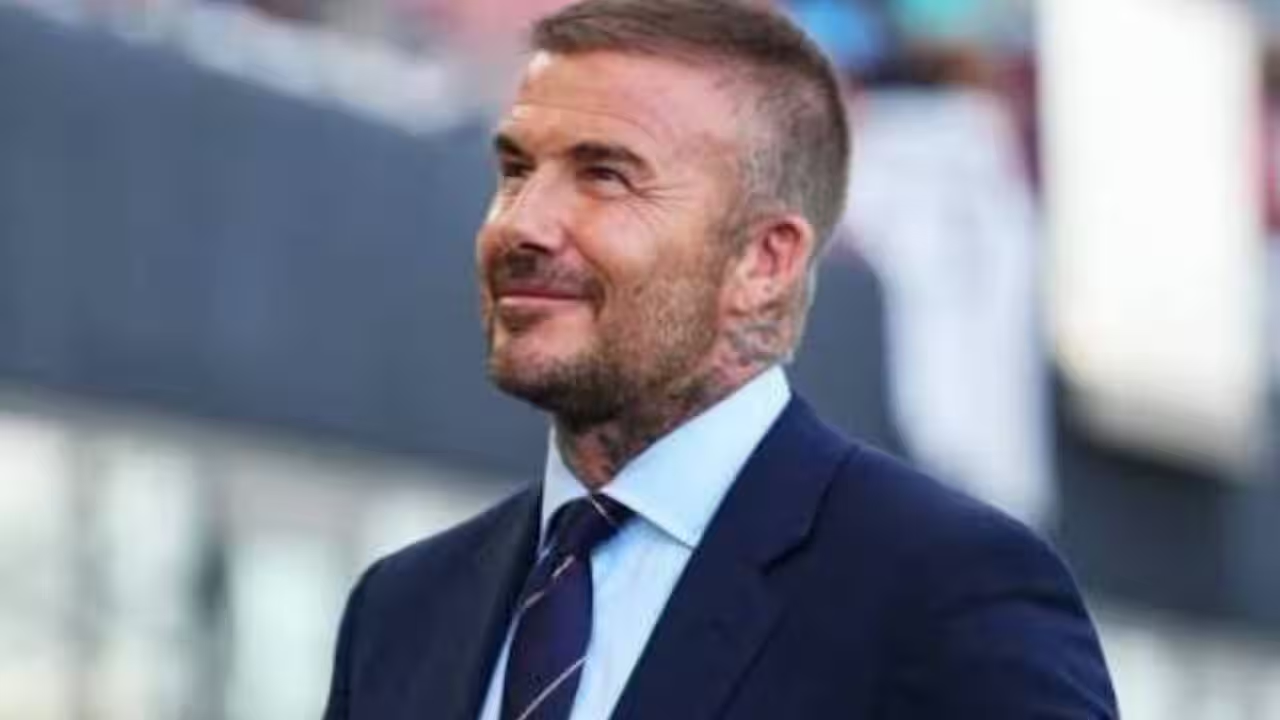
David Beckham has spent more than two decades supporting children through his work with UNICEF, from helping families affected by disasters to backing programmes against bullying, violence and child marriage. In 2013, the former England captain pledged his entire Paris Saint-Germain salary to a local children’s charity. Two years later, he launched 7: The David Beckham UNICEF Fund to support children facing serious risks. His work has taken him to countries including Sierra Leone, the Philippines and Indonesia, where he has used his fame to bring attention to children’s needs.How did David Beckham turn his football career into a long-term commitment to children’s welfare?David Beckham became a UNICEF Goodwill Ambassador in 2005. By then, he had already made his name at Manchester United and was known far beyond football. His later career took him to Real Madrid, LA Galaxy, AC Milan and Paris Saint-Germain, but his work for children developed alongside his time on the pitch.Instead of limiting his support to public appearances, Beckham worked with the organisation on issues affecting children, including preventable disease, hunger, violence and access to education. His visits to communities gave him opportunities to meet children and families directly and show the challenges they faced.In 2008, Beckham travelled to Sierra Leone to draw attention to the country’s high infant mortality rate. The visit focused on child survival and the need for better healthcare. A year later, he travelled to South Africa to highlight efforts to prevent HIV from passing from mothers to their babies.These visits helped connect his public profile with specific issues affecting children. His role was not to replace medical teams or aid workers, but to help bring wider attention to their work and encourage support for programmes designed to protect young lives.Why did David Beckham donate his Paris Saint-Germain salary to charity in 2013?In January 2013, Beckham joined Paris Saint-Germain (PSG) on a five-month contract. He was 37 and approaching the end of his playing career, but his arrival in Paris also brought a major charitable pledge.At his unveiling, Beckham announced that he would not keep his wages from the French club. Instead, the money would go to a local children’s charity. The move meant that his final months as a professional player in France would also support children in need.Beckham explained his decision in simple terms: “It’s something I’m passionate about—children and charities,” Beckham remarked at the time. “We decided on something quite unique… my wages will go over to a local children’s charity. It’s one of the things I’m very excited and proud to be able to do”.The exact value of his full salary was not publicly confirmed when he made the announcement. The BBC reported on January 31, 2013, that the donation would be worth at least £1 million. Later reports linked part of the pledge to Necker Children’s Hospital in Paris and another charity, although the full distribution was not officially confirmed in the initial announcement.The decision stood out because Beckham was giving up his earnings from the contract rather than simply making a separate donation. It also gave the Paris move a purpose beyond football, with the money intended to help children and families in the French capital.What did David Beckham’s 7 Fund do for children across different countries?In February 2015, Beckham and UNICEF launched 7: The David Beckham UNICEF Fund. The launch marked his tenth year as a Goodwill Ambassador. Named after the shirt number closely linked to his career, the fund was created to support children facing violence, abuse, poor access to education and other serious risks.Its work covered several countries, with programmes shaped around local needs. In Indonesia, the fund supported efforts to prevent bullying and violence in schools. During a visit to Semarang in March 2018, Beckham met students involved in peer-led programmes that encouraged children to speak up about bullying and help make classrooms safer.One of the students he met was Sripun, a 15-year-old who had become a student leader in the effort to prevent school violence. The programme trained selected students to promote safer behaviour among their peers, while teachers learned ways to maintain classrooms free from violence.The work extended beyond Indonesia. In Uganda, programmes supported girls’ education and helped young people stay in school. In Nepal, funding helped support mental health and emotional support programmes for pupils. In El Salvador, the fund backed efforts to create safe places where children could learn and play, alongside stronger child-protection services.UNICEF reported in March 2018 that its wider work supported by the fund had included vaccinating 400,000 children against polio in Djibouti, helping 15,000 children access clean drinking water in Burkina Faso and protecting 14,500 children from violence and abuse in Cambodia. These figures refer to specific programmes and should not be treated as a single total of children reached by the fund.The central idea was to address problems that can stop children from learning, feeling safe or building a better future. Rather than focusing only on emergency donations, the fund supported work intended to help children over time.How did David Beckham support children affected by disasters in the Philippines and Ukraine?Beckham’s work with UNICEF has also focused on children caught up in emergencies. In November 2013, Typhoon Haiyan struck the Philippines, leaving communities devastated and forcing many families from their homes. Beckham helped raise awareness of the crisis and later visited survivors in the country in 2014, meeting children and families affected by the disaster.His visits helped bring attention to the need for emergency supplies and longer-term support for children dealing with the effects of losing their homes, relatives and access to school.In March 2022, after Russia launched its full-scale invasion of Ukraine, Beckham and his wife, Victoria Beckham, supported a UNICEF emergency appeal for children and families affected by the war. The appeal focused on urgent needs, including medical supplies and safe spaces for families.Beckham also gave Dr. Iryna Kondratova, who headed a regional perinatal centre in Kharkiv, access to his Instagram account. She used the platform to show the conditions faced by medical staff caring for mothers and newborn babies during the conflict. The account takeover helped bring international attention to the challenges of providing care while attacks threatened hospitals and homes.The effort showed how Beckham could use his large social media audience to share information from people working on the ground. Rather than speaking for the medical staff, he gave them a platform to explain their work and the risks facing families.UNICEF’s records confirm his involvement in the Ukraine appeal and the Instagram takeover. However, claims about a specific £1 million donation should not be presented as a confirmed personal contribution without a reliable source establishing that exact amount.Stay updated with the latest Asian Games 2026 news, check the Asian Games medal tally and complete Asian Games schedule.Get the latest Sports News and Live updates. Download the TOI app.
Topics in this story
Gathered from external sources. Rights to this text belong to whoever originally published it.