Natalie Nakase's ‘extremist' style hit a wall in WNBA Finals. Then the Valkyries coach evolved
After Natalie Nakase gave herself an "F-minus" for the first three games of the WNBA Finals, she learned, listened and adjusted. Now the coach has the Golden...
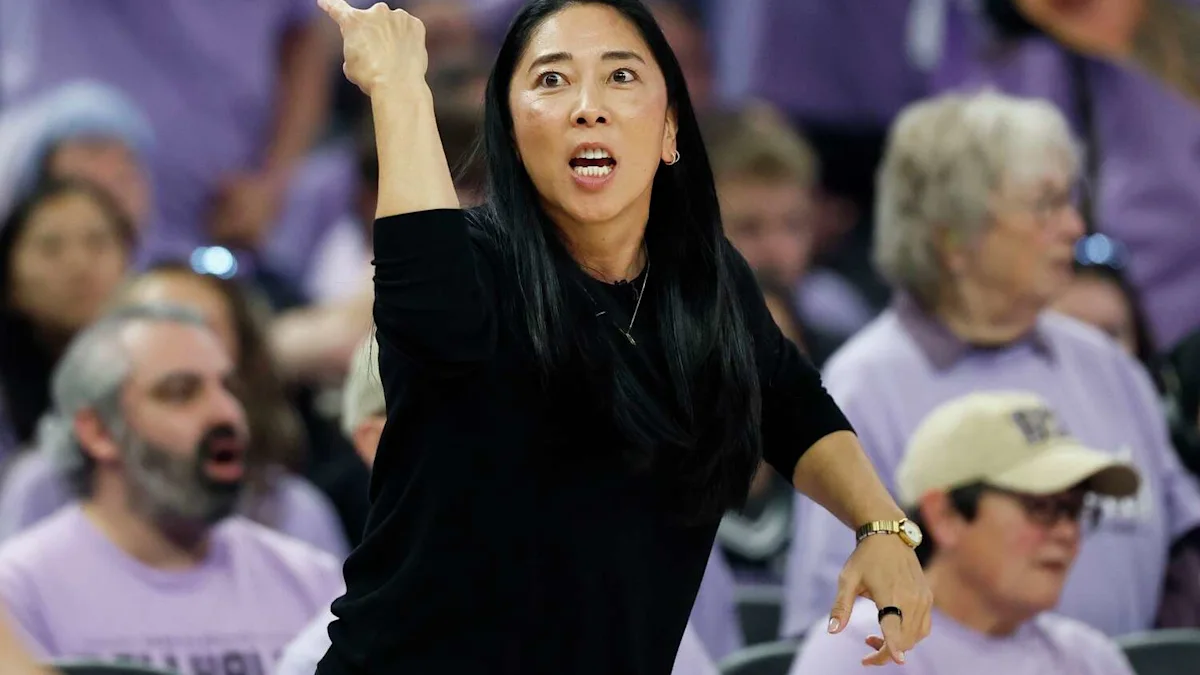
Natalie Nakase finished discussing how her Golden State Valkyries are one win from a championship and stepped out of the news conference room. Waiting in the hallway was NBA legend Chris Paul. She and Paul walked toward the Valkyries locker room, their heads bent together, deep in conversation.
Nakase is heading into uncharted territory for the WNBA. There has never been a Game 6 - or a Game 7 if it comes to that - in league history. Many of the coaches, who come to the league from the college ranks or as WNBA assistants, are unfamiliar with the rigors of a seven-game series.
But Nakase, who earned her coaching chops with the Los Angeles Clippers, can draw on her NBA background and her NBA mentors to help her navigate through this long and intense WNBA Finals.
"As boring as it sounds, it's staying healthy, maintaining high energy," Nakase said. "Rest and recovery. You know the Clippers had injuries (in the playoffs). And last year, too. I learned my lesson. We were injured. … Stay consistent, block out the noise, understand the game plan."
What Nakase learned during her time with the Clippers - where she began as a video coordinator and worked up to an assistant coach under both Doc Rivers and Tyronn Lue - is that seven-game series are long. There is time to adjust. One bad game doesn't signal doom. Even two consecutive losses don't define a series.
"That's the beauty of a seven-game series, it is long," Nakase said. "We keep our habits the same, control what we can control. Don't overreact."
It's been fascinating watching Nakase grow into her role as a head coach, on the big stage. One part of her is an intensely competitive, detail-obsessed and driven coach, who plays war sounds during practice, calls her players "killers," prefers salty language and insists she needs "no joy" to motivate her - "just winning." Who forgets to eat and goes so hard that she collapsed to the ground during the late minutes of a deciding game against Dallas.
She learned that demeanor from her late father Gary, who pushed her relentlessly. Her father didn't easily offer praise or affection.
"Basketball was his love language," she said. "It was discipline and it was time. He was there every single step of the way."
Gary always made the youngest of his three daughters - Natalie jokes that she was supposed to be Nathan - play with older kids or with boys, so that she would be the worst on her teams and always had to fight to get better.
"He instilled in me life lessons, hard lessons," she said. "He loved to throw adversity my way."
It made his youngest daughter tough. She took that toughness to UCLA, where she walked on and became the starting point guard. She took it to Germany and Japan, where she first played, then learned to coach. She took it to the NBA, where she started at the bottom.
When she joined the WNBA in 2022, as Becky Hammon's top assistant in Las Vegas, her players thought of her as the "strict coach." The serious coach. No room, as Tiffany Hayes said, "for playing around."
But now, as the head coach of a group of connected women, Nakase has grown and evolved.
"I think my identity changes from year to year," she said. "I'm a constant learner. I love to ask questions. I have a curious mindset."
One of the things she learned last year was about health. Her team suffered key injuries late in the season, to Hayes and Kayla Thornton among others. Nakase took responsibility, feeling like her practices may have been too intensive.
"It motivated me to be organized and intentional on off-days," she said. "I also wanted to make sure all 14 (on the roster) can be two-way players. If they weren't high-level two-way players I wanted to develop them because we play so hard. So there was intentionality around the kind of players we had and then seeing what they did in the offseason. Seeing how much rest they needed. Everything was calculated."
Her NBA mentors have also helped her grow and evolve. She said that Paul, during these playoffs, has counseled her to instill confidence in the players. To be there for them when they're low. To stay connected during the sticky times.
Former Clippers assistant Armond Hill, who has been a regular presence around the Valkyries during this playoff run, calls Nakase "grasshopper" and tries to calm her down, telling her to remember to breathe.
"I want to do everything right," Nakase said. "I'm a perfectionist. I'm an extremist. He says, 'Just take a breath. Make sure you're clear and concise with your game plan. Try not to get everything done all in one night.'"
During these playoffs Nakase has spoken a lot about vulnerability. The importance of her players being vulnerable with her, and of her being open and honest with them. She is revealing her softer side, talking regularly about love and care and meaningful communication.
"Part of my DNA is an obsession extremist, it's why I want to win everything so quickly," she said this week, when addressing what she felt she did wrong earlier in these Finals. "That's not really what will work in a long series. It's delivering my message a little bit slower, a little more clear. … It's always on me. It's always on the head coach's delivery."
What exactly, Nakase was asked late Monday night after the Valkyries had taken a 3-2 lead in the series, is an obsession extremist?
"I'm an extremist because I can keep doing the same thing over and over again until I perfect it," she said. "That's probably why I felt I could perfect the perfect game plan and win it right away.
"I had to listen to my players, like Kiah Stokes , who said 'It's a long series coach, take a breath.' Listen to my mentors who said 'It's going to be a battle, why don't you just take a beat' … I was hazy at times. I give myself an F-minus for Games 1, 2 and 3. My communication was poor.
"Sometimes extremist doesn't work well in a seven-game series."
Nakase is not getting an F-minus anymore. She is evolving as a head coach before our eyes. Learning. Listening. Adjusting. And now, in just their second year of existence, the Valkyries are on the brink of history, one win away from a championship.
That's pretty extreme, in all the best ways.
Topics in this story
Gathered from external sources. Rights to this text belong to whoever originally published it.