Dodgers postseason primer: Where do Shohei Ohtani and everyone else stand as they go for a three-peat?
The Dodgers' bid for history features an enormous number of moving parts.
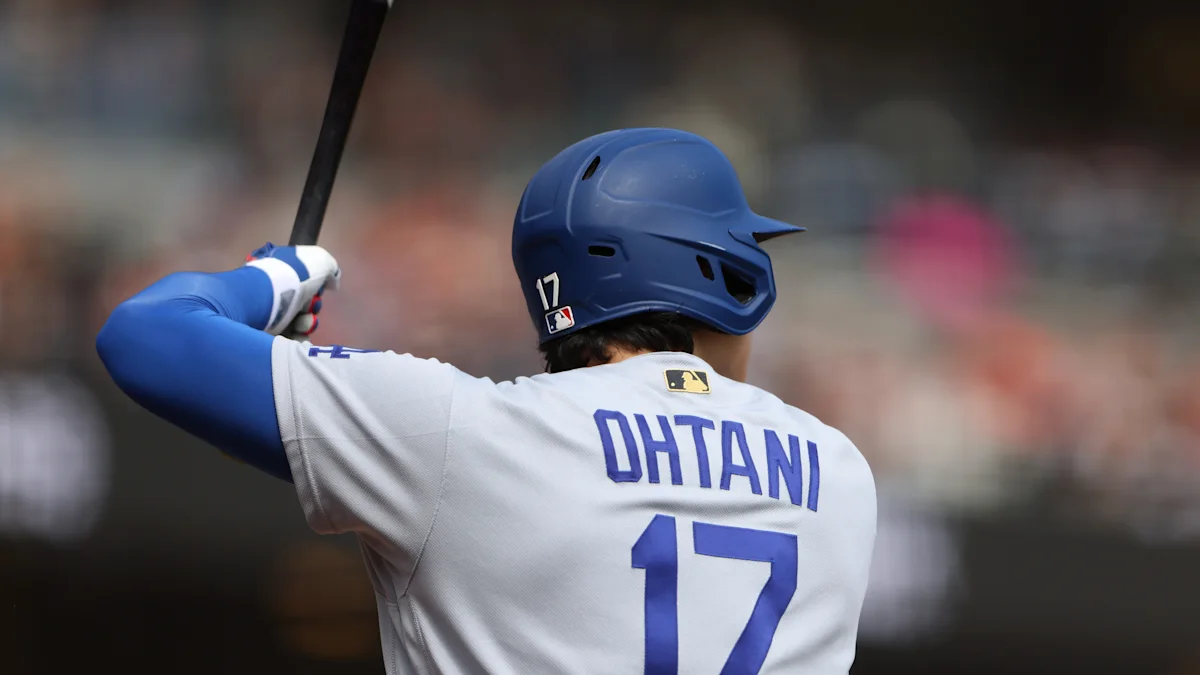
The Los Angeles Dodgers' quest for a three-peat begins in earnest on Saturday with Game 1 of the NLDS , as they seek to become the first time since the 1998-2000 New York Yankees to complete a trilogy of titles.
Up to this point, the path for L.A. hasn't been entirely straightforward. There have been times when the Dodgers have looked a bit rickety, and that's to say nothing about everything happening off the field. They are also arguably the most talented team in the playoffs and are coming off another 100-win season.
No matter how you slice it, this is a club with more than its fair share of questions. Let's get into them, starting with the easier ones.
Who are the Dodgers playing in the NLDS?
The Dodgers will face the NL East champion Atlanta Braves , who defeated the Philadelphia Phillies in a three-game wild-card series . The Dodgers went 1-5 against Atlanta in the regular season, getting outscored 26-15.
The winner of the best-of-five series gets the victor of the other NLDS between the Milwaukee Brewers and San Diego Padres.
What will the Dodgers' postseason lineup be?
The Dodgers finished the season shuffling their lineup depending on the handedness of the opposing starting pitcher, and it stands to reason that they will continue doing so in the postseason.
Here's how they could line up against right-handed pitchers:
Shohei Ohtani has never hit in a batting order position other than leadoff in his MLB postseason career, but lately he has been hitting second against left-handers while Mookie Betts takes his old position atop the order.
Both of those orders alternate left-right all the way down to Edman, a switch-hitter at the bottom. It's entirely possible the Dodgers go a different route, too.
What will the Dodgers' postseason rotation be?
That's fairly settled. The Dodgers will trot out the quartet of Yoshinobu Yamamoto, Tarik Skubal, Blake Snell and Tyler Glasnow. The order in which those arms are utilized remains to be seen, though the Dodgers have every reason to maximize innings for Yamamoto after what he did last year .
How has this season gone for the Dodgers?
It has gone well, by the standards of any other team.
By the standards of the Dodgers, well, there are a few dynamics at play. This is a good baseball team. They probably should've been better this season, and not just because they have the largest payroll in history, at a projected $410 million, per Roster Resource .
A two-time World Series champion filled its two biggest roster holes by giving two players, Kyle Tucker and Edwin Díaz, the highest salaries in the history of their positions. Entering the season, the Dodgers were estimated by the usually conservative PECOTA projections from Baseball Prospectus to win 104 games, and that didn't take into account acquiring a two-time reigning Cy Young Award winner in Skubal and more at the MLB trade deadline.
So in that sense, 100 wins is a disappointment. One of the most talented teams in MLB history (on paper at least) had more than its fair share of injuries, underperformances and mistakes. There was a point when the club seemed on the verge of letting the NL West become a race, as the Arizona Diamondbacks halved a division lead from 14 games to seven in the span of about a month between July and August, but then the D-backs got mired in their own slump and the Dodgers got hot again.
Overall, the Dodgers' issues boiled down to an offense that slumped hard in July and August, rough days for starting pitchers who will not be starting games in the playoffs and an epically bad bullpen night here and there. The first of those got better in September, though, which you can read more about here .
There is also the Dodgers' 38-37 record against teams with winning records this season, as their worst stretches of the year coincided with some of their toughest road trips and homestands, and that can leave an impression. Of course, it's a bit silly to worry about a team handling its business against good teams when it's going for a three-peat.
How does this team compare to last year's?
It's easy to remember the 2024 and 2025 Dodgers as juggernauts, but both of those teams had flaws that easily could've been fatal.
The 2024 Dodgers entered the postseason with a three-man rotation of Yamamoto, Walker Buehler and Jack Flaherty, with Clayton Kershaw, Glasnow, Dustin May, Gavin Stone, River Ryan and Emmet Sheehan among the starting pitchers on the injured list.
That team was so desperate for starting pitching help that it went full bullpen game while facing elimination at the hands of the Padres in the NLDS. It was only through the grace of a deep and competent bullpen that L.A. triumphed.
The 2025 team had the opposite problem. No one was doubting a rotation of Yamamoto, Snell, Glasnow and Ohtani, but there were most certainly concerns about a bullpen whose late-inning arms consistently blew games well into September.
Once again, the Dodgers adjusted. With their rotation overflowing, they turned to a number of starting pitchers to fill the gaps. Every single pitcher who appeared in Game 7 of the 2025 World Series started at least nine games for this year's team.
With that in mind, the 2026 Dodgers might be the franchise's most balanced roster to enter the postseason in years, but there is once again a major question.
Ohtani was the overwhelming NL MVP front-runner for the first half of this season, having begun the year as both a hitter and a pitcher for the first time in his Dodgers career.
Then Ohtani's knee started barking in July, resulting in the team taking him off the mound and giving him a lubricant injection during the All-Star break. He also developed a biceps issue at some point.
Those injuries didn't immediately stop Ohtani from playing. Much like he did in his recovery from internal brace surgery in 2024 and 2025, Ohtani played as the Dodgers' every-day designated hitter while rehabbing. However, the injuries clearly started to affect him in September, and the Dodgers opted to put him on the injured list for the first time in his tenure with the team.
Ohtani returned with five games left in the regular season and went 5-for-21 with 1 walk, 8 strikeouts and one extra-base hit, a double. Those numbers clearly aren't up to his standards, but if there's a reason for optimism, it's that he hit batted balls with exit velocities of 106.8, 106, 103.9 and 103.4 mph. He hadn't hit a ball that hard since August. Of course, the flip side of that optimism is maybe a 100% version of him would've hit them even harder.
Since his return, the Dodgers have insisted that Ohtani is feeling better, with hitting coach Aaron Bates saying Thursday that they had absolutely no concerns . The ship has sailed on Ohtani pitching again this season, though.
It still feels like Ohtani is the single biggest question for the Dodgers entering this postseason, given how long-term his knee issue has been. He at least got plenty of rest between his 15-day IL stint and the five days off between the end of the regular season and the start of the NLDS.
Do the Dodgers have a young, dynamic replacement at DH if Ohtani isn't healthy?
What an oddly specific question. The answer is yes, potentially.
It's not a stretch to say that Josue De Paula was the best hitting prospect in baseball at the time of his promotion to fill Ohtani's roster spot in September. At the time, every other position player in the MLB Pipeline top 10 was a shortstop who could offer significant two-way value, while De Paula will eventually be a bat-first corner outfielder at best and a bat-only first baseman at worst.
The good news is De Paula definitely looked like he belonged in his 11 games with the Dodgers while Ohtani was on the IL, slashing .323/.500/.581 and helping inject life into a previously struggling lineup. He was optioned when Ohtani came back, the timing of which made him available for the start of the NLDS.
In the playoffs, De Paula is likely to be the Dodgers' top left-handed bat off the bench, and he could fit in at designated hitter or corner outfield if someone gets hurt. It seems highly unlikely, however, that the Dodgers will take any plate appearances from Ohtani, barring a significant aggravation of that knee issue.
Those two players were the butt of jokes all season after they signed record contracts to join the defending champions, then posted the worst seasons of their careers. However, both offered reason for optimism in September.
Tucker entered the month slashing .228/.326/.357 but finished the season at .262/.354/.536, numbers more in line with what the Dodgers were expecting when they signed him to a four-year, $240 million contract. His six homers in September were double what he had in any other month of the season.
In 2026, Díaz made seven appearances with a 10.50 ERA, spent three months on the injured list due to loose bodies in his elbow, came back for nine more appearances, posted a 12.91 ERA in those, then hit the IL one more time in August due to what was described as neck inflammation.
Then he came back in September and, like Tucker, performed like the player the Dodgers were initially expecting, with nine strikeouts and one hit allowed across five scoreless innings. Díaz no longer has the closer role, but he made as good a case as he could for late-inning work in October.
Tucker and Díaz still finished the year with horrendous numbers, and barring some postseason heroics, that's what most fans will remember. Still, it's important to know that the Dodgers might not treat them in October like their overall numbers would suggest.
How's the rest of the Dodgers' bullpen shaping up?
It's a diverse group. We've already talked about Díaz, who could be anything from middle reliever to closer by the end of the postseason. However, the current closer is Tanner Scott, who played the Díaz role last year as the high-priced reliever who struggled in his first year with the Dodgers.
Scott's second season in L.A. has gone far better. He converted 25 of 29 save attempts with a 2.69 ERA.
As for the other six spots in the bullpen, the contenders are Edgardo Henriquez, Alex Vesia, Evan Phillips, Kris Bubic and Brock Stewart from the normal pot of relievers and Roki Sasaki, Justin Wrobleski and Sheehan as overflow from the rotation.
Henriquez might be the most intriguing name from that group, as the flame-throwing right-hander was great during the regular season, only to hit the IL due to lower back discomfort in September. The Dodgers think he's trending toward playing in the NLDS .
Does a Dodgers World Series guarantee a salary cap?
You'd think. Some certainly seem to think. However, let's take a view rooted not in optimism but in realism.
The owners want a salary cap. They wanted one before Shohei Ohtani signed on the dotted line of a $700 million contract. They wanted one before Shohei Ohtani was born (what else happened in 1994?). They want a salary cap for the same reason every owner in sports has wanted a salary cap — not for competitive balance but to remove pressure on them to spend like they want to compete.
The Dodgers have made for a convenient boogeyman by being baseball's biggest spender and baseball's best team over the past several years. They must be stopped to save baseball, or so the argument goes, as no team is supposed to have L.A.'s combination of resources, competence and aggression. It's just not fair. It almost goes without saying in many discussions that the point of a salary cap is to end the Dodgers' unfair dynasty.
And yet, it really needs to be noted: Commissioner Rob Manfred does not fantasize about the Dodgers being forced to dismantle their tremendous machine — of Andrew Friedman, on his knees, begging a small-market team to take Glasnow's contract off his books — like some salary-cap proponents seem to do. Ohtani winning rings on the Dodgers has worked out quite nicely for baseball . A salary cap can be introduced for cost control and the veneer of parity, but MLB ultimately benefits from the large-market teams being contenders with the biggest stars. As such, it's hard to imagine a salary cap being introduced in such a way that the Dodgers, Yankees, Mets and other top spenders are forced to take immediate action to get below a line. A slow introduction of a cap or some sort of contract grandfathering seems far more likely, giving the Dodgers and others time to adjust.
The Dodgers' recent success isn't so much fuel for a salary cap as it is fuel for salary-cap opinions. It has certainly convinced many fans of a salary cap's necessity, but the MLBPA is playing cards at a different table. They don't want a salary cap, no matter what the Dodgers do, and they and the MLB owners are ultimately the people whose opinions matter here.
Limitations on the Dodgers would merely be a byproduct of MLB getting what it wants, and that would be completely antithetical to the history of the union. It's difficult to imagine the next month impacting salary-cap discussions to any significant degree.
What about the money problems with Dodgers ownership?
That's still in progress, and it remains unclear how much it will affect the Dodgers.
The short version of a very complicated story is that the companies operated by Dodgers majority owner Mark Walter were found to be doing business with one another at a rate much greater than what they were telling customers, investors and regulators. Walter is now facing considerable legal scrutiny and has reacted by selling whatever he can to pay off some of the loans that turned out to be less than kosher.
Those were big parts of Walter's sports portfolio, which also includes the WNBA's Los Angeles Sparks, the Cadillac Formula 1 team, the entire Professional Women's Hockey League and, of course, the Dodgers.
Dodgers leadership has repeatedly said the team isn't for sale . Of course, any sale would probably come out of nowhere — the Lakers' move was dropped on an otherwise uneventful Wednesday morning — but for now, that's mere speculation with the Dodgers.
One notable sign of trouble in Chavez Ravine, though, was a report that Walter recently approached Charter Communications about letting them out of their famously expensive Dodgers (and Lakers) contracts in exchange for a lump sum payout . It appears nothing has come out of that, but those are not stories you hear when everything is going well.
All of that's to say that Walter would likely welcome the immediate financial benefit of winning a third straight World Series even more than your typical billionaire. Of course, that outcome isn't up to him.
Topics in this story
Gathered from external sources. Rights to this text belong to whoever originally published it.