Jazz Chisholm Jr. Signs One-Year Deal With Blue Jays
Jazz Chisholm Jr. leaves the Yankees for the Blue Jays in a $20 million deal. See the contract terms, stats, and what this move means for the AL East.
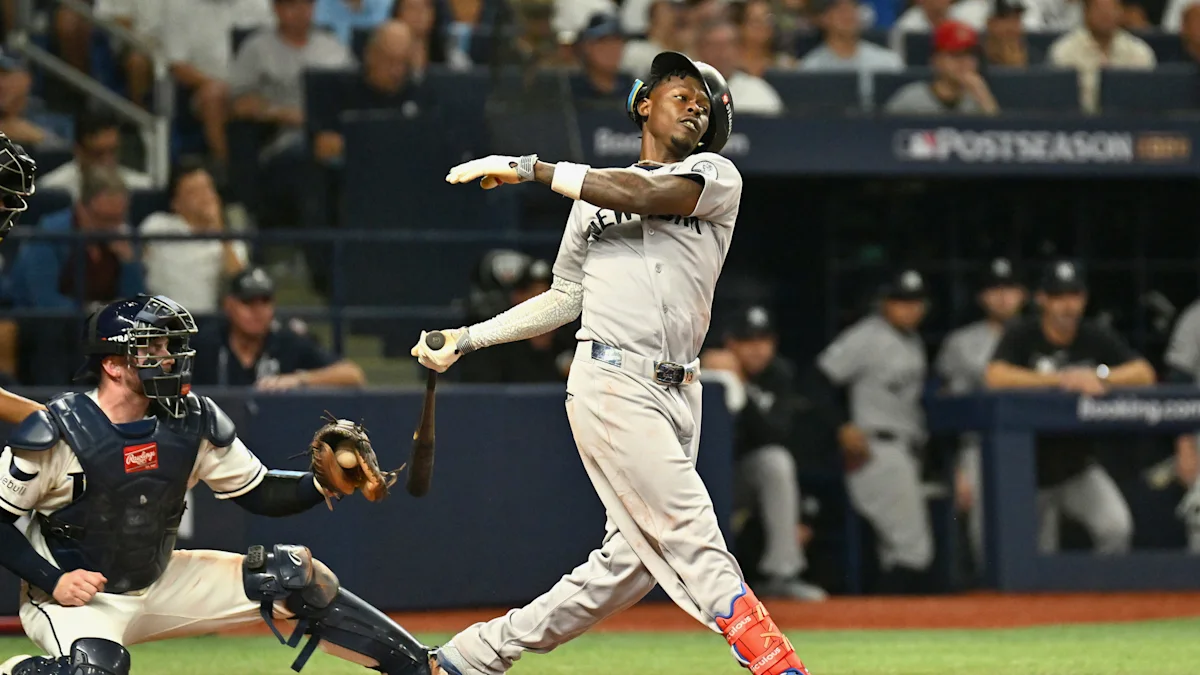
Jazz Chisholm Jr. has left the New York Yankees to join their AL East rival, the Toronto Blue Jays. ESPN reported on Friday afternoon that the two-time All-Star signed a one-year contract worth $20 million. A $16 million player option for the 2028 season and a $6 million signing bonus are part of the deal. This move keeps Chisholm in the division while shifting him to a team that finished last in the East last year.
The contract structure offers a unique twist for the 28-year-old infielder. Should Chisholm decline his $16 million player option next year, Toronto's deal becomes a $40 million team option. This clause gives the player leverage while providing the Blue Jays with a safety net if they wish to retain him long-term. The signing comes as the Yankees face uncertainty in their own lineup construction for the upcoming season.
Chisholm brings a mix of power and speed to Toronto , though his 2026 numbers were modest. He hit 19 home runs and drove in 55 runs while stealing 41 bases for the Yankees last season. His batting line ended at .231/.312/.399, which resulted in 1.7 wins above replacement. These figures show a player who still generates runs but struggled to find consistent contact in the previous year.
The year before, in 2025, Chisholm posted much stronger results, earning him a Silver Slugger Award. He recorded 31 home runs, 80 RBIs, and 31 stolen bases with a .481 slugging percentage. That performance proved he could be a top-tier contributor when healthy and in rhythm. The Blue Jays hope he can return to that form after moving to a new ballpark and lineup.
Chisholm has played multiple positions throughout his career, adding flexibility to his contract value. He started with the Miami Marlins as a shortstop and center fielder before the trade to New York. During his time in the Bronx, he played third base and second base. This versatility allows Toronto to plug him into various spots in their infield mix alongside Ernie Clement and Andrés Giménez.
The departure of a key infielder leaves a gap for the Yankees to fill before spring training. General Manager Brian Cashman has been open about the lack of guarantees for the upcoming roster. In mid-November at Yankee Stadium, Cashman stood on the field and acknowledged that "it makes no sense to guarantee anybody anything right now." This statement reflects the team's cautious approach after 17 years without a championship.
Cashman also addressed the possibility of using younger players to fill the void left by Chisholm. He was asked specifically about Spencer Jones and whether the team felt ready to put him in center field next season. Cashman responded by saying, "I think he best profiles in the corner, but am I comfortable enough if things were as they are currently that he would be in center? I would be comfortable with that," Cashman said last week. This comment suggests the team is willing to take a risk on internal options rather than spending heavily to replace Chisholm.
The Yankees are now facing a different kind of competition in the division. Toronto was one year removed from winning the AL pennant, even though they finished with a 79-83 record in 2026. Adding Chisholm to an infield that already includes Vladimir Guerrero Jr. and Kazuma Okamoto makes the Blue Jays a more dangerous opponent for New York in the coming months.
The trade shifts the balance of power slightly within the division. Chisholm joins a Toronto squad that is looking to bounce back from a last-place finish. The team still has key free agents to sign, including designated hitter George Springer and pitchers Shane Bieber and Max Scherzer. These potential additions could pair well with Chisholm's speed and power to create a dynamic lineup.
For the Yankees, losing Chisholm means they must find a new source of stolen bases and power from the middle of the order. The team has not won a title since 2009, and every roster move now carries heavy weight. The decision to let Chisholm walk suggests a shift in strategy, possibly favoring younger players or a different financial approach. Cashman's comments about not guaranteeing spots indicate a willingness to try new combinations rather than sticking with the old guard.
The one-year nature of the deal allows both sides to evaluate the fit without long-term risk. Chisholm can prove his health and skill level in Toronto before deciding on his future. The Blue Jays get a chance to see if he can replicate his 2025 Silver Slugger season. If he succeeds, the player option or team option could trigger a longer stay. If he struggles, the deal expires without hurting Toronto's future payroll flexibility.
Topics in this story
Gathered from external sources. Rights to this text belong to whoever originally published it.