MLB Has a New Formula for Winning the World Series
The Milwaukee Brewers were crowned World Series champions for the first time in franchise history on Wednesday night, closing out the Tampa Bay Rays to cap off a dominant 11-2 postseason run.
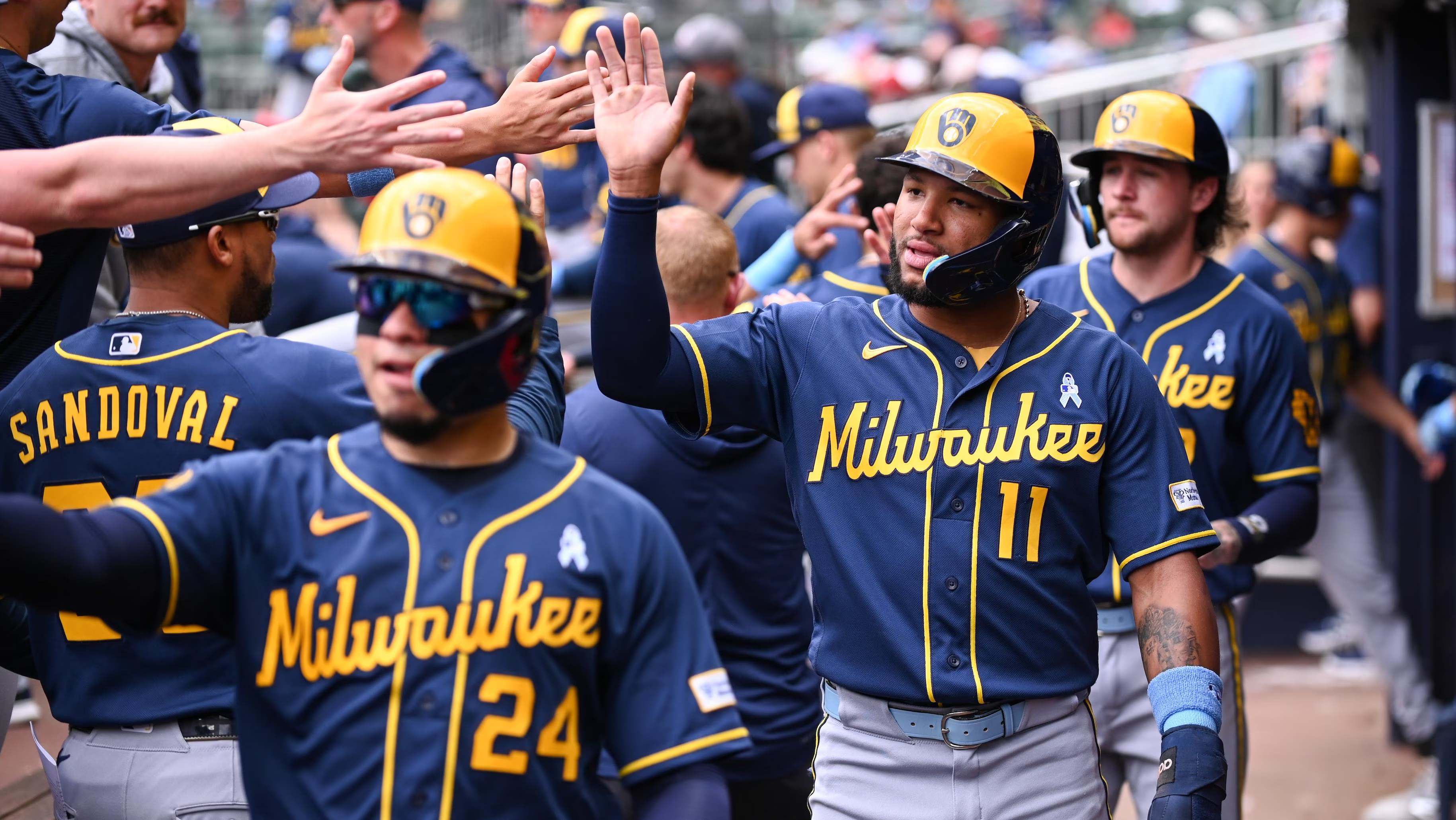
The Milwaukee Brewers were crowned World Series champions for the first time in franchise history on Wednesday night, closing out the Tampa Bay Rays to cap off a dominant 11-2 postseason run.
In an era defined by the haves and have-nots in payroll flexibility, and with the free-spending Los Angeles Dodgers winning back-to-back titles, the Brewers have shown there's another way.
Limitless spending is simply not an option for all 30 teams, and while the new CBA could level the playing field a bit, small and major markets will still exist.
The Brewers ranked 19th in the majors with a $134.4 million luxury tax payroll, roughly $250 million less than the Dodgers team they sent packing with a four-game sweep in the NLCS.
So how did they do it? And how can your team be the next Brewers?
It all starts with their offensive style of play, which runs counter to today's power-centric, three-true-outcomes game that so many teams lean on.
The Brewers ranked second in the majors in runs scored (832) during the regular season, but tied for 28th in home runs (154). Rather than living and dying by the long ball, they manufactured runs, led the league with a .341 team on-base percentage and ranked fifth in stolen bases.
Their ability to string together hits and put crooked numbers on the scoreboard was on full display in Game 3 of the World Series, when they plated 10 runs without hitting a ball over the fence. The peak moment came in the fifth inning, when six consecutive two-out hits drove in runs.
They were also one of the league's best defensive teams, rarely giving up extra-base hits and committing just 72 errors in 162 games.
Second baseman Brice Turang is the perfect example of a well-rounded player who fits the organization's philosophy.
He's not a 30-homer slugger, but a 7.3-WAR player, thanks to his on-base ability (.366 OBP) and elite defense (23 DRS, 14 OAA) as a former NL Platinum Glove winner.
The 26-year-old is not the traditional face-of-the-franchise superstar, but that gaudy 7.3 WAR trailed only Pete Crow-Armstrong (9.8) and Cristopher Sánchez (8.1) among all players across baseball.
He is also a homegrown talent, which brings us to another key component of what the Brewers have built.
In an era when analytics and video are at the forefront of how teams evaluate talent, the Brewers are proving traditional in-person scouting can still provide a legitimate competitive edge.
"For teams on a more limited baseball operations budget, investments in infrastructure are seen as more stable and reliable uses of resources than lavish free-agent spending on players who could get hurt or regress," wrote Anthony Castrovince of MLB.com while highlighting how well both of this year's pennant winners balance analytics and old-school scouting.
The Brewers had 64 scouting department members listed in this year's media guide, one of the largest groups in baseball. Both of this year's World Series teams had the maximum six scouts present to watch the opposing LCS matchup, a rare sight as teams lean harder into video scouting.
That dedication to finding a behind-the-scenes advantage has also stretched into the club's player development pipeline, and a quick glance at all the homegrown talent on the World Series roster shows what an important component that has been to the organization's success.
SP Jacob Misiorowski LF Jackson Chourio 2B Brice Turang RP Aaron Ashby SP Logan Henderson CF Garrett Mitchell SS Cooper Pratt RP Abner Uribe RF Sal Frelick
Without that group, which cost $26.3 million in combined salaries in 2026, the Brewers would not be World Series champions.
And the well hasn't run dry. They still have what is widely regarded as a top-10 farm system, headlined by infielder Jesús Made, who will be a strong contender to start the 2027 season as baseball's No. 1 prospect.
While some teams treat their farm system as trade fodder or block their rising talent with high-priced free agents, the Brewers' philosophy is built more on opportunity for those players.
In fact, the Brewers have made a point of trading away some of their top established talent before they hit the open market and lose value as two-month rentals.
Freddy Peralta, Devin Williams, Corbin Burnes and Josh Hader were all traded when their value was still high, despite the fact that the Brewers were actively trying to contend. They also let shortstop Willy Adames walk in free agency, even though many teams would have paid a premium to keep a team leader, and his first two seasons in San Francisco on a seven-year, $182 million deal have fallen flat.
Through all that high-profile turnover, the organization has not missed a beat.
Every time those trades happen, the initial takeaway is that the Brewers aren't doing enough to win now. Then they go out and do just that.
Give yourself enough chances, and things will eventually click in October.
With four straight NL Central division titles and eight playoff appearances in the last nine years, this was not a team finally arriving. This team had a seat at the table for almost a decade, finally got over the hump, and when reaching the postseason is half the battle, that level of sustainability matters.
The Brewers have built something that can endure a shifting MLB landscape, and they've done it using tools that are readily available to all 30 MLB franchises—a cohesive philosophy, a dedication to player development and a pipeline of homegrown talent.
They might not have the highest ceiling in baseball every season, but their consistently high floor has become their edge, and it finally led to a World Series title in 2026.
Topics in this story
Gathered from external sources. Rights to this text belong to whoever originally published it.