A shopper paid just £15 for an old ring in a Leicester charity shop, then experts traced it to the British royal family; the rare Princess Amelia mourning ring later sold at auction for £5,500
A shopper who paid £15 for an old ring at a charity shop in Leicester has made thousands of pounds after auction experts linked the item to the British
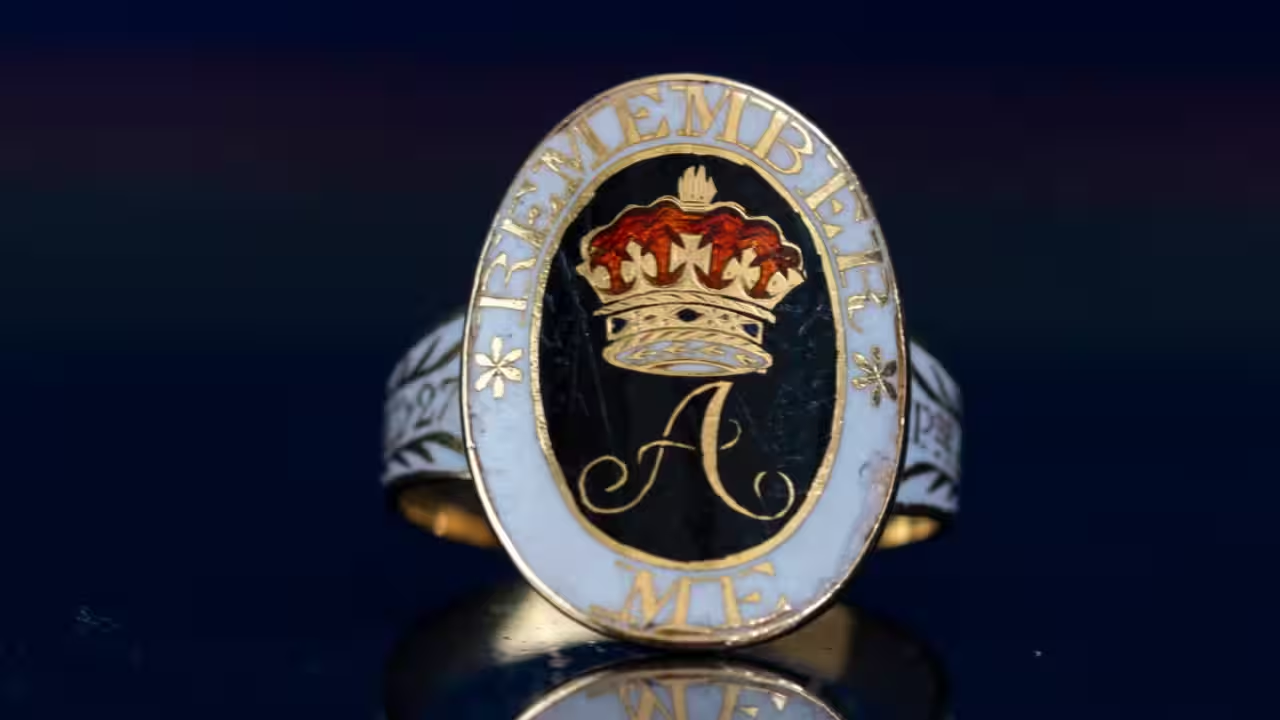
A shopper who paid £15 for an old ring at a charity shop in Leicester has made thousands of pounds after auction experts linked the item to the British royal family. The rare ring turned out to be a 19th-century gold and enamel mourning ring made to mark the death of Princess Amelia, the youngest daughter of King George III and Queen Charlotte. It was sold at Hansons Auctioneers in Etwall, Derbyshire, where intense bidding from buyers around the world pushed the final price to £5,500. According to Hansons Auctioneers, the buyer spotted the ring among everyday items in a local charity shop without knowing its historical importance. After taking it to experts for an appraisal, specialists identified the detailed gold ring as a rare item from the Regency era.Hidden high street treasureCharles Hanson, owner and director of Hansons Auctioneers, described the item as "the most important charity shop find I've heard about in a decade." Details shared by Hansons Auctioneers show that when the owner brought the ring in for a valuation, specialists recognised features linked to royal jewellery made during the reign of King George III. "I was stunned and dazzled," Mr Hanson said in an official announcement published by the auction house. "From a simple box emerged a piece of deeply personal Royal history, commissioned by the Royal family itself to honour a lost loved one. This mourning ring was created to commemorate the life and death of Princess Amelia, and it speaks volumes in its craftsmanship and symbolism."Poignant piece of royal historyPrincess Amelia was born on 7 August 1783 and was the youngest of the 15 children of King George III and Queen Charlotte. She was widely reported to be her father's favourite daughter. She died on 2 November 1810, aged 27, after a long battle with tuberculosis. Historical records cited by Hansons Auctioneers state that her death deeply affected the King and played a major role in his final and lasting decline in mental health. According to accounts of her final hours, Princess Amelia pressed a ring containing a lock of her hair into her father's hand as she lay dying. She is said to have whispered the words "remember me". After her funeral at Windsor, her elder brother, the Prince Regent, who later became King George IV, asked court goldsmiths Rundell, Bridge & Rundell to make 52 mourning rings. These were made in her memory and given only to close family members and trusted friends of the royal household. The ring has a crown design above the initial 'A'. It also carries the words "Remember me" in white enamel. "The white enamel used in the ring denotes that Amelia was unmarried at the time of her death," Mr Hanson explained. "White enamel symbolised purity and innocence in mourning jewellery, particularly for those who died young or unmarried. It contrasts with the more commonly used black enamel, which signified general mourning."International interest at auctionWhen the royal goldsmiths Rundell, Bridge & Rundell made the 52 mourning rings in 1810, each one cost 58 shillings, according to the original invoice. Interest in these royal memorial items has continued over the centuries. Records held by Hansons Auctioneers show that Queen Mary bought an identical mourning ring for the Royal Collection in 1935. Before the June Fine Art, Silver, Jewellery & Watches Auction at Hansons' Derbyshire auction house, experts estimated that the ring would sell for between £3,000 and £4,000. "This find proves treasures still lie hidden on our high streets," Mr Hanson said before the sale. "It's not just the monetary value, it's the emotion, history and humanity behind this ring that truly moves you."Surpassing estimate under the hammerOn auction day, buyers bidding by telephone, online and in the auction room competed for the ring, listed as Lot 63 in the catalogue. Daniel Armstrong, fine art auction lead at Hansons Auctioneers, oversaw the sale as bids rose above the original estimate. The ring eventually sold for £5,500. This gave the buyer a return of more than 360 times the £15 paid at the charity shop. "This sale was a perfect marriage of beauty, history and market energy," Mr Armstrong said in a post-auction report published by Hansons Auctioneers. "From ancient craftsmanship to royal remembrance, we were privileged to handle pieces that resonate deeply with collectors. Bidders were competing with purpose and passion, it was a joy to watch." The sale was part of a successful group of lots at the Derbyshire auction house. Other items included an Ancient Greek chalcedony ring, which sold for £5,600, and a Regency partner's desk, which raised £38,000 for charity.You use AI every day. Now get your AI Quotient. Take the AIQ test.
Topics in this story
Gathered from external sources. Rights to this text belong to whoever originally published it.