In 2005, Montana ranchers bought land unaware fossils lay beneath it; a nearly complete T. rex found there later sold to a Dutch museum for millions
In 2005, ranchers Mary Ann and Lige Murray purchased land in Montana, unknowingly acquiring dinosaur fossils that would lead to millions in sales and a legal dispute about ownership of the fossils. The Montana Supreme Court ultimately ruled on the ownership of these prehistoric treasures, determining the uniqueness of fossils versus traditional mineral rights.
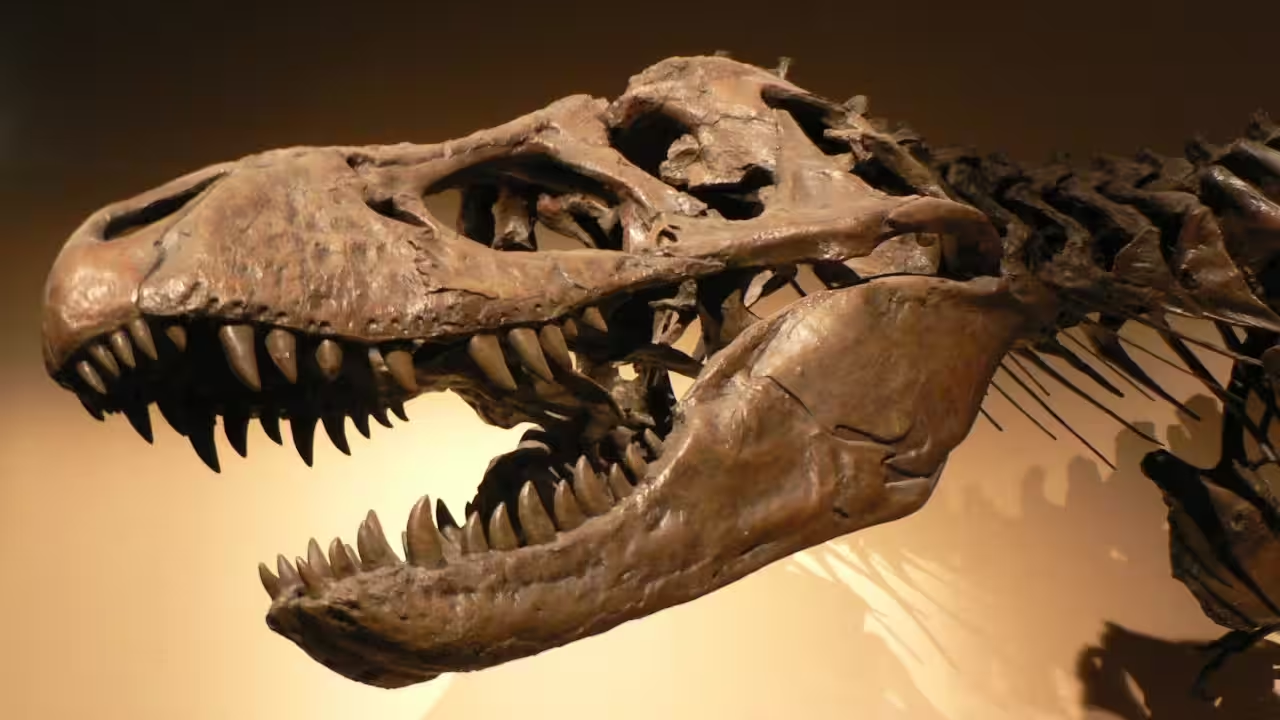
In 2005, Mary Ann and Lige Murray bought the entire surface estate of a ranch near Jordan, Montana, without knowing that dinosaur fossils lay beneath it. According to the Montana Supreme Court’s 2020 opinion, the sale divided ownership, with the Murrays receiving the surface rights and one-third of the mineral rights. The previous owners, Jerry and Robert Severson, retained the remaining two-thirds of the mineral interestsOther discoveries included a nearly complete Tyrannosaurus rex, which, per the court’s opinion, the Murrays sold to a Dutch museum in 2014 for several million dollars. The proceeds were held in escrow against the backdrop of both sides disputing ownership. Ultimately, the case reached the state’s highest court, which ruled on 20 May 2020 that the dinosaur fossils within the scope of a deed’s general mineral reservation were not categorised as minerals unless the deed itself explicitly said otherwise.Fossils turn a land sale into an ownership disputeAutumn 2005 was the year when the Murrays’ discoveries started, after they had found a cluster of fossilised spikes on the ranch. Just a year later, in 2006, amateur palaeontologist Clayton Phipps discovered the specimens which later came to be known as the “Duelling Dinosaurs”. These two specimens included a carnivorous theropod, which was about 22 feet (7 metres), and the other one was a 28-foot (9 metres) herbivorous ceratopsian. According to Phys Org’s report, they had been found with imprints of their skin and died around 66 million years ago in combat.This would not be the end of discoveries; in 2007, a Triceratops foot was found, and later in 2011, a Triceratops skull turned up. In the market, the Triceratops foot was sold for $20,000, while the skull was offered between $200,000 and $250,000; in the case of the “Duelling Dinosaurs”, their value was estimated at several million dollars because of their rarity and scientific importance.Although the Murrays were potentially on the way to riches, they couldn’t immediately cash in on their discoveries because potential buyers wanted to know whether they had the rights to sell the “Duelling Dinosaurs”. To their dismay, the situation only escalated in 2013, when the Seversons claimed ownership over the specimens through their mineral rights. In response to the situation, the Murrays sought a court declaration that they were entitled to the discoveries since they held ownership of the surface estate.Montana court defines the scope of mineral rightsA federal district court ruled for the Murrays in 2016 and found that fossils fell outside the definition of what minerals really mean. Their value, the court reasoned, depended on completeness, species, and preservation, rather than simply on mineral composition. Fossils are neither mined, processed, nor smelted, the Murrays’ attorney argued, setting them apart from the oil, coal, or gold that mineral rights have traditionally covered in Montana. Subsequently, the Ninth Circuit asked the Montana high court to resolve the issue under state law, and in evaluating the case, the court scrutinised the specific wording and context of the deed.The bottom line of the ruling favoured the Murrays, as the court reasoned fossils are prized because they are remnants of prehistoric creatures. Their value isn’t found in mineral content, which makes them viable as raw material for manufacturing fuel, goods, or jewellery. Furthermore, fossils are often brought to the surface by soil erosion, and their excavation interferes with the land above; these features are what separate them from resources that fall under mineral rights. In 2019, Montana’s law placed dinosaur fossils in the surface estate unless a transaction document specified otherwise, but excluded cases already before the courts.You use AI every day. Now get your AI Quotient. Take the AIQ test.
Topics in this story
Gathered from external sources. Rights to this text belong to whoever originally published it.