A UK collector paid £62,000 for a mounted 'fox' head; X-rays revealed the skull of an extinct thylacine hidden inside
UK News: A mounted animal head that appeared to be little more than an old, poorly made fox has turned out to be something extraordinarily rare. British collec.
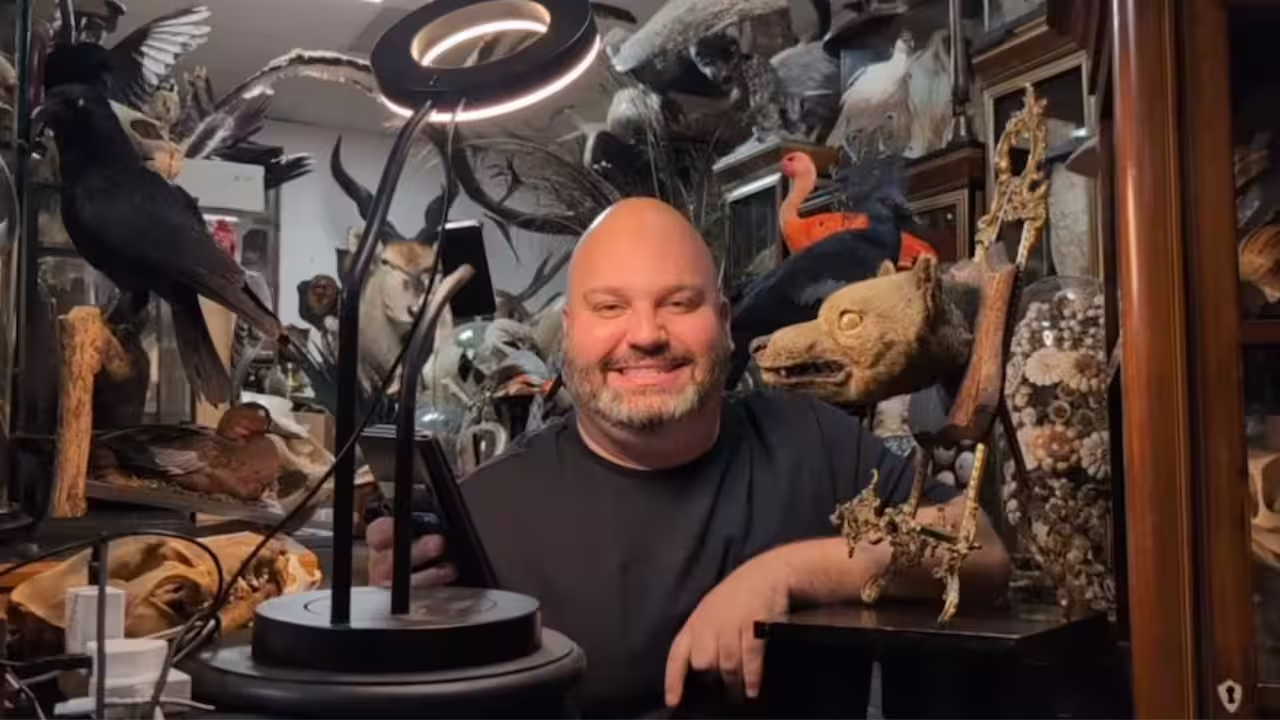
A mounted animal head that appeared to be little more than an old, poorly made fox has turned out to be something extraordinarily rare. British collector James Cranfield paid £62,000 for the specimen at a UK auction after spotting a detail that other bidders had missed, its teeth did not belong to a fox. X-rays have now confirmed what Cranfield suspected. Hidden beneath the stuffing and taxidermy was an almost complete skull belonging to a thylacine, the extinct marsupial also known as the Tasmanian tiger. The discovery has transformed an obscure auction-house curiosity into a scientifically significant specimen. The skull is intact and in remarkably good condition, despite the exterior being described as a rather crude or “naive” mount. The specimen is now expected to be added to the International Thylacine Specimen Database, while scientists are also interested in obtaining DNA from it.How did a £40 'fox' turn out to be a thylacineThe head was originally entered into a general auction in the UK as a fox's head, with an estimated value of only about £30 to £50. Its unusual appearance, including plastic googly eyes and an exaggerated forehead, apparently did little to suggest that it might be one of the rarest taxidermy specimens in existence. Cranfield, however, runs an oddities shop and has spent much of his life collecting taxidermy and natural-history curiosities. When he examined the animal's teeth, he realised something was wrong with the auction description. The distinction came down to the number of incisors. Foxes and dogs have six upper incisors between their canines, while thylacines, as marsupials, have eight. According to BBC, Cranfield recognised the unusual dental arrangement and began comparing the specimen with known thylacine material. He was not the only bidder to realise what was hiding beneath the mount. Another dealer also recognised its significance, leading to a fierce bidding battle. Cranfield eventually secured it for £62,600 including auction fees, far above the original estimate. The head had reportedly been bought for just £50 at an antiques market before eventually being entered into the auction as a fox.X-rays exposed the extinct animal's skullAlthough the teeth had convinced Cranfield that the head was probably a thylacine, scientific confirmation was still needed. Radiographs have now provided that confirmation. The X-rays showed that the animal's skin had been stretched over a genuine, full skull rather than a replica or altered animal skeleton. According to ABC News, the skull is uncut and remarkably complete, with the radiographs clearly revealing its distinctive dentition. Steven Sleightholme, director of the International Thylacine Specimen Database, confirmed the identification after examining the radiographs. The database currently records 815 thylacine specimens worldwide, ranging from tiny pieces of tissue to complete mounts. The newly authenticated head is particularly unusual because there are believed to be only two known thylacine head mounts, making the discovery considerably more important than an ordinary taxidermy find. The specimen's lack of provenance means there are still unanswered questions about exactly where and when it was collected. Its age is believed to date to the late 19th century, but researchers hope further investigation may provide more information.Why does this thylacine specimen matter so much?The thylacine disappeared from the wild in Tasmania during the 20th century, with the last known individual dying at Beaumaris Zoo in Hobart on 7 September 1936. For decades, the species has remained one of the most famous examples of human-driven extinction. Its distinctive striped body and dog-like appearance made it an iconic animal, while surviving photographs, films, skins, skeletons and taxidermy specimens are now the only physical reminders of the species. That makes every previously undocumented specimen valuable to researchers. The rarity is especially striking among privately held material. ABC News reported that only 16 Tasmanian tiger specimens, including this newly confirmed mount, were held in private hands, with most of the remaining specimens in museum or university collections. The newly identified head could therefore provide researchers with information that cannot be obtained from photographs alone. Its skull may reveal individual variation in the species, while preserved tissue could potentially retain genetic material.Scientists want DNA from the newly discovered thylacineThe specimen has attracted interest from researchers involved in efforts to understand, and potentially one day revive, the extinct species. Andrew Pask, a University of Melbourne professor and chief biology officer at Colossal Biosciences, is among the scientists interested in examining the specimen. The team working on thylacine “de-extinction” hopes to collect DNA from the head. Researchers believe that sequencing DNA from additional thylacines could help build a better picture of the species' genetic diversity. Each individual genome can add information about differences between animals and the population as a whole. That information is particularly important for any future attempt to recreate aspects of the species' biology. A genetically diverse population would be far more viable than one based on a narrow genetic sample. However, the immediate scientific value of the specimen does not depend on de-extinction. A genuine thylacine skull is already an important historical and biological record.The strange taxidermy may have helped hide its true identityIronically, the very features that made the specimen look unconvincing may have helped it escape attention. Cranfield believes the mount's proportions were distorted by the amount of material packed beneath the skin. X-rays showed traditional taxidermy materials, including wood wool and tow, used to give the head its shape. The stuffing appears to have altered the proportions of the animal's face, while the unusual eyes and bulbous forehead made it look more like an eccentric fox mount than an extinct Tasmanian predator. Cranfield has said he would prefer to preserve the specimen largely in its existing condition rather than completely remount it. From his perspective, the imperfections are part of its history. That approach could also benefit researchers. Altering an old specimen risks destroying evidence about how it was originally prepared and preserved.A lost animal hiding in plain sightThe discovery is remarkable not simply because a thylacine specimen survived, but because it remained misidentified for so long. For years, the mounted head was apparently just another unusual piece of taxidermy. It entered an auction with a modest price estimate and was described as a fox. Only a collector's knowledge of animal anatomy revealed that something much more significant might be concealed beneath the skin. Now, the X-rays have settled the mystery. The head is a genuine thylacine, complete with an unusually well-preserved skull. Its next chapter is likely to involve researchers, DNA sampling and the International Thylacine Specimen Database rather than an ordinary collector's cabinet. For a species that has been extinct for almost 90 years, the discovery offers an unexpected new connection to an animal that has otherwise survived only in photographs, museum collections and historical records. What looked like a battered fox's head was, in fact, a piece of one of Australia's most famous extinct species, and its most important secret was hidden inside the skull.Catch the latest World News and Live updates. Download the TOI app.
Topics in this story
Gathered from external sources. Rights to this text belong to whoever originally published it.