In 2022, Chloe Hurst took a seasonal job on a remote Isle of Man island; she woke at 5 a.m. to ring birds as supply boats were delayed for weeks
Discover the challenges and rewards of island living as Chloe Hurst shares her experience working at the Calf of Man Bird Observatory. Learn about bird ringing, isolation, and the beauty of nature in this unique job.
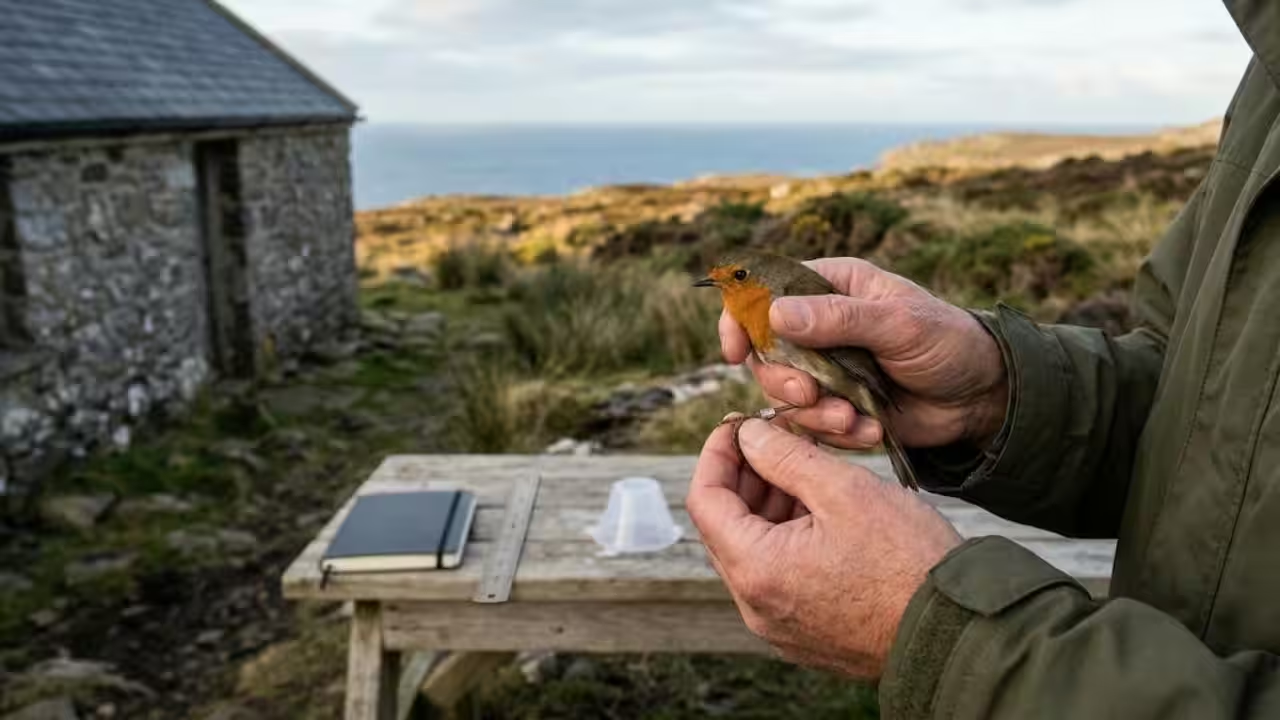
Most jobs come with a nearby shop, a canteen and a daily commute. Chloe Hurst's seasonal role on the Calf of Man was different. In 2022, she worked as a warden on the rocky island, which covers about 600 acres off the southern coast of the Isle of Man. Manx National Heritage owns the island, while Manx Wildlife Trust operates its bird observatory. The reserve supports bird monitoring and other conservation work. Manx National Heritage's official information about the Calf provides details about the island and its facilities.Hurst's experience shows both the demands and the rewards of remote conservation work. Her day began at 5 a.m. with bird ringing, followed by wildlife surveys, habitat management and other practical tasks. Daily life also meant adapting to limited food supplies, short weekly showers and deliveries that could be delayed for two to three weeks in bad weather. She returned in 2024 as a paid estate warden. Manx National Heritage records that about 33 species of seabirds breed on the island each year.Getting to the CalfTravel to the Calf normally depends on small boats. In a 2024 interview with The Independent, Hurst said she discovered the opportunity in 2022 while working at the Cornish Seal Sanctuary in Gweek. She applied through the Manx Wildlife Trust website after learning about the warden role. The Trust operates the bird observatory, while Manx National Heritage owns the island. Crossings from Port St Mary and Port Erin can take up to 40 minutes, depending on the vessel. Sailings depend on weather, tides and the availability of boat operators, and trips must be booked in advance. Manx National Heritage's visitor guide explains the access arrangements and warns that crossings can be cancelled if conditions are unsuitable.The warden team consists of four people, two focused on bird work and two on estate duties. They stay in a farmhouse with an attached hostel that can accommodate up to eight overnight guests during summer. That figure refers to the hostel's overnight capacity, not the total number of people who can visit the island during the day. Hurst said she had seen around 40 people on the island at once during the open season. There is no pub or shop. Rainwater is collected in large tanks and filtered for drinking, so water use is closely monitored and showers are limited to once a week. A generator and battery bank power the shower and dryer, while internet access can be slow.A day that starts at 5 a.m.Once on the island, the birds set the pace of the day. Bird ringing involves catching a bird, fitting a small metal ring with a unique number to one leg, recording its species, age, sex, wing length and weight, and then releasing it. On the Calf, birds are caught in fine mist nets or Heligoland traps and are normally processed within a minute or two so they can be released safely. The ringing programme began in 1959. By the start of the 2020 season, more than 275,000 birds representing 184 species had been ringed, according to Manx Wildlife Trust's official Calf of Man Bird Observatory information.The purpose of ringing has changed over time. Early work focused on establishing where birds travelled, while the modern emphasis includes monitoring populations and understanding changes in their numbers. Records from the Calf show that the average spring arrival of blackcaps advanced by about one week per decade between 1959 and 2018.Ringing was only the beginning of the day. Hurst also cleaned buildings, repaired gates, conducted wildlife surveys and helped manage habitats. About 150 bird species have been recorded on the island, including Manx shearwaters, razorbills and shags, according to Hurst's 2024 interview. Wardens also monitor seals, survey butterflies, record dragonflies and damselflies, and trap moths for identification. The surrounding waters form the Calf of Man and Wart Bank Marine Nature Reserve. Hurst said she had seen around 40 people on the island at once during the open season.When the boat does not comeBad weather can prevent boats from reaching the Calf, delaying food and other supplies and leaving wardens unable to leave by their usual route. Hurst said the team sometimes waited two to three weeks for a boat, so the wardens kept tinned food and emergency rations in reserve. In a genuine emergency, they could contact the Coastguard for helicopter evacuation. Boat travel is therefore the normal route to and from the island, but it is not the only possible means of emergency evacuation.A Manx Wildlife Trust job description for an assistant bird warden states that the seasonal placement runs from early March to early November. Leave must be arranged so that at least two wardens remain on the Calf at all times, allowing the observatory and estate work to continue.Hurst described her 2022 experience as one of the best periods of her life and returned in 2024 as a paid estate warden. Press reports placed the pay for the later seasonal post at around £19,000. Her advice to anyone considering similar conservation work is to research the role carefully, prepare for basic living conditions and be ready to adapt when weather delays supplies and ordinary shopping trips are not possible.You use AI every day. Now get your AI Quotient. Take the AIQ test.
Topics in this story
Gathered from external sources. Rights to this text belong to whoever originally published it.