Neighbours fought over a 65-year-old fence in Kansas; court ruled that the surveyed property line mattered more than the fence
A 65-year-old fence has become the centre of a property dispute between neighbouring landowners in Kansas, USA, after a court was asked to decide whether
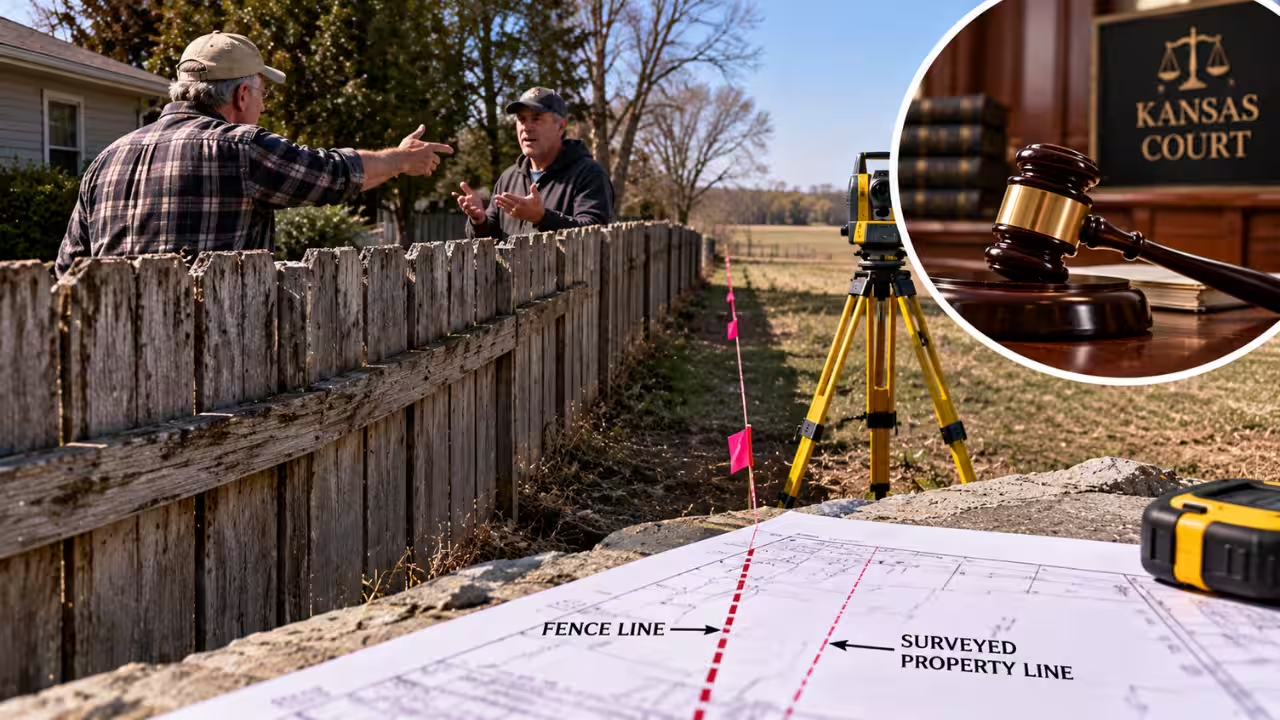
A 65-year-old fence has become the centre of a property dispute between neighbouring landowners in Kansas, USA, after a court was asked to decide whether the old fence or the surveyed property line determined ownership of approximately 5.13 acres of land. The Kansas Court of Appeals upheld a lower court’s ruling that the legal boundary described in the property deeds took precedence over the irregular fence, rejecting the neighbours’ claim that they had acquired the disputed land through long-term possession. The ruling, filed on 28 August 2026, followed a dispute over a fence originally built away from the boundary because of difficult terrain and the labour-intensive construction methods available at the time.Why did neighbours fight over an old fenceAccording to the Kansas Court of Appeals, the dispute concerned neighbouring properties in Sections 23 and 24, Township 30 South, Range 13 West, in Barber County, Kansas. Dan Hittle owned land in Section 23 that had previously belonged to his great-grandfather and had been passed down or sold within the family. The fence along its eastern side did not follow the section line described by the legal property boundary. According to Hittle’s testimony, his grandfather explained that the previous owners had agreed to build the fence away from the boundary because following the exact line would have been too labour-intensive given the terrain and the tools available at the time.The section line crossed a bog, terraces designed to keep water out of a hay field, a creek, a cliff measuring 20 to 30 feet and large trees. Fence construction also required considerable manual work, including digging post holes, cutting posts and walking along the line several times to roll out barbed wire. Hittle described the existing structure as a “fence of convenience”. His father and grandfather repaired and replaced sections when necessary, but his father had said that if they ever built a new fence, they would place it on the property line. Hittle also believed modern equipment would make that possible.How did a fence dispute escalate in 2021Ron and Patricia Lynn Loftus purchased the neighbouring property in Section 24 in 2002 while living in Colorado. They drove past the land before buying it but did not drive onto the property or obtain a survey. The Loftuses operated a cattle business and continued to maintain the existing fence along the western side of their property. At one point along its irregular route, approximately 5.13 acres lay between the fence and the section line. The Loftuses used this land for agricultural purposes and repaired the fence when needed.Around 2014, Ron Loftus rebuilt part of the fence near the creek. Hittle saw the work and spoke with him, but the two did not discuss moving the entire fence or changing the boundary. The dispute became more direct after Don Queal and Donna Hoener-Queal purchased part of the Hittle family property in 2021. After examining the fence, Don asked Hittle about a noticeable bend and learnt that the fence did not mark the legal boundary. Don then discussed moving it with Ron Loftus. The two did not reach an agreement. Don subsequently removed the fence and cleared trees along approximately 400 yards of the section line before Ron returned from holiday and insisted that the fence be restored to its previous position, claiming ownership through adverse possession. The work stopped.Why did the court reject the Loftuses’ ownership claimIn 2023, Queal and Hittle brought a lawsuit seeking to establish ownership of their properties according to their deeds. The Loftuses filed a counterclaim arguing that they had acquired the disputed land through adverse possession. They also maintained that the original owners had established the fence as the agreed boundary and had occupied their respective properties accordingly. After hearing evidence and visiting the property, the district court found insufficient evidence of an agreement permanently fixing the boundary at the fence line.The lower court accepted Hittle’s account that the fence had been positioned for convenience and to reduce construction costs. It also found that the fence’s right-angle bend and other irregularities should have alerted the Loftuses that it did not follow the section line. Although the Loftuses claimed that they believed they owned the disputed land, the court concluded that this belief was not objectively reasonable. It therefore granted Queal’s request for quiet title, a legal determination of ownership, and rejected the Loftuses’ adverse possession claim. The Court of Appeals agreed that the findings were supported by substantial competent evidence.How does Kansas law determine property boundariesThe Court of Appeals explained that property boundaries are ordinarily determined by the legal description in the deed. It acknowledged that neighbouring owners can establish a different boundary through mutual agreement, provided they agree on the line and subsequently occupy their properties in accordance with it. However, the court distinguished an agreed boundary from a fence erected merely as a practical barrier. It stated: “A fence may be maintained between adjoining lands for convenience only, and without the intention of thereby fixing a boundary.” The court found that the evidence supported the conclusion that the original fence was built for convenience rather than to establish a different legal boundary.The judges also upheld the rejection of the adverse possession claim. Under Kansas law, a person claiming ownership through adverse possession must establish open, exclusive and continuous possession for 15 years, either under a knowingly adverse claim or under a belief of ownership. The claim must be proved by clear and convincing evidence, and a belief of ownership must be in good faith and objectively reasonable. The court noted the irregular fence line, the legal description in the Loftuses’ deed and conflicting testimony from Ron Loftus about when he became aware of the fence’s unusual route. It found no basis to overturn the lower court’s conclusion that the required evidence had not been established. The Kansas Court of Appeals therefore affirmed the ruling in favour of Queal and Hittle.You use AI every day. Now get your AI Quotient. Take the AIQ test.
Topics in this story
Gathered from external sources. Rights to this text belong to whoever originally published it.