In 2014, Australia tested geopolymer concrete in ten 50-metre pours beside Wellcamp Airport’s runway; after the trial met specifications, it was approved for heavy aircraft pavement
Discover how geopolymer concrete was successfully tested and implemented at Wellcamp Airport for heavy-duty aircraft pavement, reducing carbon emissions and paving the way for sustainable construction practices.
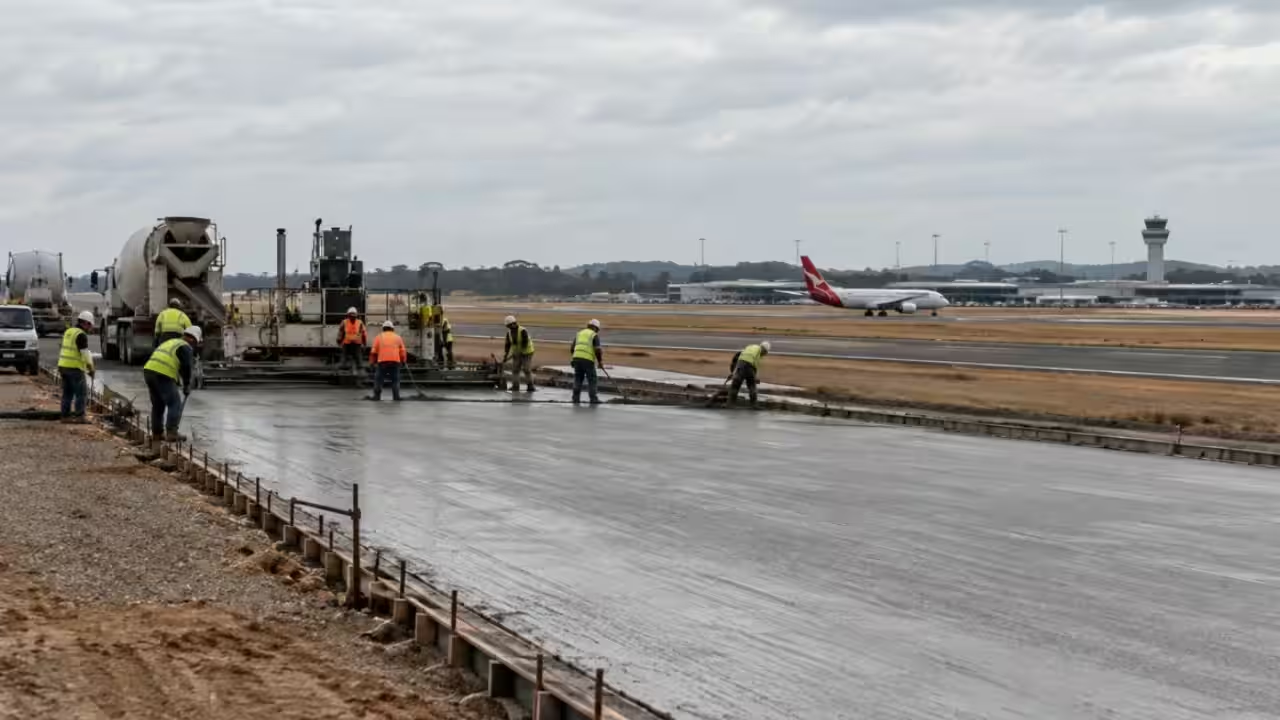
In 2014, Queensland, Australia, engineers tested a specially developed geopolymer concrete mix before incorporating it for heavy-duty aircraft pavement at Brisbane West Wellcamp Airport. This trial involved 10 individual pours, each one five metres wide and 50 metres long, on a private hangar pavement outside the airport boundary, east of the runway. The aim was to establish whether the material could meet the project’s specified performance requirements and be placed using a slip-form paving machine. After a successful experimental phase, the concrete mix and construction method were approved for the Wellcamp project. Subsequently, the airport became a major commercial-scale application of geopolymer concrete, with around 40,000 cubic metres used across the wide construction project.Why engineers decided to test geopolymer concreteConventional concrete generally uses Portland cement as its principal binding ingredient. Cement production involves high-temperature processing and releases carbon dioxide, thus making it a significant source of industrial emissions. Geopolymer concrete provides an alternative binder system that uses chemically activated aluminosilicate materials. Based on the formulation, these can include industrial by-products like fly ash and ground granulated blast-furnace slag. The environmental benefits vary with the ingredients, chemical activators, manufacturing process and transport requirements, so they cannot be assumed to be identical across all geopolymer products.For Wellcamp Airport, geopolymer concrete, known as Earth Friendly Concrete (EFC), was supplied by Australian construction company Wagners. Pavements capable of withstanding the substantial loads and stresses associated with aircraft movement, especially in turning areas, taxiways, and apron surfaces, were required for this project. Therefore, engineers needed to assess not only the material’s strength and shrinkage but also whether it could be transported, placed and compacted reliably using the proposed method of construction. The trial was designed to test the specific EFC mix and paving process intended for the project.10 pours tested the mix and construction methodBetween May and July, the trial took place on a private hangar pavement outside the airport boundary. This pavement allowed engineers and contractors to assess the mix under construction conditions before proceeding with the main airport pavement works.Prepared by consulting engineers ACG, the project specification set two crucial performance criteria: an average flexural strength of 4.8 megapascals at 28 days and a maximum drying shrinkage of 450 microstrain at 28 days, as noted in the project’s paper. Flexural strength measures concrete’s ability to withstand bending stresses, which are relevant to rigid pavement under heavy loads. Furthermore, shrinkage is considered important because excessive contraction can contribute to cracking.In addition to this, the trial examined the practical challenges of producing, delivering and placing EFC. The material needed to retain suitable workability during transport and remain compatible with the slip-form paving equipment. According to the project paper, the trial phase helped resolve construction challenges, following which the mix and paving method were approved for use on the airport project.From trial pavement to heavy-duty aircraft surfacesAfter the successful testing, construction moved to the airport’s main pavement areas. During August and September 2014, work on the aircraft turning node took place. This was followed by apron construction from October into early November. The project used heavy-duty EFC pavement approximately 435 millimetres thick in the aircraft turning areas, with geopolymer concrete also used in the taxiway and apron pavement.The trial was only one part of a much larger construction effort. The project report indicates that about 40,000 cubic meters of geopolymer concrete were employed at the Wellcamp Airport, amounting to about 100,000 tonnes. The company identifies the airport as one of the notable projects which have seen the use of EFC, with an estimated reduction in carbon emissions of around 6,600 tonnes for the whole project. Wellcamp Airport began commercial operations in November 2014, with QantasLink operating its first commercial flights on November 17.You use AI every day. Now get your AI Quotient. Take the AIQ test.
Topics in this story
Gathered from external sources. Rights to this text belong to whoever originally published it.