10 years after Sinjar, the world still fails to protect vulnerable communities
Reflecting on the ten-year anniversary of the ISIS genocide against the Yazidi people in Sinjar, Cudi Zerey argues that true protection requires proactive early action, locally trusted security, political agency for survivors, and sustained reconstruction efforts.
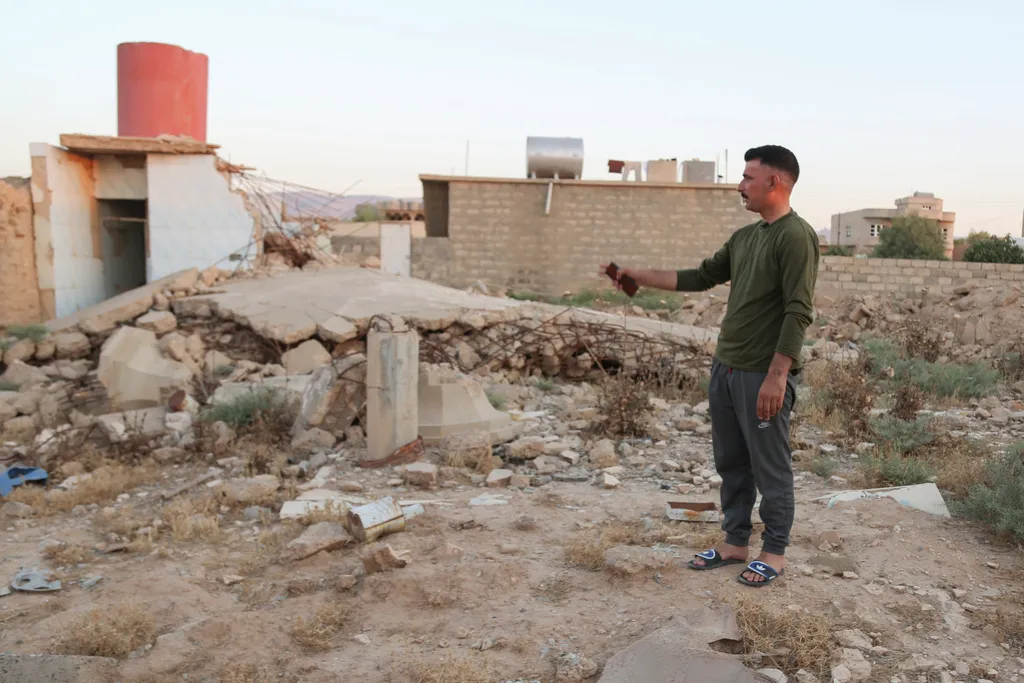
On Aug. 3, 2014, fighters from the so-called Islamic State in Syria and Iraq swept into Sinjar, the ancestral homeland of Iraq’s Yazidi minority. Within days, thousands were killed, thousands more were kidnapped and enslaved, and entire communities were uprooted. The United Nations would later recognize these crimes as genocide . Yet a decade later, the most important lesson of Sinjar remains largely unlearned.
The failure was not simply that ISIS committed atrocities. The failure was that nearly every layer of protection collapsed at the same time. Local security arrangements failed. Political authorities failed. International actors reacted only after mass violence had already begun . And even today, many Yazidis remain displaced , while Sinjar continues to struggle with insecurity, contested governance and insufficient reconstruction.
Too often, policymakers discuss atrocities as if the central challenge is how to respond once the killing starts. Sinjar demonstrates a different reality: By the time emergency intervention becomes necessary, protection has already failed.
This pattern is hardly unique to Iraq. Around the world, vulnerable communities continue to live in fragile environments characterized by weak governance , contested authority, armed competition and rising extremist violence . Far less attention is devoted to preventing vulnerable populations from becoming trapped in catastrophe in the first place. The first lesson from Sinjar is therefore that early warning means little without early action.
Before ISIS captured Sinjar, the group’s ideology, territorial expansion and hostility toward minorities were already widely known. Yet warnings were not translated into effective preventive measures for the Yazidi population. Governments and international organizations frequently produce risk assessments, conflict forecasts and atrocity warnings . But warning systems do not save lives by themselves. Without contingency planning, evacuation mechanisms and clearly defined triggers for preventive action, early warning risks becoming little more than documentation of a future failure.
A second lesson is that protection must be locally legitimate. One of the overlooked dimensions of Sinjar is that security arrangements existed on paper but proved unreliable when tested by crisis. The presence of armed actors is not the same as genuine protection. Vulnerable communities need security institutions they trust and believe will remain committed when violence escalates. In many contemporary conflicts, minority groups are expected to rely on external security guarantees provided by actors whose priorities may change quickly. Protection depends on whether communities believe those troops will act when needed.
The third lesson is that vulnerable communities require political agency, not merely physical protection. The Yazidis were not simply passive victims waiting to be rescued. Like many threatened minorities, they possessed local knowledge and leadership structures. Yet decisions affecting their future were often made by others. Too often, protection policies treat endangered communities as objects of international concern rather than partners in protection. This not only undermines legitimacy but also disregards local knowledge that can strengthen prevention, resilience and recovery.
Justice constitutes a fourth lesson. Accountability remains essential, but justice after atrocity cannot be reduced to criminal prosecutions alone. Survivors need recognition, support, legal protection and opportunities to rebuild their lives . Many Yazidi survivors continue to face the consequences of displacement, trauma and social disruption years after ISIS lost territorial control. If protection ends when the shooting stops, then protection was never truly achieved.
Finally, reconstruction is itself a form of security. A community cannot recover if roads remain unsafe, schools remain closed, public services remain absent and political uncertainty discourages return. The military defeat of a perpetrator does not automatically restore the security of those who suffered from its crimes. For many Yazidis, displacement remains a present reality . Sustainable return requires safety, governance, representation, livelihoods and functioning institutions .
Ten years after Sinjar, remembrance alone is not enough. Every anniversary brings statements of solidarity and promises that such crimes must never happen again. But declarations are easy. Building protection systems that act before communities are abandoned is much harder. The world often measures success by how quickly it responds to atrocities. Sinjar suggests a different standard. Success should be measured by whether vulnerable communities receive protection before mass violence begins, whether they have a voice in decisions affecting their future and whether they can return home safely after conflict ends.
The Yazidi genocide was not only a tragedy of the past. It remains a warning for the future. The lesson of Sinjar is that warning signs are often visible long before mass violence begins. Governments and international organizations already possess many of the tools needed to protect vulnerable communities. What remains missing is the political will to act before catastrophe unfolds. Ten years after Sinjar, preventing the next atrocity will require moving protection from rhetoric to action.
Cudi Zerey is a management consultant specializing in public-sector and defense transformation and a doctoral researcher at the University of Vechta. His research focuses on climate security, resilience, sustainable armed forces, and military transformation.
Topics in this story
Gathered from external sources. Rights to this text belong to whoever originally published it.