Germany turned apartment balconies into tiny solar power plants; more than 550,000 systems are now helping renters generate their own electricity
Rest of World News: Across Germany, solar power is showing up in an unlikely place: apartment balconies. Small panels are being fixed to railings and walls, giving renter.
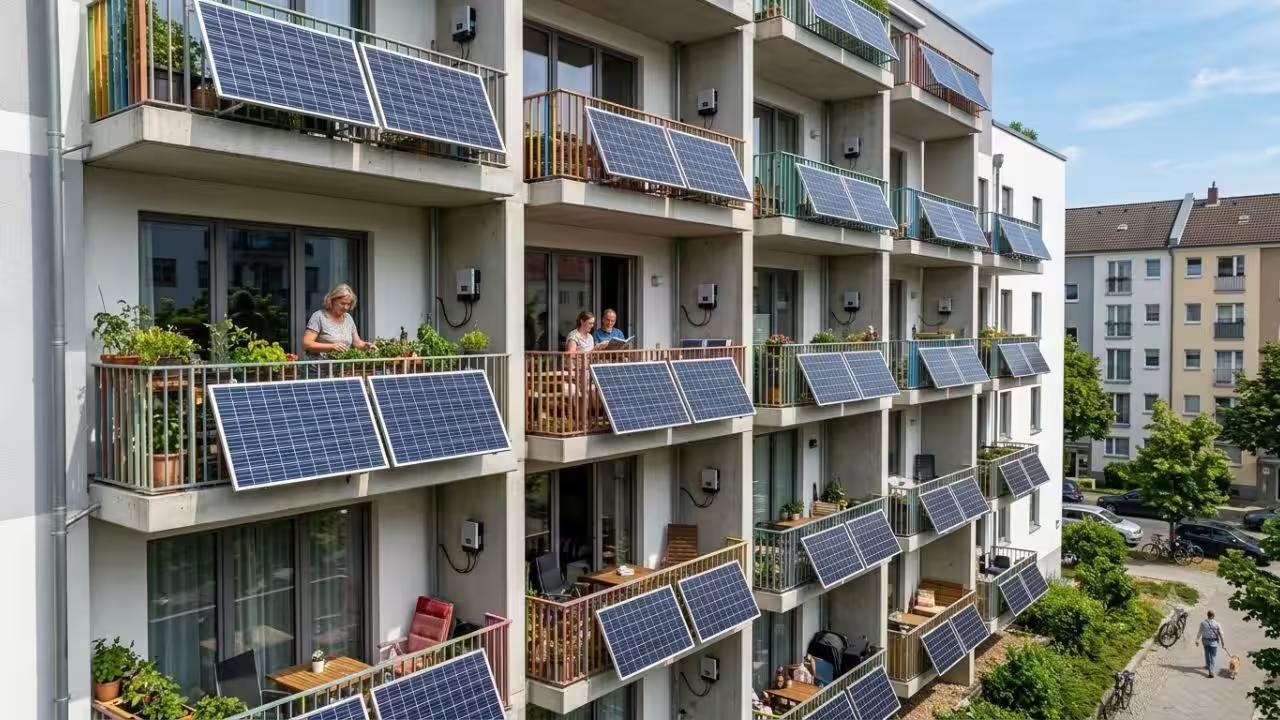
Across Germany, solar power is showing up in an unlikely place: apartment balconies. Small panels are being fixed to railings and walls, giving renters a way to generate some of their own electricity without owning a house or installing a rooftop system. Known as Balkonkraftwerk, or “balcony power plant”, these compact setups can be bought for around 500 euros and connected to an apartment through a plug-in microinverter. What began as a niche idea has grown rapidly, with more than 550,000 systems recorded across the country by 2024.Changes to technical rules, simpler registration and new protections for tenants helped remove some of the barriers that had kept the technology from spreading. The systems are not large enough to transform Germany’s energy supply, and their financial savings vary with sunlight and orientation. But on a household level, they offer renters a practical way to produce a little electricity themselves.Germany turned balconies into mini solar power stationsThe German term Balkonkraftwerk roughly translates as “balcony power plant”. The name sounds grander than the equipment itself.A typical setup consists of one or two solar panels attached to a balcony railing or wall, along with a microinverter. The panels generate direct-current electricity, the inverter converts it for household use, and the system sends the power into the home's electrical circuit.For someone living in a detached house, rooftop solar is the obvious route. Apartment residents have a different problem. They may have plenty of sunlight reaching their balcony but no control over the roof above them.That distinction helps explain why balcony systems found an audience in Germany. They offered renters a way around one of the biggest barriers to household solar: ownership of the building.According to Grist (an American non-profit online magazine), the hardware was also relatively inexpensive. Around 500 euros, or roughly $550 at the time, could buy a basic system. Installation was far less involved than fitting a conventional rooftop array, making it something closer to a household appliance than a major building project.The 2019 rules opened the door for plug-in balcony solarBalcony solar had existed for years before it became a mainstream product. The turning point came when Germany began changing the rules around small plug-in photovoltaic systems.Technical regulations introduced in 2019 allowed these devices to use standard electrical plugs and supply electricity to the household grid. That gave manufacturers and campaigners a clearer framework in which to sell and promote them.The growth was gradual at first. Then several things happened at once.During the pandemic, people were spending much more time at home, and small DIY projects became common. Rising electricity prices following Russia's invasion of Ukraine added another reason to look for ways of reducing household energy costs.The result was a rapid rise in installations. About half of the more than 550,000 systems recorded by 2024 had been installed during 2023 alone. In the first six months of 2024, balcony photovoltaic capacity added up to about 200 megawatts.Simpler rules and subsidies opened balcony solar to more rentersThe equipment itself was only part of the story. Germany also began removing some of the administrative obstacles surrounding balcony solar.In April 2024, the federal government simplified registration and permitting requirements. A few months later, lawmakers approved changes giving renters greater protection against landlords simply refusing a balcony solar installation.That matters in a country where more than half of the population lives in rented accommodation. A rooftop system can involve questions of ownership, building structure and access. A small panel attached to a balcony creates a different set of issues, but landlords can still object to alterations to their buildings.Some German cities have gone further by offering financial assistance. Berlin, Kiel and other local authorities have provided subsidies designed to encourage residents to install small photovoltaic systems.The policy approach has therefore worked on several fronts: make the equipment relatively simple, reduce paperwork, protect tenants and, in some places, help cover the purchase price.An 800-watt limit keeps balcony solar small but usefulIt would be easy to assume that hundreds of thousands of balcony systems must be making a major contribution to Germany's electricity supply. They are not.The individual systems are simply too small. German regulations at the time limited balcony solar installations to 800 watts. That is enough to run or offset part of the electricity demand from small household appliances, but it is nowhere near the output of a conventional rooftop array.For individual households, the savings can still be worthwhile. Matthias Weyland, who has two panels on his apartment balcony, paid around $530 for a system rated at 600 watts. He estimated that it would reduce his annual electricity costs by roughly $100, giving him a payback period of about five years.A south-facing balcony with little shade can generate considerably more useful electricity than a shaded installation facing in an unfavourable direction. The number of panels, the position of the balcony and local weather all affect the result.Peter Stratmann of Germany's Federal Network Agency estimated that a relatively large, well-positioned balcony system in a sunny south-facing location could supply around 15 percent of a household's electricity.The panels bring electricity generation into view at homeThere is another effect that is harder to measure on a national energy chart. Balcony solar makes electricity visible.For most households, electricity arrives invisibly through a socket. A person switches on a washing machine and rarely thinks about whether the power being used was generated by a coal plant, a wind turbine or a solar panel hundreds of kilometres away.A balcony array changes that relationship. On a bright afternoon, the panels are producing power right outside the apartment.Because the systems generally do not include batteries, the timing matters. Electricity generated during the day is most useful when it is consumed at roughly the same time. That can encourage owners to run appliances when their panels are producing.Some systems come with apps showing how much electricity has been generated. Owners can watch the output rise and fall with the weather, and compare their production from one day to another.For some households, that has turned into a small daily ritual. The amount generated becomes something to check, share and compare.It also makes energy consumption less abstract. A washing machine running in bright sunshine has a visible connection to the panels outside.Why Germany has embraced balcony solar so stronglyThe technology is not exclusive to Germany. Balcony systems have become increasingly visible in countries including Austria, France and the Netherlands.Germany, however, has developed an unusually large market for them.Part of that comes down to housing. A large share of the population lives in apartments, meaning there is a substantial group of people who may want solar power but cannot simply install panels on a roof.There is also the country's longer-running push towards renewable energy. Small photovoltaic systems fit neatly into that effort because they allow households to participate without waiting for a major building project.The emotional appeal is surprisingly straightforward, too. The panels provide something people can see and control.A household may not be able to influence the national electricity mix, but it can put two panels on a balcony and watch them generate electricity.That is a modest form of energy independence rather than anything approaching off-grid living.Solar panels sparked disputes over safety, appearance and landlord approvalSome landlords and property managers have raised concerns about the appearance of panels on apartment buildings, while others have questioned electrical safety or demanded additional inspections before allowing installations.Weyland encountered that problem himself. His property management company imposed requirements he considered unreasonable, including a formal inspection of the building's electrical system.The dispute ended up in court. In October 2023, a German court ruled in his favour, allowing the balcony system to be installed.Disagreements between tenants and landlords over balcony solar continued to appear even as the federal government moved to make installations easier. The legal changes introduced in 2024 were intended to give renters a stronger position, reducing the ability of landlords to block systems without good reason.Catch the latest World News and Live updates. Download the TOI app.
Topics in this story
Gathered from external sources. Rights to this text belong to whoever originally published it.