Another endless war? Saudi Arabia prepares for prolonged fight against Yemen's Houthis
Saudi Arabia is preparing for a conflict with Yemen's Houthi rebels that could continue for up to six months, extending into next year, as the kingdom
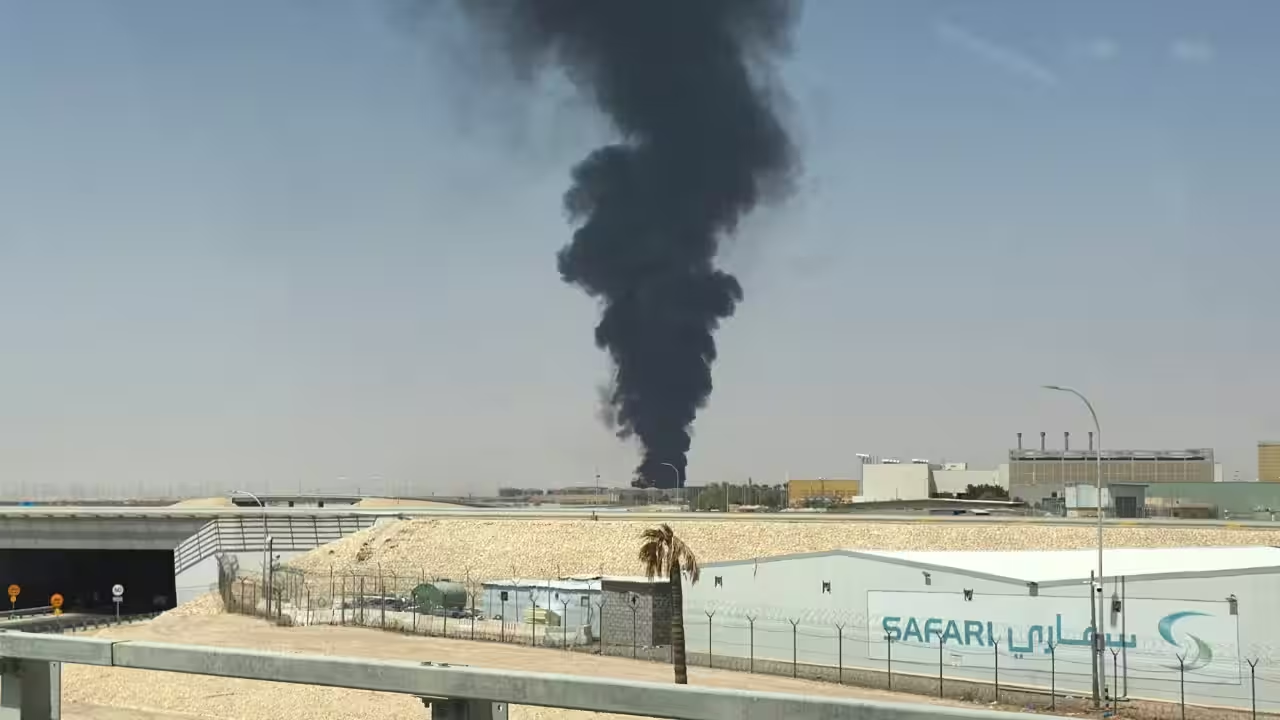
Saudi Arabia is preparing for a conflict with Yemen's Houthi rebels that could continue for up to six months, extending into next year, as the kingdom seeks to reverse battlefield setbacks and contain attacks on its territory, according to three sources familiar with its plans.Two Western officials briefed by Saudi counterparts said Riyadh expects the campaign to continue for several months, with the aim of securing gains on the ground through its Yemeni allies before entering negotiations with the Houthis. A third source familiar with the plans confirmed their accounts. All three spoke on condition of anonymity to discuss private conversations with Saudi officials, Reuters reported.The third source said Saudi Arabia believes that US offensive support for its operations in Yemen, which the administration of President Donald Trump has so far withheld, could alter the course of the conflict and allow Saudi-backed forces to make the desired territorial gains within weeks.The sources also said that an agreement to end the wider war involving Iran could lead to a reduction in fighting in Yemen.The renewed conflict has become the most active front in the wider Iran war, killing and injuring thousands and displacing hundreds of thousands of people in Yemen. It has also disrupted Saudi Arabia's efforts to attract non-oil investment and host major international events.Battlefield setbacks for Saudi-backed forcesSaudi Arabia entered the Yemen conflict in 2015, leading an Arab coalition that sought to restore the country's government to power after the Houthis seized the capital, Sanaa, and large parts of the country. The fighting resulted in a bloody stalemate before a ceasefire was reached in 2022. The truce held until the conflict resumed this summer.Since fighting restarted, the Houthis have seized the Red Sea coast and the strategically important Bab el-Mandeb Strait from forces backed by Saudi Arabia. They have also encircled Taiz, a city in the highlands overlooking Aden, the government's temporary capital on Yemen's southern coast.Yemeni government forces launched a counteroffensive last month and recaptured territory around the strait. However, they withdrew over the past weekend to protect Aden, marking a setback for the Saudi-backed side.Saudi and Yemeni forces are now reorganising to defend Aden against further Houthi advances. They are also considering shifting their offensive towards eastern fronts, where they have made some progress or managed to hold their positions, one of the Western officials said.Saudi Arabia announced on Monday that it had replaced the commander overseeing the Saudi-led coalition. Yemen's government is also expected to reshuffle its military leadership, according to two people familiar with the plans.Saudi Arabia shifts public messaging on warSaudi Arabia had previously sought to portray the renewed conflict as an internal Yemeni issue, with the kingdom supporting its allies in Yemen while defending itself against cross-border attacks, rather than presenting itself as a direct party to the war.However, repeated attacks on Saudi cities have made that position increasingly difficult to maintain. The kingdom has gradually begun acknowledging the conflict and its domestic impact through public statements and messaging in the media and mosques.A Houthi attack last week tore a large hole in the headquarters of state oil company Aramco in Riyadh. A series of deadly strikes on the Saudi capital's airport has also kept it closed to most flights since October.The disruptions have led to the cancellation or postponement of major events, including the flagship Future Investment Initiative (FII) conference. The AFC Asian Cup, a key event in Saudi Arabia's efforts to establish itself as a major destination for international sport, has also been postponed from January 2027 to December of the same year.Since last month, Saudi authorities have been issuing regular alerts ahead of attacks, followed by more detailed statements about the incidents. This marks a shift from their earlier approach of releasing comparatively limited information.Although laws criminalising the distribution of images of attack sites have restricted the circulation of such footage, the deputy governor of Riyadh visited the Aramco Tower two days after it was hit, and state media broadcast images showing the damage.The shift in public messaging has also extended to mosques, where the government guides the themes of sermons that generally focus on everyday issues such as marriage and good neighbourliness.Last Friday, the conflict with the Houthis dominated the sermon at one of Riyadh's larger mosques. The imam promised fighters "victory or martyrdom" and offered prayers for Saudi soldiers stationed along the kingdom's southern border."Oh Allah, guide their aim and steady their feet, and grant them victory over those who show them hostility," he said.Strategic importance of Bab el-Mandeb StraitYemen, a mountainous and largely impoverished country with a heavily armed and tribal society, lies in the south-western corner of the Arabian Peninsula. It has two coastlines, one facing the Indian Ocean and the other the Red Sea.The port city of Aden, once a prosperous trading centre, lies along the Indian Ocean coast. On the Red Sea side is the Bab el-Mandeb Strait, a narrow maritime passage at the southern entrance to the waterway. Its name translates into English as the "Gate of Tears".Control of the strait carries significant strategic importance because it allows the holder to threaten maritime traffic travelling between the Mediterranean, the Red Sea and the Indian Ocean.You use AI every day. Now get your AI Quotient. Take the AIQ test.
Topics in this story
Gathered from external sources. Rights to this text belong to whoever originally published it.