Why children lie and it is important they do
Parents may be annoyed when their kids lie but experts explain why it is part of their development.
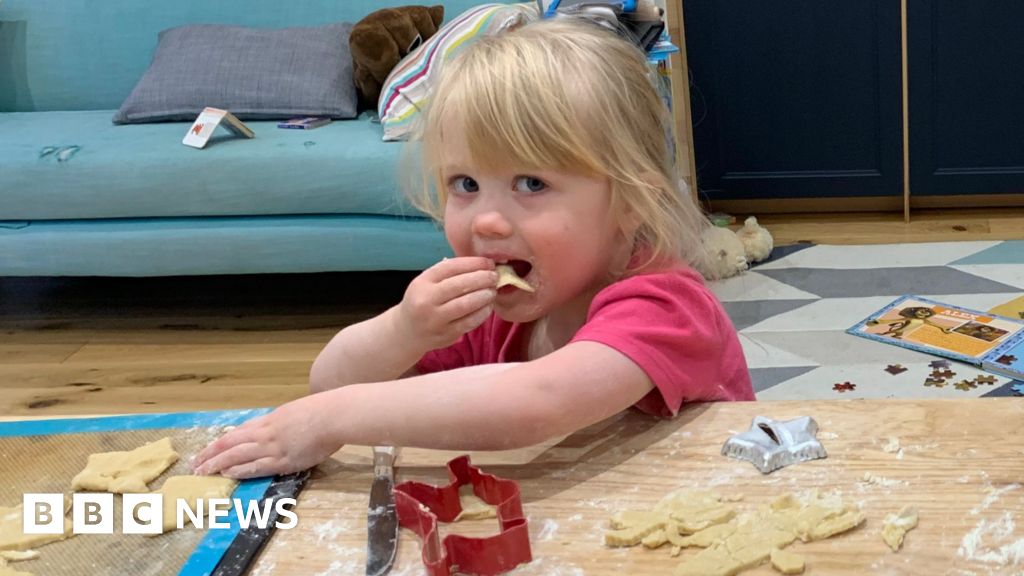
When drawings appear on the wall or biscuits disappear from the tin, your child might blame the dog or claim there was a ghost - even if they are clutching crayons or covered in crumbs.
Children telling fibs is something most parents experience, but such dishonesty and deception is an important part of mental development.
"It's actually a skill that they're developing and that they will play with in order to get better," clinical psychologist Dr Jade Redfern tells the CBeebies Parenting Download podcast.
Here, experts explain why learning to lie is a sign of healthy behaviour - and how to help encourage honesty.
Young children aren't quite sophisticated enough to lie, says Redfern, but they are capable of deception before the age of one.
One of the studies mentioned on the podcast comes from the University of Bristol , which found that around a quarter of children appear to understand some form of deception by the time they are ten months old.
Prof Elena Hoicka, who led the study, says it was fascinating to see how "surprisingly young" kids could be so adept and cunning, including her own.
"As a mother of three, I can certainly vouch for how artful and wily they can be.
"Hiding under the table or in the bathroom to eat sweets or chocolate is their common ploy."
Hoicka says that the kind of deception a child uses from the age of two is quite basic - like pretending not to hear their parent or denying they've done something.
"It could also extend to doing forbidden activities in secret," she says. "For example, looking in a bag they were told not to look in when no one is apparently watching, or making excuses, such as claiming to need the toilet when asked to tidy up."
By the age of three, they have become much more proficient and creative in their deceptions, showing a deeper understanding of language and how other people's minds work.
She says they also start to withhold information. For instance, truthfully telling their parents that their sibling has hit them but omitting the fact that they hit their sibling first.
These deceptions are a sign of them developing something Redfern calls "theory of mind".
"As children grow up, we want them to learn and develop the skill that they are their own human being with a separate mind and intentions," she explains.
"This is how [they] develop the skills in empathy, or being able to think about another person's thoughts and feelings that might differ from their own."
Another reason a child might lie is self-preservation as they don't want to upset or disappoint their parent.
"All human beings are driven by attachment," says Redfern. "[Children are] driven by being able to preserve that relationship with their caregivers as they depend upon it."
Early on, they learn what brings them closer to their caregiver and what pulls them apart, she says. With this in mind, Redfern thinks you can encourage honesty by creating a safe environment for a child to tell the truth.
"[We] have to think about ways we can help children feel safe enough to tell us the truth [when] they've made a mistake... and they don't want to disappoint us."
This is something Rachel Duffy, who won the latest series of The Traitors, tells the CBeebies Parenting podcast the she has been trying to do.
The mum-of-three recalls one occasion when her eldest son borrowed his brother's bike and broke it after crashing it into a car. Initially, he tried to lie about what happened.
"I said to him, 'You'll not get into big trouble when you tell me the truth.' I just left and gave him a little space.
"And he went, 'Yeah, that was me.' And then he knew that space was safe. We had a conversation - no raised voices, no roaring or shouting."
Redfern says this is a good example of how to deal with such a situation and that there are occasions when a lie, or nuance, might be appropriate - such as when they receive a gift they don't want or describe other people physically.
"My kids delightfully told me recently that I was very wrinkly," she says. "Again, I try to take it with open curiosity."
She does this by talking about why they think she is wrinkly.
"I think just being able to explore as children get older, just having open, curious conversations - it really develops empathy for somebody else's feelings when they've been shown and modelled empathy over and over again."
'You're triggering me': How to understand your therapy-speak teen
Your child wasn't invited to the party - here's how to handle the disappointment
A cemetery felt too far away, so we created our own memorial garden at home
Topics in this story
Gathered from external sources. Rights to this text belong to whoever originally published it.