Council of Europe head revives Biden-backed framework for AI regulation
The Biden administration and a number of countries in Europe have endorsed a framework for AI regulation that respects human rights, democracy and the rule of law, but it is generally unheard of outside of the little-known European organization that drafted it. Alain Berset is the secretary-general of the Council of Europe, an important but…
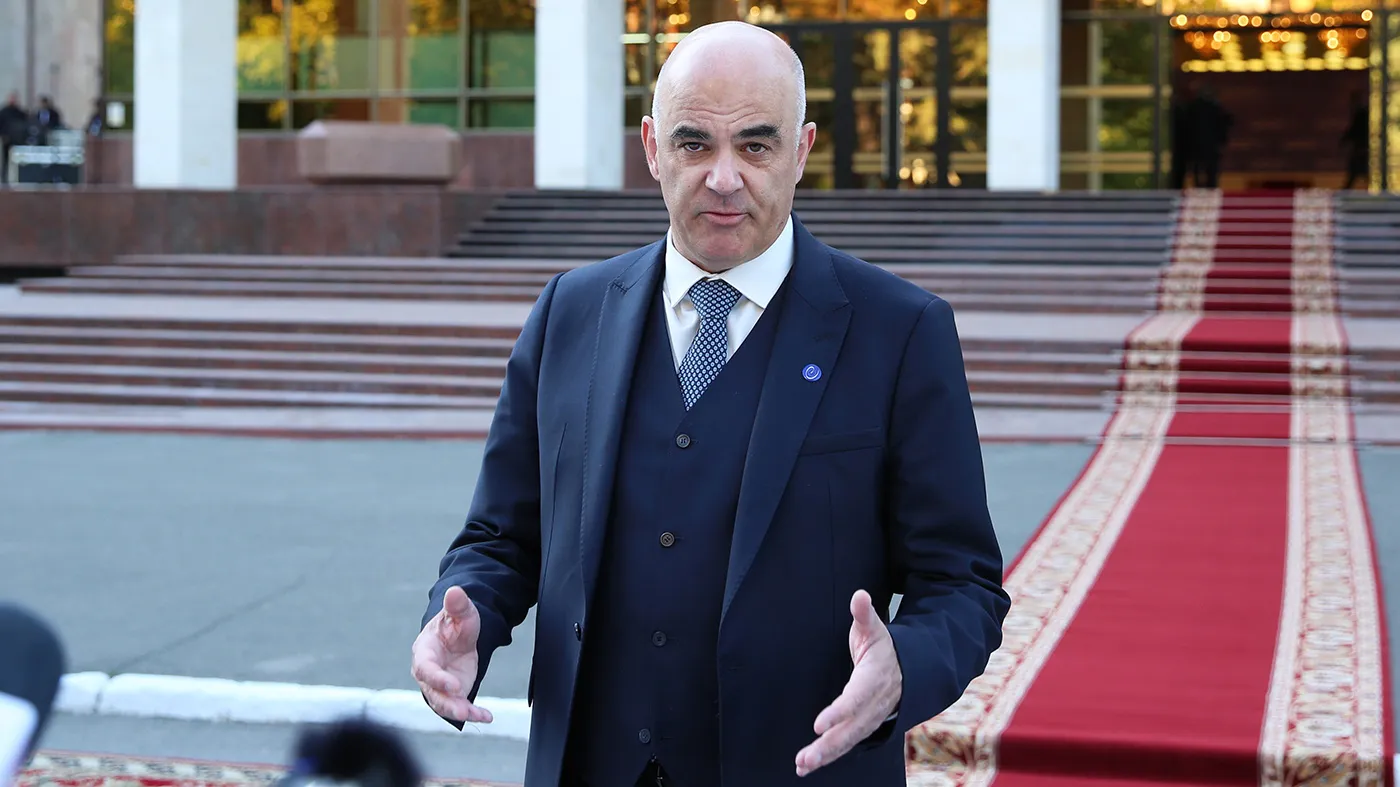
The Biden administration and a number of countries in Europe have endorsed a framework for AI regulation that respects human rights, democracy and the rule of law, but it is generally unheard of outside of the little-known European organization that drafted it.
Alain Berset is the secretary-general of the Council of Europe, an important but relatively unknown independent organization of 46 member states and based in Strasbourg, France.
Berset, a former president of Switzerland, is trying to change that and bring some attention to his organization. He carried out an inaugural visit to Washington, D.C., last week and met with lawmakers on Capitol Hill, think tanks and journalists.
Part of his message was promoting the Framework Convention on Artificial Intelligence, a treaty published in September 2024 that was signed by the former Biden administration along with 20 other countries, including Japan and Israel, as well as a number of countries in Europe and the Americas.
The framework is a legally-binding document but has only been ratified, so far, by the European Union — and only recently, in May 2026.
But President Trump’s rejection and criticism of any regulation surrounding AI represents one of the biggest hurdles toward trying to convince other countries to take seriously dire warnings from tech companies and others about the destructive power of the advancing technology.
“I do not see any alternative to a strong, I would say, involvement of states,” Berset said when asked about the challenge of rallying international cooperation in what is generally viewed as a major arms race.
He argues the framework, already drafted and agreed, provides a starting point.
“For the first time, we have specialists telling us that this revolution could destroy humanity in a few years. This should be a quite hard wake up call for all of us, to say, ‘OK, what do we propose for this?’ … And the framework convention is exactly that,” he said.
Berset’s advocacy in Washington, D.C., came after a stop in New York to the United Nations General Assembly, where the Council of Europe opened a permanent observer office to the U.N.
The point of the office is to expose the council to a larger audience and raise the visibility of its work on human rights, democracy and the rule of law — with AI being a dominant topic.
Last week, AI leaders urged the United Nations Security Council to put restraints on their companies , warning of a real and imminent threat to humanity.
The global reach provided by the U.N. presents an important venue for the council to promote its Framework on AI, providing a structure grounded in human rights, democracy and rule of law, Berset said at the opening of the council’s office at the U.N.
“Our task is to connect these strengths,” he said.
The council is one of Europe’s oldest human rights organizations, created in 1949 in the aftermath of World War II and the horrors of the Holocaust. One of the first treaties established by the council was the European Convention on Human Rights, a legally binding document enforced by the European Court of Human Rights.
The council has drafted approximately 200 treaties, and Berset said the court has taken one million decisions — making it a valuable resource for justice, accountability and resolution.
What also makes the council unique is that membership is not limited to European Union member countries. Its 46 member states also include aspiring EU-countries, like Turkey and Ukraine, and observer states like the U.S., Canada, Mexico, Japan and the Holy See.
“We have created the biggest common legal space that exists in the world,” Berset said in a speech at the Hudson Institute.
“It’s not that visible but it’s extremely important for having this convergence, year after year, between the 46 members of the council of Europe.”
The council’s large membership and history in treaty drafting, pursuit of ratification and enforcement mechanisms make it a good starting point for conversations on AI, Berset argues.
“I think it is one contribution. It is not the only one, it will not be the only one, but it is one concrete contribution,” he told The Hill.
To naysayers against the Framework on AI, he urges other creative ideas but not to dismiss what has already been accomplished.
“I would be more than happy if you bring a better answer. We have at least one answer, we have one element. We have one framework where we are able to work together to follow this,” Berset said.
Topics in this story
Gathered from external sources. Rights to this text belong to whoever originally published it.