A 3,000-year-old ship-shaped stone grave was discovered in Sweden; four urns inside contained burnt human bones and a metal object
Europe News: Archaeologists discovered a prehistoric burial site near Domsten, north of Helsingborg, while monitoring work to replace the Öresund cables. The disco.
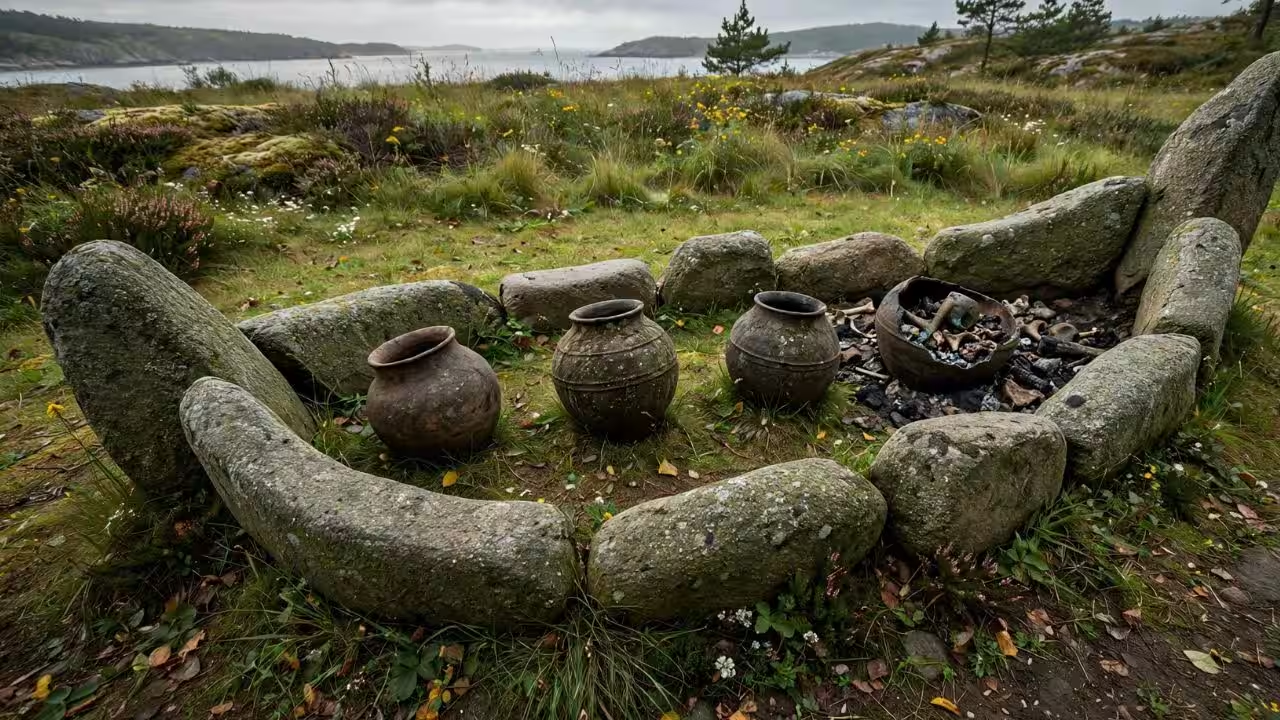
Archaeologists discovered a prehistoric burial site near Domsten, north of Helsingborg, while monitoring work to replace the Öresund cables. The discovery includes a stone structure shaped like a small ship, measuring about three metres long, as well as two circular stone structures. Four burial urns were also recovered from the site. X-ray images later showed burnt bones and a metal object in one of them. As per Sweden’s national transmission system operator (Svenska kraftnät), they are around 2,500 to 3,000 years old, which places them in the earlier Bronze Age or the early Pre-Roman Iron Age. Archaeologists discovered the site while monitoring work in an area where earlier graves had also been found. Further examination is planned for the autumn that could provide new clues about the people buried there.Ancient ship-shaped stone grave discovered near DomstenThe discovery was made during archaeological monitoring carried out in connection with Svenska kraftnät’s work on the Öresund cables. Archaeologists initially uncovered flint remains linked to older settlements. They later discovered a stone structure hidden beneath what appeared to be an ordinary stone mound. The structure consisted of a small, ship-shaped stone setting measuring around three metres in length. Two circular stone structures were also found alongside it. Archaeologists believe the site may originally have been covered with earth or peat, creating a low burial mound.How archaeologists estimated the age of the ancient remainsThe human remains have not yet undergone a full analysis, so archaeologists have estimated their age from the form and construction of the graves. The burial structures suggest that they belong to the earlier part of the Bronze Age or the transition to the Pre-Roman Iron Age, which places the remains roughly 2,500 to 3,000 years old.The discovery also adds to the archaeological evidence from the surrounding area. A separate group of graves found nearby in 2019 was dated to approximately 1400 to 1050 BC. The two discoveries are located around 100 metres apart.X-rays reveal burnt bones inside four ancient burial urnsFour burial urns were recovered during the excavation. The vessels were described as very well preserved and were almost completely intact when archaeologists removed them from the site. Their condition made it possible to remove all four as a whole for further examination. The urns were subsequently examined using X-rays. The images revealed burnt bones inside the vessels, along with a metal object in one of them. The findings indicate that the urns contain material that can now be studied in greater detail.What could further examination reveal about the Domsten gravesReportedly, archaeologists will examine the recovered material in greater detail, including the burial urns and their contents. The preserved bones may provide information about the people buried at the site, including estimates of their age and sex. Researchers will also examine the metal object identified by the X-rays and look for other possible grave goods. The discovery has also raised questions about the wider burial landscape around Domsten.Catch the latest World News and Live updates. Download the TOI app.
Topics in this story
Gathered from external sources. Rights to this text belong to whoever originally published it.