Fragments of Halley’s Comet, which comes after every 76 years, to light up the night sky this week: All you need to know
Skywatchers are in for an autumn celestial treat this week as debris from arguably the solar system's most famous cosmic visitor, Halley's Comet, streaks
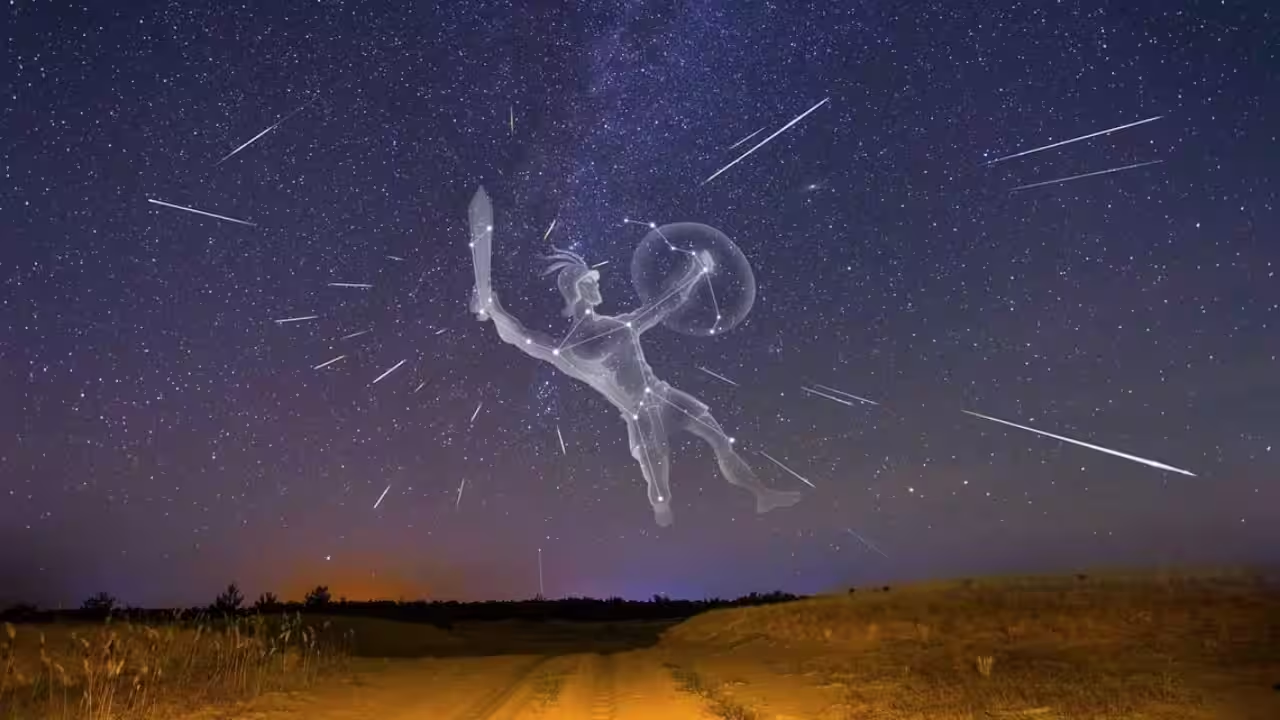
Skywatchers are in for an autumn celestial treat this week as debris from arguably the solar system's most famous cosmic visitor, Halley's Comet, streaks across the night sky in the annual Orionid meteor shower. While the comet itself only visits the inner solar system once every 76 years, tiny fragments left trailing in its ancient orbital path will collide with Earth's atmosphere, vaporizing into fast-moving “shooting stars.” Alongside the meteor shower, the stargazing calendar from Monday, October 19 through Sunday, October 25 features major planetary movements, including Venus transitioning between morning and evening skies and a close encounter between a bright waxing moon and Saturn.When and how to watch the OrionidsThe Orionids reach their peak activity overnight from Wednesday, October 21 into Thursday, October 22, capable of producing up to 20 shooting stars per hour under dark, clear skies, as per a report in Forbes. Notably, the prime viewing hours occur in the late overnight window just before dawn. The bright moon will set before the pre-dawn hours, leaving the sky dark right when the constellation Orion stands high overhead and North America directly faces the incoming debris stream.Other key planetary events this weekIn addition to the meteor display, skywatchers should circle Saturday, October 24 for two major planetary highlights. The first is Venus at Inferior Conjunction. On Saturday, Venus passes directly between the Earth and the Sun, officially ending its long presence as the brilliant “Evening Star.” While it will be completely lost in the Sun's glare on Saturday, Venus will emerge over the coming weeks in the eastern dawn sky to begin its cycle as the “Morning Star.”The Moon Meets Saturn: Also on Saturday evening, if you glance toward the southeast immediately after sunset, a 94%-lit waxing gibbous moon will appear in close proximity to Saturn. While the ringed planet sits a few weeks past its opposition, it remains easily visible to the naked eye and presents an outstanding view through backyard telescopes.Viewing advice for stargazingAs a bright moon dominates much of the week, faint deep-sky targets will be difficult to spot. Observers are advised to focus instead on prominent winter constellations. For example, the northeast sky will have “W” formation of Cassiopeia, with the cascading star stream of Perseus resting directly below it.Later in the evening, watch for the Pleiades (the Seven Sisters cluster) rising ahead of Taurus the Bull and its reddish anchor star, Aldebaran. Followed shortly after is Orion, recognized by its three iconic belt stars rising almost vertically from the horizon.You use AI every day. Now get your AI Quotient. Take the AIQ test.
Topics in this story
Gathered from external sources. Rights to this text belong to whoever originally published it.