A Norfolk woman inherited a homemade 1970s model village and grew it into a front garden attraction with more than 20 miniature buildings
Some hobbies start small and quietly take over.
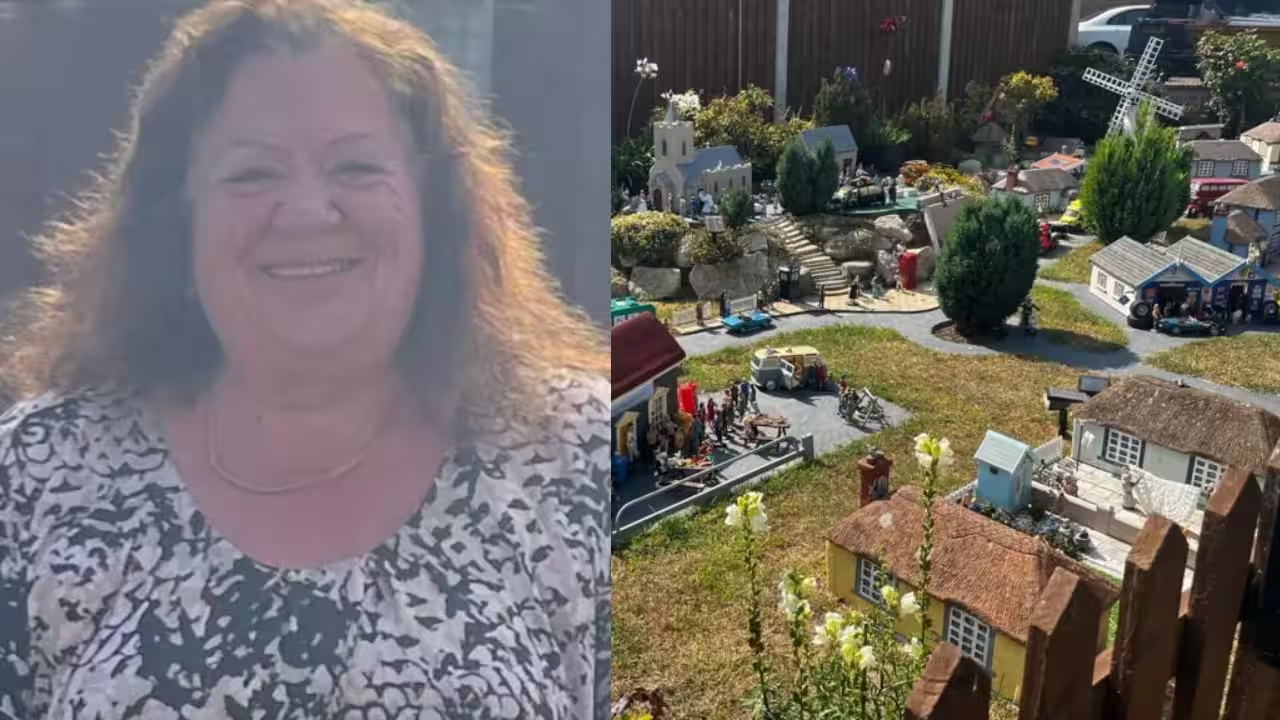
Some hobbies start small and quietly take over. For Jane High, it began with a love of miniature figures and ended with a front garden that draws smiles from passers-by. She was given a homemade 1970s model village, rebuilt it after it arrived in pieces, and has kept adding to it ever since. Today it has more than 20 tiny buildings, from a fish and chip shop to a windmill, plus some truly unexpected visitors. Read on to discover where this little village came from, how she brought it back to life, and why it makes so many passers-by smile.Meet Jane High, the Scratby woman who turned a 1970s model village into a quirky front garden attractionA front garden in Scratby, near Great Yarmouth in Norfolk, has become a quirky local attraction. According to the BBC, the garden belongs to Jane High, who was gifted a homemade model village from the 1970s four years ago. She has not simply preserved it; she has continued to add to it, and it now displays more than 20 tiny buildings. High told the BBC that the village started as a little hobby that has taken over, and that its purpose is to make people smile as they walk past. The report describes the project as giving the models a new lease of life, turning what was once a private garden display into something the whole neighbourhood can enjoy.Where the village began, Alan Sewell's concrete houses, moulds, and church in a north London gardenThe story begins long before Scratby. The village was originally in Alan Sewell's north London garden, where it was said to have been built by Sewell himself. He made moulds, concrete houses, and a church to display there. After Sewell died in 2006, his daughter inherited the village, and it was moved to Great Yarmouth. Concrete construction is a notable detail, because it suggests a project intended to last outdoors, and it helps explain how the village could survive a move. The report's careful wording, saying the village was said to have been built by Sewell, also reminds readers that homemade projects like this often rely on family memory rather than formal records, which makes the care shown by its new keeper all the more valuable.From painting figures in Great Yarmouth to rehoming a village, how Jane High's love of models beganHigh's affection for miniature worlds has its own backstory. She told the BBC that she was not into dolls or doll houses as a child, yet many years ago she tried her hand at painting model figures. She used to paint figures for the model village in Great Yarmouth, and she believes that is where her love of the hobby began, adding that she absolutely loves that village. After Sewell's village moved to Great Yarmouth, she passed it every day and thought it needed a bit of love and attention. When she met Sewell's daughter by chance, the two agreed that High was the right person to rehome it. The sequence shows how a hobby can lead naturally into a larger project, with small skills and shared enthusiasm eventually turning into a garden full of miniature buildings.Rebuilding a dismantled village, a summer of digging the lawn, laying concrete roads, and raising a hillMoving the village was no small task. It had to be dismantled before transport and arrived at High's house in Scratby in pieces, after which she spent a summer putting it all back together. Part of her front lawn had to be dug out so concrete roads could be laid. Nothing was wasted: everything that came out of the ground was piled into a big heap, and that heap became the hill on which the church now stands. The detail is a charming example of landscape thinking on a miniature scale, using the garden itself as raw material rather than hauling soil away. It also shows the effort behind the attraction, which relied on digging, rebuilding, and patience before a single visitor could stop to admire it.A fish and chip shop, a forge, a windmill, and Daleks, the quirky scenes that make visitors smileToday the miniature village plays out numerous scenes, including a 1960s garage, a forge, and a windmill. Fitting for a coastal setting, there is also a fish and chip shop. Not everything fits neatly together, High told the British Broadcasting Corporation that the village includes things that do not really belong, such as dinosaurs, Doctor Who figures, and Daleks, because children keep coming over. She explained that the unconventional mix is a response to her young visitors, who have effectively shaped the display. For High, the point is simple, "It just makes people smile when they come past." For readers looking for a reminder that small acts of creativity can brighten a street, a front garden in Scratby offers one.You use AI every day. Now get your AI Quotient. Take the AIQ test.
Topics in this story
Gathered from external sources. Rights to this text belong to whoever originally published it.