A rare barn owl family nested in a Manhattan water tower near Central Park, drawing nightly crowds to see a nest experts say is the first on record
A rare nesting of barn owls in a Manhattan water tower near Central Park has drawn crowds of bird-watchers and photographers, marking the first documented instance in the city. Learn more about this unique occurrence and the owls' status.
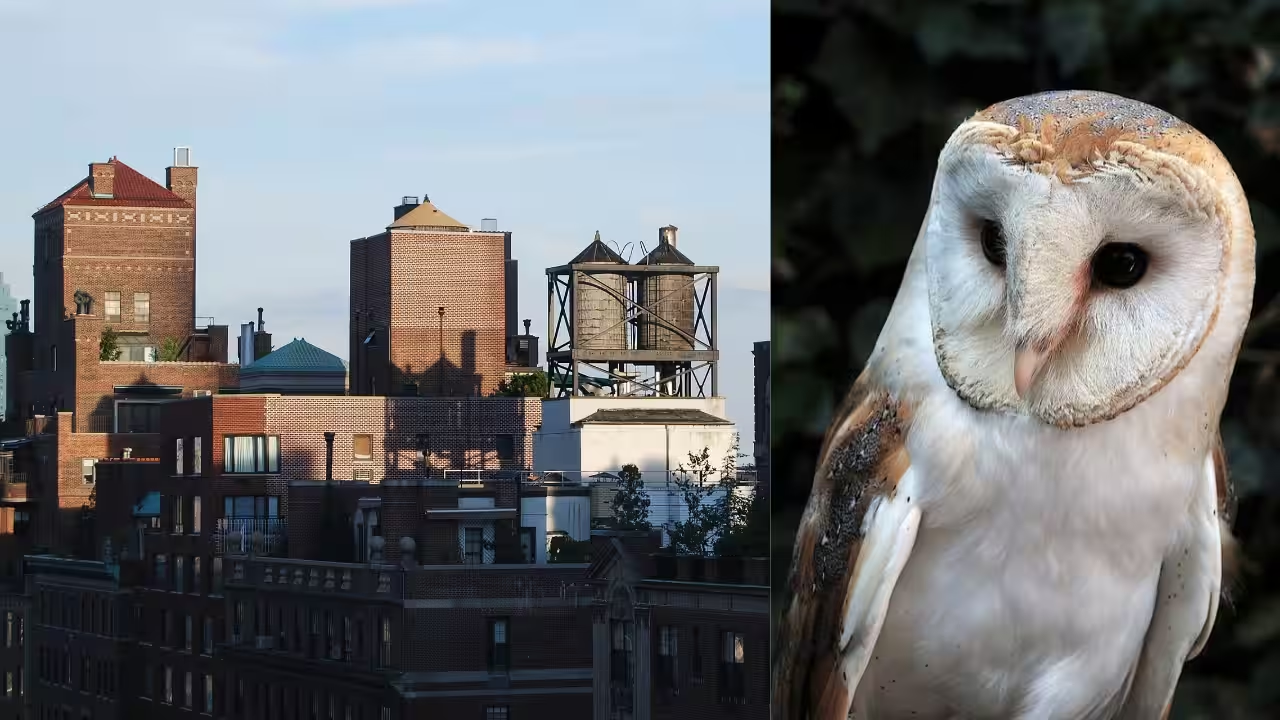
A family of barn owls has made a water tower atop a building on Manhattan’s Upper West Side their residence, and has been drawing bird-watchers and photographers to West 75th Street near Central Park, with ornithologists saying that it is the first documented instance of barn owls nesting in Manhattan in recorded history.Upper West Side resident Elisabeth Williams reported seeing several birds around the tower on October 6, 2026, which is when the owls came to wider public attention. Andrew Farnsworth, who is a migration ecologist at the Cornell Lab of Ornithology, told the Associated Press that birders had no previous record of a barn owl nest in Manhattan.Bird-watchers have counted at least five young owlsDavid Barrett, a Manhattan birder who runs the Manhattan Bird Alert account, said that he had seen at least one adult owl and five fledglings at the water tower, and had also observed an adult carrying rodents back to the site. Two adults are believed to be present, while some photographers have reported seeing at least six fledglings. The nest has drawn nightly crowds, which include people who had never actively watched birds before, and residents and photographers gather around dusk to view the owls when they leave for hunting. One local resident, Thomas Obersteiner, has also let photographers watch from his roof deck, and told the Associated Press that about 20 people had gathered there on one night. Barn owls are nocturnal, which makes them difficult to spot, and their pale faces and distinctive calls can make them conspicuous when they appear in an urban setting. Their usual nesting sites include barns, other buildings, and suitable cavities.Barn owls are rare across New York StateThe New York State Department of Environmental Conservation says that the American barn owl is rare across the state and has sharply declined over recent decades. New York lies near the northern edge of the bird’s range, and the agency’s 2024 species status assessment identifies open habitats such as grasslands, marshes and agricultural areas as breeding environments for barn owls, who also use cavities in barns and other buildings, cliff crevices and artificial nest boxes. The first New York Breeding Bird Atlas that covered 1980 to 1985 recorded barn owls in 126 survey blocks, and the second atlas, which covered 2000 to 2005, recorded them in 28 blocks. The survey blocks measure where a species was recorded, not the total number of individual owls.Most known nesting areas in New York are on Long Island and Staten Island, according to the state assessment, so a family breeding on the Upper West Side is therefore unusual according to regular urban standards, although just the sighting alone does not establish why the birds chose the water tower or whether they will return.Residents heard the owls before they saw themA few weeks before the nest became widely known, neighbours noticed strange screeching sounds, and Williams and her husband heard intermittent calls beginning in early September. Obersteiner said that he heard wailing noises for two or three weeks in mid-September but did not know they came from owls.Farnsworth told the Associated Press that barn owls use their screeches to communicate, and several residents initially mistook the sounds for a person in distress. The owls’ presence has since attracted people to the block most evenings, and their longer-term status at the site remains unclear; the available reports do not establish whether the family will remain in the tower after the young birds leave the nest.You use AI every day. Now get your AI Quotient. Take the AIQ test.
Topics in this story
Gathered from external sources. Rights to this text belong to whoever originally published it.