The Naked Shoe Is the New Naked Dress
The New York runways have revealed a foot fetish on the part of designers. What’s behind it?
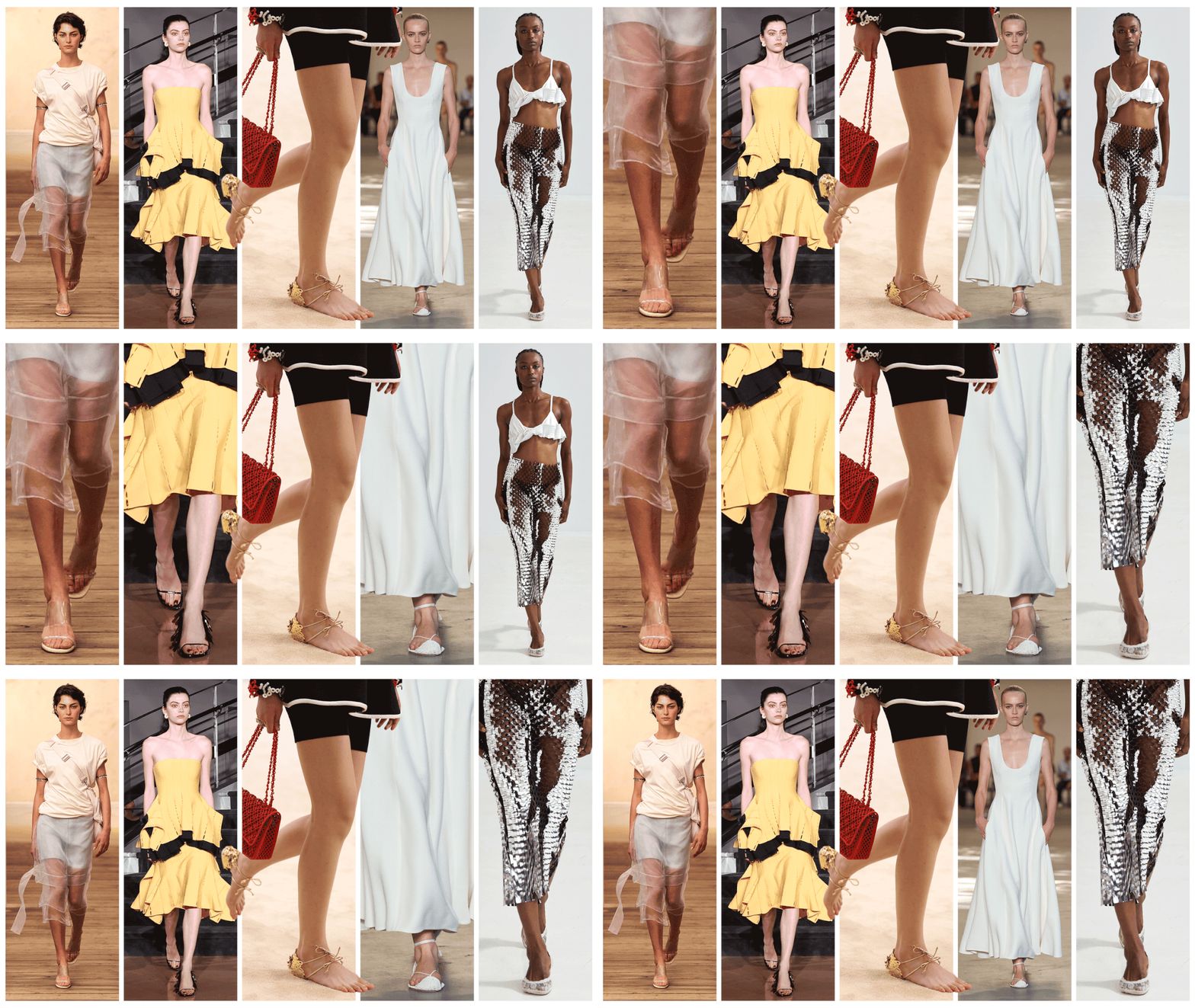
At Calvin Klein this season, Veronica Leoni harkened back to Mr. Klein's founding principles of radical minimalism. She stripped back any superfluous design, engaging only with what is "100% necessary." In the clothing, that ideal manifested as a simplified blazer, a whisper of a slip dress, a column-style pencil skirt—the best versions of the essentials. And in footwear, she gave us shoes that were barely shoes.
One pair, shown in different variations, featured a wickerlike base that wrapped up around the toe and heel, with thin laces snaking up and around the ankle. The construction left very little to the imagination—it's a naked shoe. And this deliberately austere, perhaps slightly freaky silhouette was by no means the only one of its kind this New York Fashion Week. Designers all over the place were finding new ways to reduce footwear to expose more of the foot.
At Proenza Schouler, Rachel Scott showed two pairs of stiletto heels, each with multiple iterations in which the shoe appeared to cling on by a strap around the toe and one around the heel. Her show was about the dissolution between formal and casual wear, and in the context of eveningwear specifically—these were multi-inch stilettos, after all—there's something quite casually sensual about a naked shoe, both in the way it elongates the leg and in its exposed nature.
At Area, Nicholas Aburn showed the lace camisole of footwear. He debuted a pair that looked like a lace-trimmed, nude, no-show sock with an invisible sole and tiny heel adhered to its base—and a secret clear strap across the top for extra security. It felt as if models were prancing around in a barely-there sock rather than a shoe at all.
Elsewhere, both Eckhaus Latta and Magda Butrym chose to style a number of looks with Maryam Nassir Zadeh's Olympia shoes. The style, which features a colorful wedge with two clear plastic straps around the foot, achieved renown when she launched it almost a decade ago.
And it's not just in New York. In recent seasons, the naked shoe has taken over the runways. Chanel sparked intense discourse after its Resort 2027 collection included a pair of half-sandals that only covered the wearer's heels, leaving the balls of the feet bare. For its Spring 2027 men's collection, Saint Laurent showed clear plastic, pointed-toe oxfords. More than anything else, these weird naked shoes have served as catalysts for conversation, particularly on social media. In the case of Chanel, practicality is a key concern, sure, but in other spaces, it's more about the dance between covering and revealing. There's an automatic air of perversion, kink even, when talking about the foot, one that's guaranteed to get people talking.
Is a move in this direction inevitable? In recent years, the flip-flop has become a dominant choice of footwear in urban settings as well as beachy ones. Perhaps the original mass-adopted naked shoe, it has been made by designers in different luxe materials in recent years. This is, perhaps, a step further, translating the barely-there ethos of the flip-flop into something more elegant, yes, but also more thought-provoking. But it still feels rather radical.
The runway offers space to experiment with these ideas, but how does this manifest in the everyday? For her Spring 2027 show this week, Daniella Kallmeyer put a leather thong sandal, with just one thin leather strap running between the toe and up to a fastening at the ankle, onto a little wedge heel. Less dramatic, sure, but it achieves a similar effect. Back at Calvin Klein, Leoni also offered a pair of what she dubbed "slightly naked shoes." At first glance, they're just a pair of pumps, but upon deeper inspection, the designer pulled the silhouette back as much as structurally possible to reveal what's underneath. The difference is subtle, but it stokes the coals of this idea just a little bit. Just enough to get you thinking.
Topics in this story
Gathered from external sources. Rights to this text belong to whoever originally published it.