Canada’s trade war with the US won’t end with tariffs
The recent escalation of the trade war with Canada identifies structural challenges in Washington’s supply chain resilience.
America’s global trade war is entering a more dangerous phase. Canada’s counter-tariffs , which took effect Sept. 8, target roughly $27.6 billion of American goods. Ottawa has conspicuously left energy and other strategically important commodities off the table.
Decision-makers in Washington may perceive that restraint as an affirmation of America holding a stronger position. The other possibility, however, is that Canada is saving a card it would rather not play just yet.
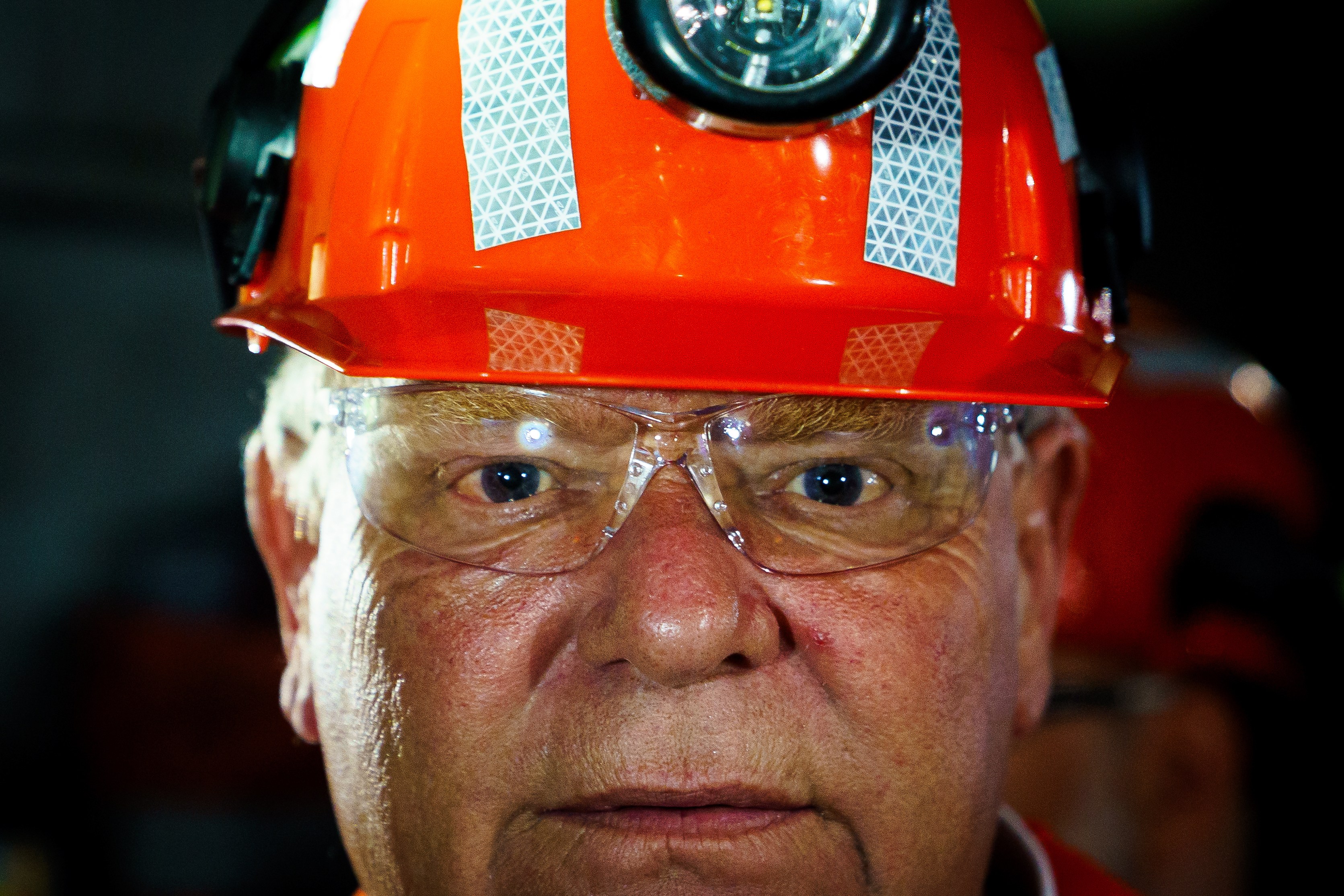
Ontario Premier Doug Ford was among the most vocal north of the border, warning that “everything is on the table” should the trade war escalate. Immediate concern from his threat was stymied by the fact that Ford holds no control over Canada’s international trade regime. His warning nevertheless matters, as it identifies a vulnerability that Washington has thus far been unsuccessful in eliminating: critical minerals, and nickel in particular.
Nickel is not a mineral that is particularly scarce, with global supply exceeding consumption every year since 2022, according to U.S. Geological Survey . Indonesia has the world’s largest nickel reserves and is the leading producer of mined nickel, whereas Canada supplies roughly 44 percent of U.S. primary nickel imports. The U.S. has only one operating primary nickel mine — the Eagle Mine in Michigan’s Upper Peninsula. This produced around 10,000 metric tons of nickel in 2025, enough to address a mere 4.5 percent of total U.S. nickel consumption.
And this is where the domestic supply chain ends, with the U.S. lacking an operating nickel smelter capable of taking Eagle’s concentrate through the next stage of processing. It is instead shipped overseas — to Canada and elsewhere — where it is processed by smelters. Washington’s problem, therefore, is not simply identifying nickel sources, but establishing the industrial infrastructure that can turn nickel-bearing ore into usable material.
Smelting and refining requires cheap and reliable energy and a willingness to accept difficult environmental consequences. Thus, China has become dominant in the global refining space. Indonesia, home to the world’s largest processing site, has spent more than a decade establishing processing capacity, simultaneously controlling the export of a metal critical to the energy transition.
In this regard, a pressing issue in the immediate term for Washington is how to secure supplies from sources considered politically and strategically acceptable, alongside the challenge of building domestic processing infrastructure that can help address this issue for the decades ahead.
Some have cited copper as a useful counterpoint, demonstrating that domestic mineral supply chains can be built. But copper is also a warning against assuming substitution is easy. Building resilient copper supply chains required years of permitting, investment and infrastructure development, backed by those prepared to sustain that commitment.
Washington is actively trying to close some of these gaps. The Defense Industrial Base Consortium currently has an active solicitation for domestic processing capabilities covering indium, magnesium, manganese and titanium, with first-phase submissions due Sept. 17. Nickel is not among them.
That omission illustrates a broader weakness in Washington’s critical-minerals strategy. Policy is often organized around lists rather than the processing bottlenecks that determine whether minerals needed can reach American industry. The dispute with Canada exposes that distinction with unusual clarity. Ottawa would not need to impose an outright embargo to cause problems — the credible prospect of disruption could be enough to force American buyers into the market for alternative supply, pushing them into competition for available material.
The private sector can, in this case, provide a helpful solution. Physical commodity traders such as Glencore, BGN Group, Trafigura and Mercuria operate across global physical markets. These have access to networks of producers, storage facilities, financiers and shippers to facilitate the movement of materials globally.
Critical-mineral policy debates often overlook these private-sector actors. Yet in a disruption, they can serve as important cogs in the supply chain, and can prove instrumental in managing disruptions while domestic processing capacity is built.
BGN Group offers a concrete example from a recent collaboration with Electro Mobility Materials Europe, a French project focused on producing battery-grade nickel and cobalt. The company will act as EMME’s primary commercial partner, supplying critical metals and managing the global commercialization of its output. The arrangement exhibits how traders can sit between upstream supply and downstream demand and turn new production capacity into a functioning commercial supply chain.
It also shows the limit, however, of what they can do. Even the most sophisticated trading house cannot trade its way around a structural processing deficit. That is the lesson Washington will undoubtedly take from this dispute.
The vulnerability is not Canada’s Sept. 8 tariff package, which does not target nickel anyway. Nor is it Ford’s threat, which remains political rhetoric rather than Canadian trade policy. The vulnerability is Washington’s assumption that Canadian mineral supply can always be replaced by buying the same commodity somewhere else.
For some commodities, that assumption is reasonable. For others, it misses the point. Until it can process minerals at home, the U.S. has not replaced Canada — it has merely replaced one dependency with another.
Lord J.D. Waverley is a former member of the UK House of Lords and an international trade and investment adviser. He works at the intersection of business diplomacy and public policy.
Topics in this story
Gathered from external sources. Rights to this text belong to whoever originally published it.