South Korea built an underground seed vault to save wild plants but some seeds could help crops survive a hotter, harsher future
Rest of World News: As climate change accelerates biodiversity loss and threatens food security, South Korea is expanding an unusual form of protection, preserving the ge.
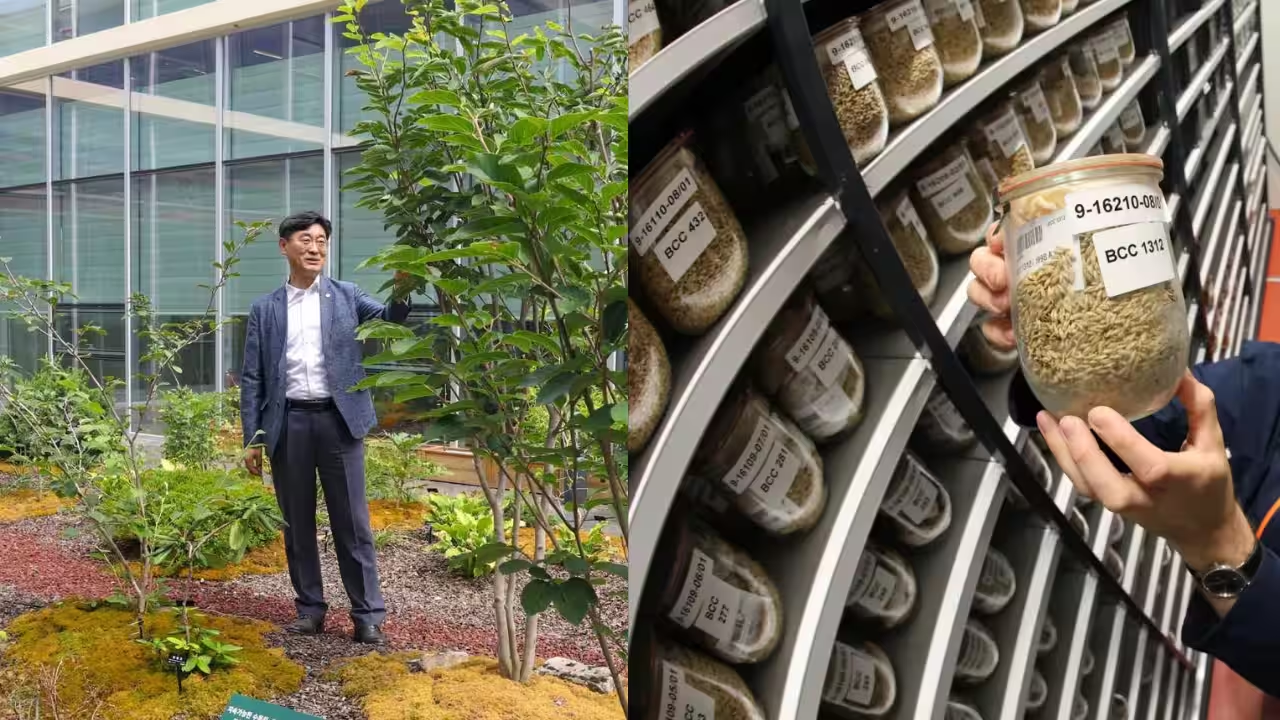
As climate change accelerates biodiversity loss and threatens food security, South Korea is expanding an unusual form of protection, preserving the genetic resources of wild plants for the future. At the centre of this effort is the Baekdudaegan Global Seed Vault, operated by the Korea Arboreta and Gardens Institute (KoAGI). The underground facility in Bonghwa, North Gyeongsang Province, permanently stores wild plant seeds as insurance against natural disasters, environmental destruction and species extinction. KoAGI President Shim Sang-taek has outlined plans to strengthen international cooperation, conserve crop wild relatives and support countries particularly vulnerable to climate change. The vault currently holds around 290,000 seed accessions, including approximately 131,000 from outside Korea. Its growing international role reflects a changing approach to conservation, safeguarding biodiversity is not simply about protecting species today, but preserving genetic resources that could help future ecosystems and food systems withstand a hotter and increasingly unpredictable world.Why is Korea’s global seed vault important for the climate crisisThe Baekdudaegan Global Seed Vault is designed to protect wild plant genetic resources from threats that could permanently destroy them. Climate change is increasing pressure on ecosystems while natural disasters, habitat destruction and species extinction create additional risks. By storing seeds underground, the facility provides a long-term safety net for plant diversity. The vault currently contains around 290,000 seed accessions, with approximately 131,000 originating outside Korea. KoAGI sees the facility as more than a storage site, aiming to develop it into an international platform for biodiversity conservation. The strategy is based on cooperation between countries, research organisations and governments because plant genetic resources can have value far beyond the places where they were originally collected. Preserving them now means keeping biological resources available for future generations.How could wild plants protect future food security?A major part of KoAGI’s work focuses on crop wild relatives, or CWRs, wild plants that are genetically related to cultivated crops. Unlike modern crops, which have often been bred for consistent yields and particular characteristics, their wild relatives can carry traits that allow them to survive difficult conditions. These may include tolerance to drought, salinity, disease and extreme temperatures. Such characteristics could become increasingly important as climate change alters agricultural conditions and exposes crops to new environmental pressures. Working with a consortium of eight universities, the institute secures an average of 300 genetic-resource samples from around 30 species each year, and has compiled more than 7,100 data points on characteristics including drought tolerance, salt tolerance, disease resistance and potential antioxidant or anti-inflammatory properties.How is Korea building a global seed safety net?KoAGI is extending the role of the Baekdudaegan Global Seed Vault beyond South Korea through international partnerships. Its network has grown from 38 participating institutions to 58, with cooperation involving Botanic Gardens Conservation International and a pilot project focused on small island developing states. These countries can be particularly exposed to rising sea levels, extreme weather and habitat loss, while some lack the infrastructure or expertise needed for long-term seed conservation. Through the “Island Seeds, Global Legacy” initiative, KoAGI provides training, equipment and operational support for collecting and storing wild plant seeds. The collected material is divided between the originating country's seed bank and the Korean vault. This creates duplicate collections, reducing the possibility that one disaster could destroy irreplaceable genetic resources. Participating countries also retain sovereign rights over their deposited seeds.Why is Korea changing how ecosystem restoration is measured?KoAGI is also challenging the way restoration projects are judged. Instead of simply counting trees planted or measuring the area covered by a project, the institute wants to determine whether ecosystems and biodiversity have genuinely recovered. It has been registered as Korea’s certification hub for the Global Biodiversity Standard, which evaluates whether restoration creates measurable improvements in vegetation, habitats and species diversity. Its criteria include prioritising native species, protecting existing habitats, preventing invasive species and working with local communities. KoAGI plans to assess restoration projects, train professional evaluators and provide consulting based on international standards. The institute also operates SeedPedia, a public database containing more than 40,000 records covering 2,273 native plant species. The wider goal is to connect conservation, scientific research and practical restoration while providing evidence that nature-based projects are producing genuine ecological benefits.Catch the latest World News and Live updates. Download the TOI app.
Topics in this story
- Baekdudaegan Global Seed Vault
- South Korea seed bank
- Korea Arboreta and Gardens Institute
- crop wild relatives conservation
- wild plant seed preservation
- global biodiversity standard
- climate change food security
- seed vault international cooperation
- KoAGI conservation
- genetic resource conservation
- World news
- World news today
Gathered from external sources. Rights to this text belong to whoever originally published it.