Flydubai hijacking attempt exposes worrying gaps in aviation security
The quick-thinking actions of the captain of last week’s Flydubai flight bound for Israel prevented what could have been an unmitigated hijacking disaster. But aviation safety experts say the incident raises serious concerns about the security failures before the flight and how it happened in the first place.
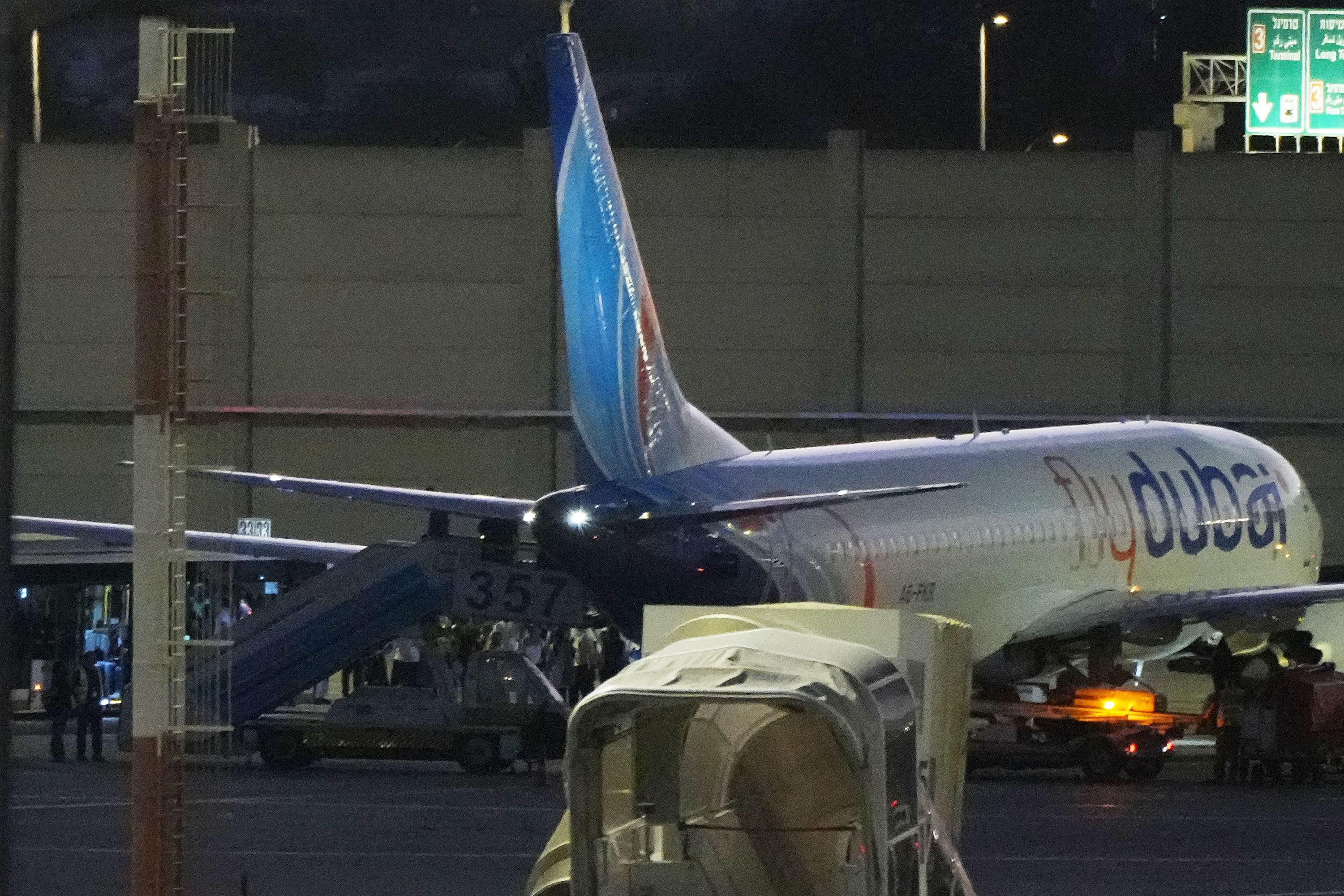
The quick-thinking actions of the captain of last week’s Flydubai flight bound for Israel prevented what could have been an unmitigated hijacking disaster. But aviation safety experts say the incident raises serious concerns about the security failures before the flight and how it happened in the first place. The suspected attacker, named as co-pilot Hamam al-Hammami, was removed from Oman’s national airline last year following concerns about his extremist views, sources told CNN. Both the United Arab Emirates and Israel have strict aviation security regulations – yet al-Hammami was allowed to fly. “A lot of the post 9/11 security measures that were adopted were meant to prevent an external threat – loading bombs or things onto an aircraft, you know, preventing a threat from amongst the passenger base from getting access to cockpits,” said CNN national security analyst Alex Plitsas. “It wasn’t really designed with the theory that a pilot would do something like that.” There is no international standard for background checks. Experts said pilots’ licenses and security passes are handled at the national level, and the rules vary depending on the country. Questions about background checks in aviation industry The allegations of extremist views and the suspected attacker’s dismissal from a previous job have raised concerns about the reliability of background checks in the aviation industry. CNN has reached out to Oman Air, the Dubai government’s media office and Dubai Airports Company for comment. Flydubai said it could not provide comment while the incident remained under investigation. All flight crew members require an “airside” pass, which allows them to go to the non-passenger side of airports and aircraft, according to aviation expert Alastair Rosenschein, who worked as a pilot in the United Kingdom for four decades. Those passes typically require police checks and background checks to obtain, but experts say the process comes down to each country’s regulations. The Israeli Ministry of Transport told reporters on Saturday that it relies on foreign air carriers’ commitment to international regulations, as well as signed declarations that each carrier’s pilots and crews have been vetted. Rosenschein said that he doesn’t have insight into the specific process in the UAE, but “I do know where the responsibility lies, and that is with the government, with the airlines, and with security services – because no one else has the authority to investigate or pass on this information.” “There’s not really anything cast in stone as to how people are vetted – and there should be,” Rosenschein said, and questioned: “Why did the Omanis not suspend his pilot’s license?” Aviation expert and British pilot Gideon Ewers noted that a pilot’s license is essentially just a technical qualification that shows someone knows how to fly a plane. The license itself doesn’t come with a record of previous employment issues or infractions. Questions about hiring practices and ongoing checks Hiring practices also vary greatly by each airline, but most involve some sort of psychological evaluation, flight simulation tests and references from previous employers or trainers, Rosenschein said. Pilots must also pass regular medical exams. It’s unclear how the attacking pilot would have passed a referencing process if he was dismissed from the Omani airline for concerns about his extremist views. “The hiring process at company ‘A’ can be quite different from the process at company ‘B,’ even though it’s a similar role,” Ewers told CNN. “Any pilot who’s involved in the recruitment will say their primary question is asking themselves, ‘Would I want to sit in a cockpit with this guy for 12 hours?’” Rosenschein added that the main way airlines know if somebody is unfit to work is through internal company reporting. He said that “if somebody is acting strangely – maybe they started drinking heavily on night stops, etc. – they should be reported by their colleagues.” He argued that this attempted hijacking, as well as previous cases of pilot suicide-murders, show that much more needs to be done in terms of industry staff checks, including information sharing between airlines and countries, social media checks, random staff checks for substances like alcohol and regular psychological exams. None of that is standard across the industry. “I think that we have to move to a far more serious regulation in the industry because so many lives are at stake in an aircraft,” Rosenschein said, although he noted that flying today is far safer than when he began working as a pilot in the 1970s. CNN reached out to the International Civil Aviation Organization (ICAO), the UN agency that helps countries cooperate on aviation matters, which said standards are “under continuous review by ICAO and are enhanced as ICAO identifies emerging priorities and new best practices.” A weapon on the flight deck On Saturday the UAE cleared up suggestions the suspect smuggled in a knife by confirming he used the cockpit’s crash ax, something found on most passenger planes in case an emergency requires breaking out of a damaged aircraft or breaking open panels to reach a fire. “You have a weapon on the flight deck. Should that remain there? I don’t think it should,” Rosenschein said, adding that the ax also presents security issues related to those outside the cockpit, as the door is sometimes opened during flights for bathroom breaks. It’s a difficult balance for airlines, which are tasked with preventing both accidental and malicious emergencies, as well as internal and external threats. For security, cockpit doors are locked from the inside, and experts say most planes are fitted with a switch on the control panel that can open that hard door. It’s unclear in the Flydubai incident if that’s how the injured Indian pilot opened the door to allow passengers to help. Some planes are also outfitted with emergency entry door codes, to allow access to the flight deck in the event of incapacitation of the crew, such as a pilot having a heart attack or stroke. But that would be unlikely to help in the event of any pilot-intended incident, such as an attack or pilot suicide. Investigations ongoing The United Arab Emirates and Israel are both investigating the incident, according to officials. There will also be an investigation conducted in Saudi Arabia, where the flight was diverted for its emergency landing. Saudi Arabia has no formal diplomatic ties with Israel. In the coming days, investigators will likely explore the flight data recorder and cockpit voice recorder first, said Marco Chan, a senior lecturer in aviation operations at London’s Kingston University. They will likely be digging further into the attacker’s medical history and training history, Chan told CNN. Investigators will also likely interview the other crew members, passengers and the off-duty pilots who managed to safely land the plane, he said. One Israeli official told CNN it is not yet clear how the Omani pilot would have obtained clearance to fly to Israel, given that Oman and Israel do not have formal diplomatic relations. Israel’s Tax Authority confirmed the names of all passengers and crew were in the hands of Israeli authorities before the flight had taken off, but it said questions about the vetting of crew members should be referred to the Ministry of Transport. Shin Bet, Israel’s internal security agency, also referred CNN to the Ministry of Transport, which it said is “responsible for all security matters concerning foreign airlines.” The Ministry of Transport said that its procedures do not include checking the names of flight crew members, although those names are submitted to the Israel Tax Authority, which collects them in case of requests by security services. The ministry added that all flight crew members are required to have a travel visa to enter the country, and an Omani passport should have been flagged at check-in. But the ministry also said its “procedures do not address the threat from a pilot.” On Sunday evening, Israeli Prime Minister Benjamin Netanyahu instructed the head of the country’s National Security Council to carry out a “thorough examination” of all aspects of the security of foreign civil aviation coming into Israel. When it comes to broader aviation hiring practices and background checks, security experts said those checks should theoretically be applied to everybody, regardless of nationality.
Topics in this story
Gathered from external sources. Rights to this text belong to whoever originally published it.