In 2015, engineers fitted sawtooth edges to blades on three large wind turbines; field measurements found noise reductions of about 1.5 decibels or more
Discover how engineers at LM Wind Power implemented serrated panels on wind turbine blades to significantly reduce aerodynamic noise by more than 1.5 decibels, enhancing design safety and performance.
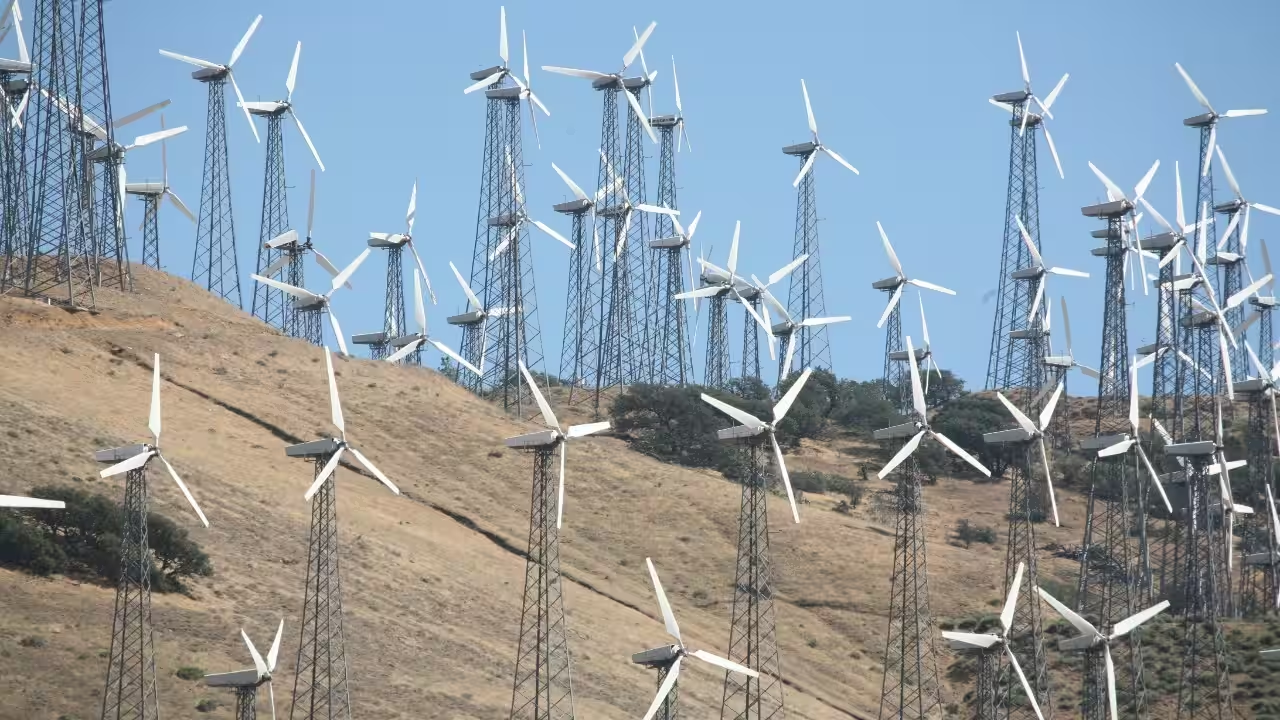
Wind turbine blades can generate aerodynamic noise as air moves over their surfaces; because of this, it's important to prioritise noise reduction when it comes to turbine design. In 2015, engineers at LM Wind Power tested serrated panels fitted to the blades of three wind turbines and measured how effectively they reduced noise. According to a 2016 paper published in the Journal of Physics: Conference Series, the turbines had rated capacities of 2–3 megawatts while the rotor diameters ranged from 90 to 122 metres. After wind tunnel testing, the three validation campaigns’ field measurements showed noise reductions of about 1.5 decibels or more, and the results were obtained through different serration designs on the three turbines. The research examined the panels’ performance based on the geometry, positioning, and construction and addressed the challenge of reducing turbine noise while maintaining the aerodynamic performance and structural reliability necessary for operating wind turbines.How serrated panels change airflow at the blade edge Wind turbine blades can generate aerodynamic noise as air moves over their surfaces. Because of this, it’s important to prioritise noise reduction when it comes to turbine design. Serrations were then introduced as a toothed profile along the edge, which altered the airflow around the region causing the noise. The design methodology of LM Wind Power involved determining the length and position of the teeth, their flap angle, the material used, and the method of attachment. The researchers generally targeted the final 30% of the blade span, which was the main source of the dominant noise; however, extending the serrated section beyond this region was not considered feasible. Increasing it would only result in additional loads without yielding any improvement in noise reduction. In addition, panel placement also had to account for blade curvature, lift-handling locations, and fatigue safety limits.Before the field tests, aerodynamic testing examined the effects of serrations on lift and drag, and measurements were conducted at a Reynolds number of three million. In LM Wind Power's low-speed wind tunnel in Denmark, researchers compared an unmodified airfoil with versions carrying 100 mm and 130 mm serrations. The results showed that serrations increased the lift-curve slope by approximately 2% as opposed to the unmodified airfoil. They also increased drag, with the 130 mm serrations producing 3% more drag than the 100 mm version. Increasing the flap angle towards the upper side of the airfoil reduced the additional lift.Wind tunnel measurements before full-scale validationAcoustic experiments, also run before the field tests, investigated how changes in serration geometry influenced noise levels. Tests at the Institute for Sound and Vibration Research wind tunnel examined different tooth lengths, shapes, and flap angles. Researchers also conducted experiments at the TU Delft vertical wind tunnel, where particle image velocimetry was used to investigate airflow around the modified trailing edges.The measurements showed that serration length influenced noise reduction differently across the frequency spectrum. Longer teeth generally improved noise reduction at lower frequencies; conversely, their effectiveness decreased at higher frequencies. Three-dimensional serration designs also provided better reductions compared to flat designs at lower frequencies in the reported tests.The angle of the panels was another important factor. In tests at the Institute for Sound and Vibration Research, changing the flap angle produced differences of up to 3.5 decibels at individual frequencies, separate from the overall field reductions, and demonstrated that a panel’s effectiveness was contingent on its geometry and the airflow conditions. Furthermore, the engineers also developed models to predict the aerodynamic, acoustic, and structural performance of serrations. These models were based on wind tunnel measurements, field acoustic tests, and strain-gauge measurements used to assess the bending forces acting on the panels.You use AI every day. Now get your AI Quotient. Take the AIQ test.
Topics in this story
Gathered from external sources. Rights to this text belong to whoever originally published it.