In 2010, Taiwan turned 1.5 million discarded PET bottles into Taipei’s EcoARK; the $4.22 million exhibition hall stood 26 metres high and resisted storms
Rest of World News: Taiwan opened a 26-metre-high exhibition hall in Taipei in 2010 whose walls were made from plastic bottles.The structure was called EcoARK, used about.
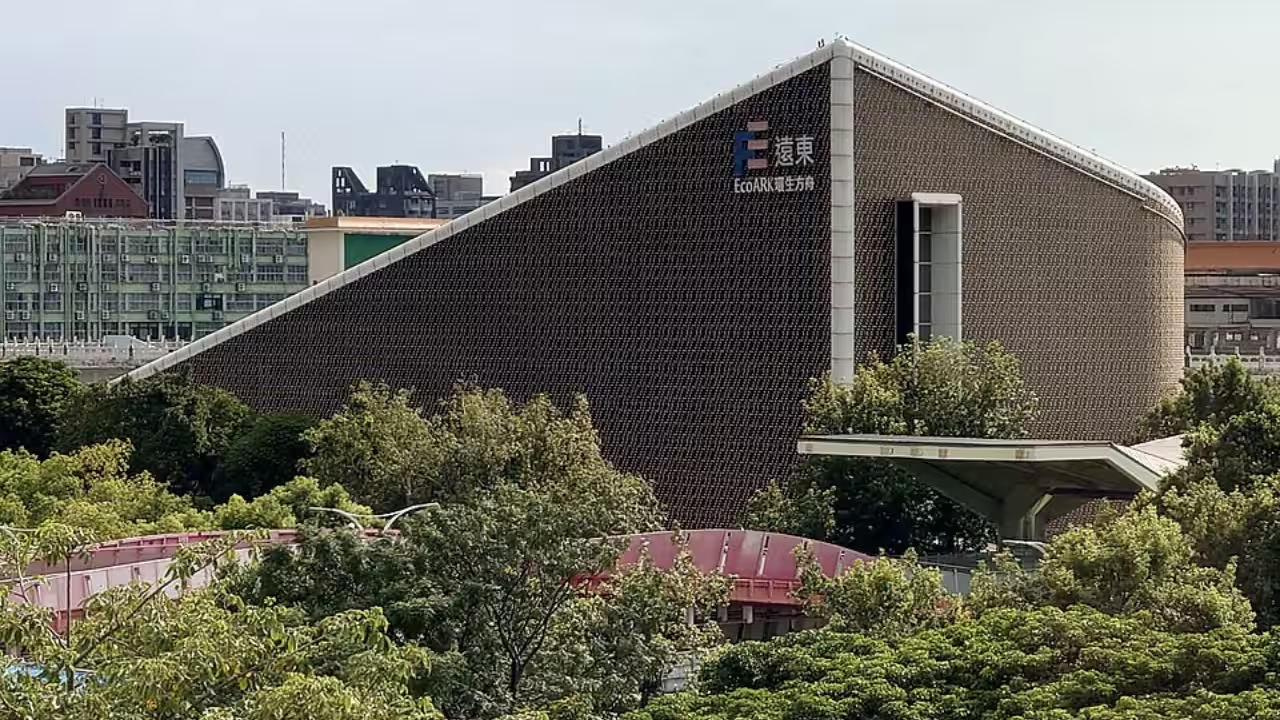
Taiwan opened a 26-metre-high exhibition hall in Taipei in 2010 whose walls were made from plastic bottles.The structure was called EcoARK, used about 1.5 million recycled PET bottles and was designed to withstand storms, earthquakes and fire. The project was created by architect and structural engineer Arthur Huang and his company, Miniwiz, for the Taipei International Flora Exposition. Contemporary reports estimated the cost at about NT$133 million, or roughly $4.22 million at the time. The three-storey exhibition hall stretched about 130 metres and was built from interlocking blocks made from recycled plastic.The bottles became building blocksThe bottles were processed into a construction material called Polli-Brick, which is a lightweight, translucent block made from recycled polyethylene terephthalate, or PET. The resulting wall had a honeycomb-like structure. The individual blocks locked together, which created a rigid outer shell and left small spaces that helped bring daylight into the building.Far Eastern Group commissioned and developed the project with Miniwiz and other partners, and said the EcoARK team repeatedly tested the wall during construction because of safety concerns. The company said the structure could withstand wind, water, fire and earthquakes.The building was also designed with features that tried to reduce its energy demands. Rainwater was collected and used in an exterior water-cooling system, while the translucent walls admitted natural light into the exhibition spaces.More than 1.5 million bottles went into EcoARKTaipei's own records give the number as 1.52 million recycled PET bottles, and the city's account of the 2010 Flora Expo described EcoARK as the Pavilion of New Fashion. The building was part of the Yuanshan Park area and was an example of the exposition's emphasis on reducing waste and lowering energy consumption.Far Eastern said its recycling program gathered one million PET bottles in 2008 alone, with schools, families and other members of the public contributing bottles for the project. The bottles were processed into the Polli-Brick units used to construct the building's facade. Far Eastern later said the project used 600,000 hexagonal Polli-Bricks.The building was designed to survive Taipei's weatherArthur Huang said that the interlocking plastic containers were strong enough to block the elements and withstand storms or earthquakes, and the wall system was also light enough to make the structure easier to assemble and dismantle. That flexibility became part of the project's design, and its components could be taken apart and reused instead of treating the building as a conventional permanent structure.National Geographic later described EcoARK as a nine-storey exhibition building made from 1.5 million recycled plastic bottles, and the same report identified the structure as one of Huang's early projects in turning discarded materials into construction products. The difference between the contemporary description of a three-storey hall and National Geographic's later nine-storey description seems to come from how the unusually tall structure was characterized. The more consistent measurement across contemporary reports is its roughly 26-metre height.EcoARK did not remain at the expo foreverThe building's first major public role came with the Taipei International Flora Expo, which opened on November 6, 2010. EcoARK served as an exhibition pavilion during the event, which attracted millions of visitors.In June 2011, Taipei City Government reported that the Pavilion of New Fashion had been dismantled. Far Eastern said its PET blocks would be given new uses through an initiative that planned to place them at elementary schools damaged by Typhoon Morakot in 2009. The blocks could be incorporated into learning spaces, galleries, greenhouses, recycling areas and animal enclosures.The pavilion therefore had a relatively short life as a single building, and its materials were intended to have a longer one. The project later became one of the best-known examples that was associated with Huang's work in recycled construction materials. The 2010 pavilion was eventually gone, but the bottles that formed its walls were designed from the beginning to avoid having a single final destination.Catch the latest World News and Live updates. Download the TOI app.
Topics in this story
Gathered from external sources. Rights to this text belong to whoever originally published it.