In 2021, South Carolina sank a retired 250-foot barge off Edisto Island; its water tower and containers now give snapper and grouper cave-like shelter
US News: In 2021, a retired barge was sunk off Edisto Island, creating an artificial reef that provides vital shelter for marine life like snapper and grouper, enhancing biodiversity and fishing opportunities in South Carolina.
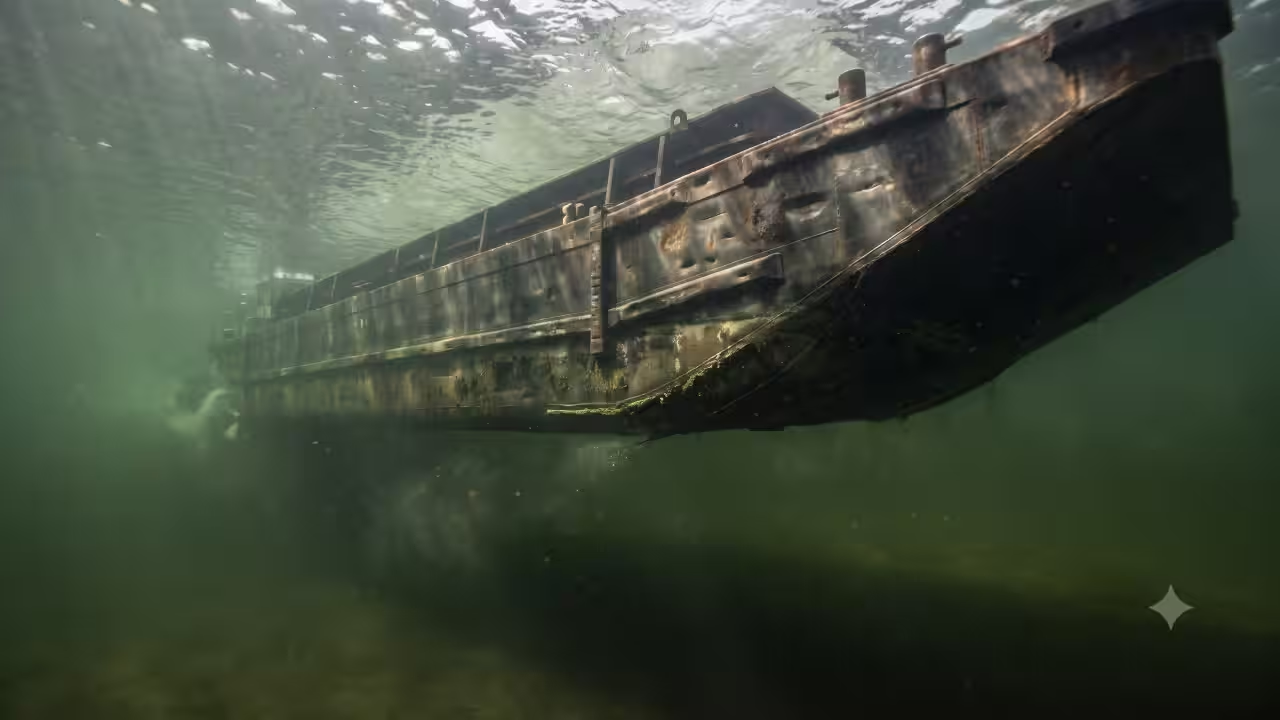
Much of South Carolina’s seafloor is flat and sandy, offering little shelter for fish along the coast. For decades, the state’s wildlife managers have tried to change that by sinking retired ships, vehicles and construction debris to give marine life places to cling to and hide. One of their more elaborate efforts came in September 2021, when a 250-foot decommissioned barge was towed about 10 nautical miles off Edisto Island and deliberately sunk. On its deck were sections of a dismantled municipal water tower, a dozen shipping containers with holes cut through their steel walls, and a life-sized concrete sculpture of a great white shark. It took approximately two hours for the barge to disappear beneath the waves. Five years later, the structure remains part of the Edisto 60-foot artificial reef, where its containers and water-tower sections provide the varied shelter the project was designed to create for marine lifeA partnership behind the scrap pileThe project was led by the South Carolina Department of Natural Resources, whose artificial reef programme has spent decades building habitat along a coastline short of hard, rocky seafloor. According to SCDNR, the barge and its cargo were contributed through a partnership with the Coastal Conservation Association of South Carolina and Sea Hunt Boat Company, which together funded half the cost of the barge and its tow to the reef site. The water tower sections came from Mount Pleasant, which had recently demolished an old municipal tank and donated the steel instead of scrapping it. For the Coastal Conservation Association, the Edisto deployment marked its fifteenth reef contribution in the state, part of a longer-running effort to keep adding material to South Carolina's permitted reef sites.Why shape matters more than size to a fishRobert Martore, the programme’s long-time head, explained that the key factor was shelter, not size. According to the South Carolina Department of Natural Resources, the open spaces inside the shipping containers create a cave-like interior that larger species such as snapper and grouper prefer, while the flatter pieces of the water tower provide low-relief refuge for smaller and juvenile fish. That mix of structure sizes is deliberate. A stretch of open sand offers almost nothing for a young fish to hide behind, so even modest variation in height and enclosure can draw in a wider range of species than a single uniform shape would. That same logic, giving fish a reason to stay rather than simply pass through, is the entire premise behind building artificial reefs at all.A layered habitat built over decadesThe barge did not create a reef so much as add to an existing one. Known as the Edisto 60-foot reef, or PA 30, the site lies about 10 nautical miles offshore and had already received more than 20 structures before 2021, including a large ship, decommissioned military vehicles and rubble salvaged from the old Cooper River Bridge. According to NOAA Fisheries, artificial reefs work by providing new or enhanced hard-bottom habitat in areas that would otherwise be habitat-limited, giving space for organisms to colonise quickly and offering juvenile fish more places to shelter from predators. Along much of South Carolina's coast, where the natural seafloor is largely flat and sandy, that kind of added structure can make an outsized difference to how much marine life an area supports.For anglers and divers, the appeal is immediate. A reef with this variety of structure can provide habitat for snapper, grouper and other reef-associated species, turning otherwise open seafloor into a more complex fishing and diving site. Species such as red snapper and gag grouper are slow to mature and tend to stay close to the structure they settle near, which is why fisheries managers pay close attention to where new reef material is placed. There is also a concrete shark at one end of the wreck, a detail that has nothing to do with fish biology. Programme staff built the sculpture themselves as something divers would enjoy photographing, a small acknowledgement that an artificial reef is meant to be visited as well as inhabited.Catch the latest World News and Live updates. Download the TOI app.
Topics in this story
Gathered from external sources. Rights to this text belong to whoever originally published it.