South Africans vote in local elections seen as test for embattled ANC
Municipal failures have contributed to declining public trust, President Cyril Ramaphosa has admitted.
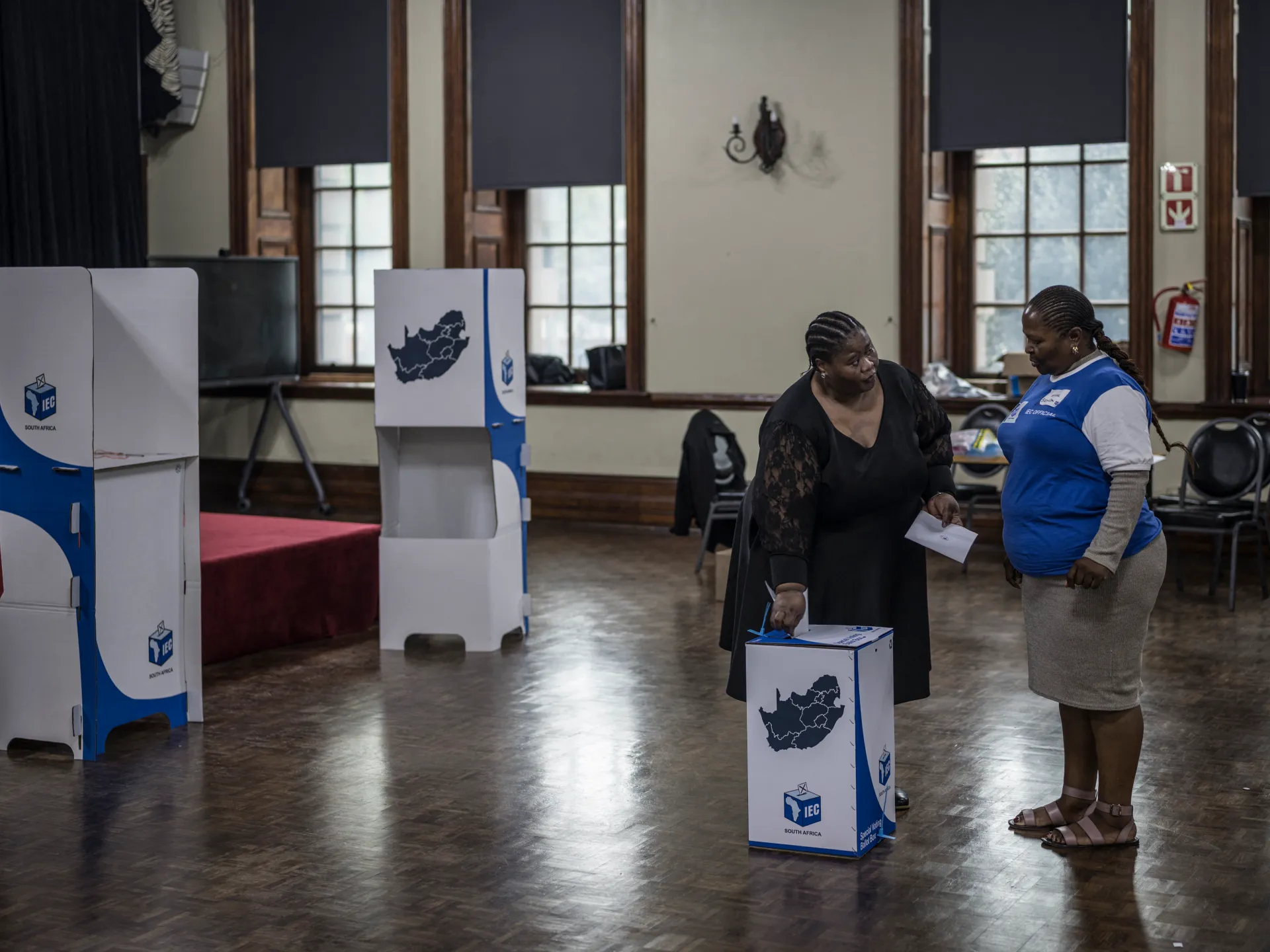
South Africans are voting in local elections widely seen as a verdict on the African National Congress (ANC), the party that led the country out of white minority rule in 1994 but has steadily lost support over the past decade.
Polls opened at 7am (05:00 GMT) on Wednesday and close at 9pm (19:00 GMT). A record 29.2 million people are registered to vote at 23,696 voting stations, according to the Electoral Commission of South Africa (IEC). More than 1.4 million special votes were cast on Monday and Tuesday.
Voters are electing councils for the country’s eight metropolitan municipalities, 44 district councils and 205 local councils. Those councils then choose mayors.
The ANC fell below 50 percent in municipal polls for the first time in 2021. In the 2024 national election, it lost its parliamentary majority and was forced into a coalition government with the Democratic Alliance (DA) and other parties. Polls suggest the ANC’s support could drop below 40 percent this time.
“Municipal failures have contributed to declining public trust and confidence in democratic governance,” President Cyril Ramaphosa said in his weekly newsletter, “From the Desk of the President”.
Ramaphosa is due to vote at Hyde Park High School in Johannesburg, the presidency said.
Johannesburg is the biggest prize in this election. The country’s financial capital has had five mayors in four years.
The DA has fielded its 75-year-old former leader, Helen Zille , for the city’s top job. Her campaign stunts included snorkelling in a mud-filled trench that was flooded by a burst municipal water pipe.
A News24 poll put Zille at 36 percent, meaning she would need coalition partners, particularly the ANC, to govern. Zille told the Associated Press news agency that the ANC was “in free fall”.
“The ANC has been losing support over the years and if you go by the polls, the indication is that that trend will likely continue,” said Al Jazeera’s Haru Mutasa, reporting from Johannesburg. She added that the political landscape in South Africa is “definitely changing”.
Wednesday’s is the first local vote for former President Jacob Zuma ’s uMkhonto weSizwe (MK) party, which is mounting a strong challenge in the coastal city of Durban.
“We are going to start by taking back our country here,” Zuma told supporters in the city on Sunday, the AFP news agency reported. Durban has become a centre of anti-migrant sentiment, a prominent theme in the campaign.
Turnout may be a concern. Only 46 percent of registered voters took part in the 2021 municipal elections.
Coalition government is already widespread: 74 of the country’s 257 municipalities were run by coalitions or minority administrations as of February, according to the Mapungubwe Institute for Strategic Reflection.
Security has also been tightened. Police said 21 election-related cases have been recorded since Sunday. KwaZulu-Natal has 165 voting stations classed as high risk, the most of any province.
It seems like “no one party will win the outright majority” in the election, Al Jazeera’s Mutasa noted. She explained that the country will likely see coalitions being formed, with the ANC working with smaller parties.
Final results are expected on Sunday. They are expected to shape the race to succeed Ramaphosa as ANC leader at the party’s conference in December 2027.
Topics in this story
Gathered from external sources. Rights to this text belong to whoever originally published it.