In 2009, an Arkansas tree seller supplied 500 Christmas trees for fish habitat in Greers Ferry Lake; volunteers turned them into 25 brush piles across three underwater areas
US News: In a creative environmental initiative, 500 discarded Christmas trees from Arkansas were repurposed as fish habitats in Greers Ferry Lake, creating new underwater shelters for fish and enhancing fishing opportunities.
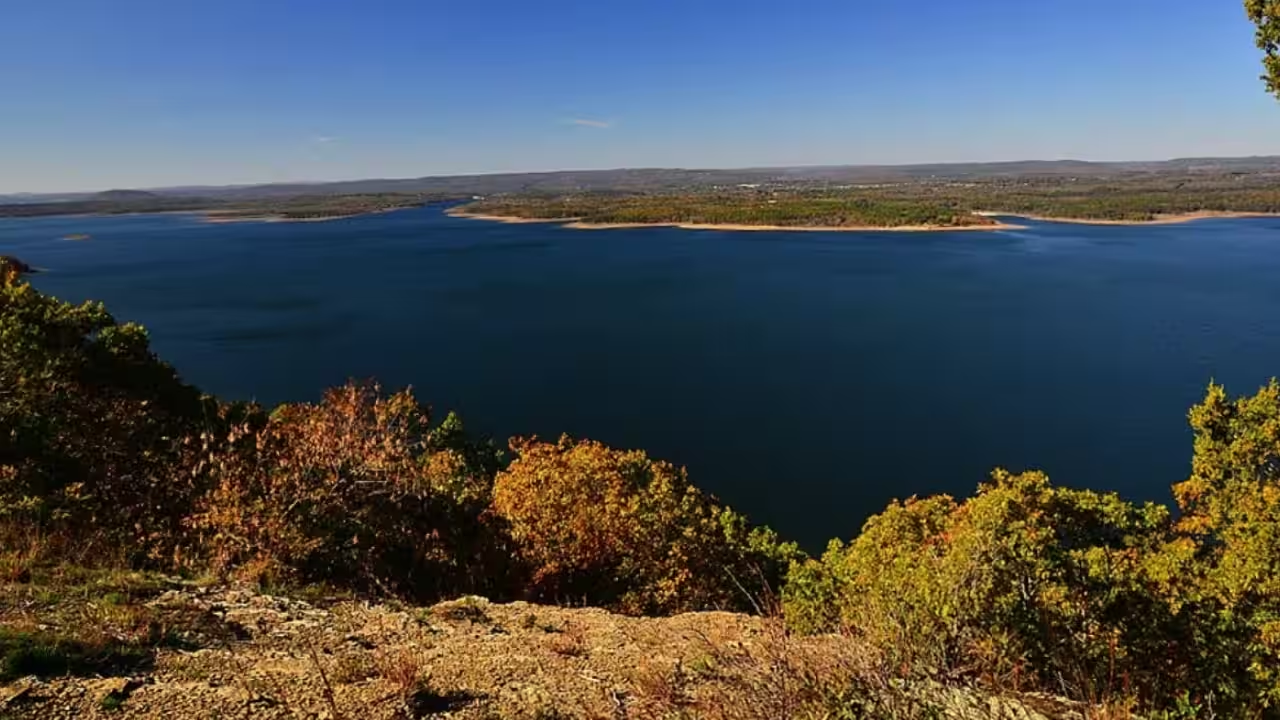
In early 2009, around 500 unsold and discarded Christmas trees in Arkansas were on their way to an unusual destination. The trees were headed for the bottom of Greers Ferry Lake. A Christmas-tree seller from Heber Springs named Harold McFarlin donated the trees for a fish-habitat project, where officials and volunteers of this project bundled them together and sank them at selected locations in the reservoir. The objective of this project was to create an underwater cover for young fish and baitfish while giving anglers new structures around which sportfish could be gathered.The Arkansas Game and Fish Commission (AGFC), the U.S. Army Corps of Engineers, and members of the Greers Ferry Bassmasters came into a joint partnership for this project. Instead of treating the trees as post-holiday waste, the organisations decided to use them as a readily available source of woody cover.How 500 Christmas trees turned into underwater coverInstead of being sunk individually, the donated trees were bundled together. Workers loaded those bundles onto a front-loading dump barge donated by Bass Pro, which could be used to transport the materials out onto the lake before the trees were dropped to their designated locations.Reports suggest that the structures were intended to provide cover for newly born fish, minnows and shad. Those smaller fish populations were considered an important prey for larger sportfish, including bass, crappie and walleye. So, adding shelter for those smaller fish could make the structures useful parts of the lake’s fishing habitat.Later guidelines from the AGFC reflect why trees are bundled together. They explained that although Christmas trees can provide fish cover, their small branches and needles would generally deteriorate within about a year or two; thus, they recommended sinking them in groups because larger woody portions can continue to provide structure after the final material has decomposed.The placement also had to consider the lake’s recreational use, so brush piles were positioned deep enough to avoid interfering with boat traffic, even when water levels were low. This allowed the organisations to add the structures without turning them into navigation hazards.Three major areas were mapped for anglersFisheries Biologists identified that Sandy Beach, Devil’s Fork and Frontier Canyon needed additional underwater habitat. The 2009 operation created 25 brush piles across the three areas: 8 at Sandy Beach, 10 at Devil’s Fork, and 7 at Frontier Canyon. The crew also recorded the new structures with Global Positioning System equipment. The locations were intended to be made available to the public through the Corps of Engineers, giving the anglers a way to locate the newly established habitat rather than having to discover the brush piles themselves.This strategy of installing structures underneath continued beyond the 2009 Christmas tree project. For instance, in 2015, the Corps and local volunteers placed additional structures in Higden Bay using PVC pipes and cedar trees. Authorities explained that such structures could attract algae, small insects and baitfish. This, in turn, could attract larger fish and anglers.Post-holiday waste turned into a fisheries resourceThe Christmas-tree efforts were considered a part of a wider practice in Arkansas. The Corps had reportedly encouraged the community around Greers Ferry Lake to donate live, undecorated Christmas trees after the holiday season. In its 2013 programme announcement, the organisation shared that trees would be bundled into fish shelters and placed in the lake, with drop-off locations including Sandy Beach, Devils Fork and Choctaw Park.Thus, the operation that began with 500 discarded Christmas trees became 25 mapped underwater brush piles spread across three parts of Greers Ferry Lake, and prompted the officials to continue the same strategy as part of the lake’s broader fish-habitat programme for years to come.Catch the latest World News and Live updates. Download the TOI app.
Topics in this story
Gathered from external sources. Rights to this text belong to whoever originally published it.