Mumbai restaurants to hike prices by 10-15% from next week; your idli, dosa and dal-rice meals to cost more
MUMBAI: For a Mumbaikar who begins the day with idli at a neighbourhood Udupi restaurant and depends on a simple dal-rice meal for lunch, eating out could
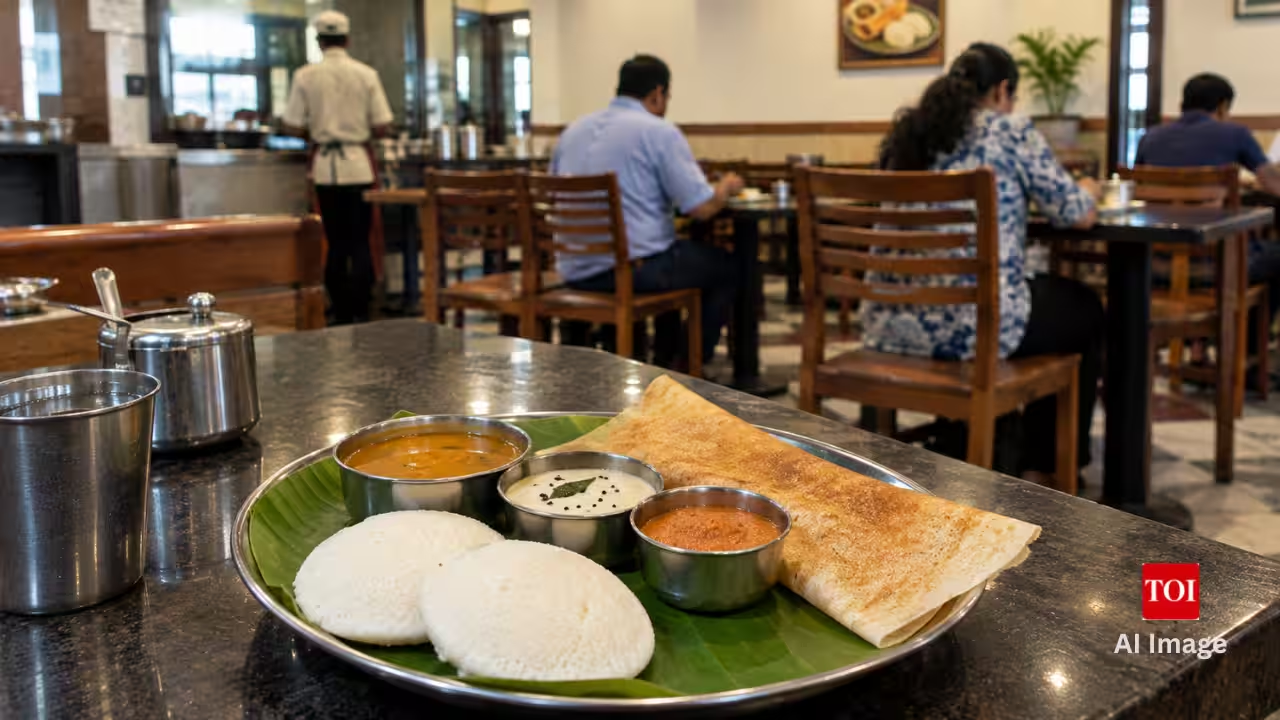
MUMBAI: For a Mumbaikar who begins the day with idli at a neighbourhood Udupi restaurant and depends on a simple dal-rice meal for lunch, eating out could soon take a bigger bite out of the monthly budget.Restaurants across the city are likely to increase menu prices by 10% to 15% in the coming weeks, the Indian Hotel & Restaurant Association (AHAR) announced on Wednesday, citing rising cooking-gas, food, rental, labour and transportation costs.The rise will come into effect from next week, said AHAR President Vijay Shetty.The increase may look modest on an individual bill. But for office-goers who eat out daily, students living away from home, delivery-dependent professionals and families that order meals when time is short, the additional expense could accumulate over a month."On every menu the rise will be minimum Rs 10 if calculated on an average for menus such as idli, dosai and daal rice," Shetty said.AHAR has over 25000 member restaurants and bars.Online menus listed by Mumbai restaurants and food-delivery platforms provide a useful indication of the potential impact.Udupi Cafe in Powai lists idli at Rs 80, sada dosa at Rs 90 and dal khichdi at Rs 120.At Udupi 2 Mumbai's Dadar East outlet, listed prices include Rs 120 for steamed idli, Rs 130 for sada dosa and Rs 165 for masala dosa. These are published online menu prices, not a citywide average or a uniform dine-in tariff.If the proposed 10%-15% revision were applied to these prices, an Rs 80 serving of idli would cost Rs 88 to Rs 92, a Rs 90 sada dosa Rs 99 to Rs 104 and a Rs 165 masala dosa about Rs 182 to Rs 190.The actual increase will depend on whether an establishment revises its prices and by how much.What your everyday meal could costThe spread in dal-rice prices is significant.Swiggy listings show dal-rice at Rs 140 at Jyoti Refreshment in Dadar East and Rs 175 at Neo Welcome Restaurant in Ghatkopar West.These are individual outlet prices, not a representative average for Mumbai's eateries. They nevertheless show why the effect on customers will differ according to where they eat.The monthly bill: A small increase that adds upConsider an office-goer who spends ₹150 a day on breakfast and lunch. If the entire spend rises by 10%-15%, the daily outlay would increase to Rs 165 to Rs 172.50.Over 26 working days, the additional expense would be Rs 390 to Rs 585. For two working adults in a household with similar eating-out habits, the combined increase could approach Rs 780 to Rs 1,170 a month.For a student or a worker who relies on an inexpensive neighbourhood eatery, that could mean cutting back on snacks, ordering less frequently or carrying food from home more often.Why restaurants say they cannot absorb the costsAHAR president Vijay K Shetty said restaurants had absorbed rising expenses for as long as possible, but simultaneous increases in several operating costs had made this increasingly difficult.Commercial LPG and piped gas are essential to everyday kitchen operations. Restaurants must also pay for vegetables, pulses, milk, dairy products, edible oils and other groceries, besides transport and logistics to bring supplies to their premises.Commercial rentals and real-estate costs add to the pressure, particularly in Mumbai's busy business districts and high-footfall neighbourhoods. Restaurants must also meet wage bills, maintenance costs, utility expenses, equipment requirements and other operating obligations.The pressure on pulses is not limited to restaurant kitchens. A Times of India report published in October documented retail dal prices rising by Rs 20 to Rs 30 per kg across the Mumbai Metropolitan Region, following a Rs 10 to Rs 20 per kg increase in wholesale prices at Vashi APMC.The report attributed the increase to supply shortages, deficient monsoon rainfall, drought conditions, logistics costs and festive-season demand.For a restaurant buying ingredients in bulk, such movements can add to the difficulty of keeping a familiar meal affordable. The extent of the effect on any particular menu, however, depends on its ingredients, quantities, procurement arrangements and other costs.When the kitchen bill becomes a customer billThe problem has surfaced before.In April 2026, another media organisation reported that Udupi Shri Krishna in Lower Parel had raised prices by 20% amid a commercial LPG supply crunch.A vegetable sandwich that had cost Rs 70 was priced at Rs 90, while pav bhaji and uttapam also became more expensive.The report described how restaurants were struggling with fuel availability and rising ingredient and packaging costs.That earlier episode illustrates the dilemma: a restaurant cannot indefinitely absorb higher operating expenses, but every price increase risks making regular customers reconsider how often they eat there.A neighbourhood khanaval serving dal, rice, chapati and vegetables faces the same balancing act. Its customers may be workers who cannot return home for lunch.If a meal becomes more expensive, they feel the difference directly; if the owner holds prices down while costs rise, the business has less room to pay staff and maintain operations.No blanket increase across all restaurantsAHAR said the proposed revision would be implemented individually by establishments, depending on their cost structures and business models. It could affect dine-in restaurants, quick-service outlets and delivery businesses differently.“This is not a price increase undertaken for profiteering. It is a necessary adjustment to ensure that restaurants can continue to maintain the quality of food, hygiene, service and employment that our customers expect,” Shetty said.The association's announcement does not mean every restaurant has already raised prices, nor does it establish a mandatory or uniform rate. Customers should check the current menu at their regular outlets before assuming that a hike has taken effect.For Mumbai's restaurant industry, the immediate challenge is to keep businesses viable as costs rise. For its customers, it is to preserve the convenience of an everyday meal outside the home without allowing the monthly food budget to spiral.You Can Also Check: Gold Rate in Mumbai | Silver Rate in Mumbai | Bank Holidays in Mumbai | Public Holidays in Mumbai | Mumbai AQI | Weather in Mumbai | Petrol Price in Mumbai | Diesel Price in Mumbai | CNG Price in Mumbai | LPG Price in MumbaiStay updated with the latest Mumbai news. Download the TOI App.
Topics in this story
Gathered from external sources. Rights to this text belong to whoever originally published it.