In 2019, Seattle residents helped float planted “biobarges” beside a hardened waterway; cameras later recorded young salmon feeding around the new habitat
US News: In a groundbreaking project, Seattle residents collaborated to deploy biobarges that revitalized habitats along the Duwamish River, enabling young salmon to thrive in previously barren waterways.
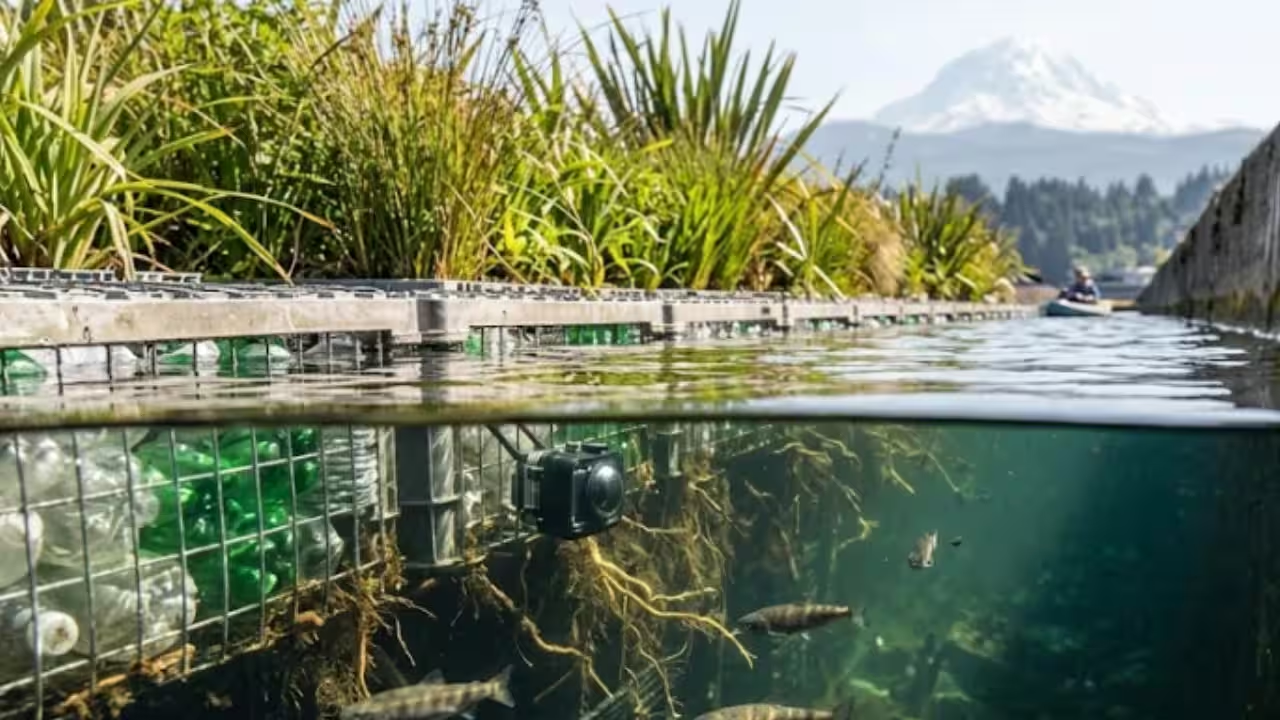
According to NOAA's Lower Duwamish River hazardous-waste site summary, the river once had extensive tidal marshes and mudflats along its banks before channelization and filling transformed much of the estuary into an industrial waterway. Dredging, channeling and a century of industrial activity have destroyed 97 percent of the tidal wetlands that once lined the riverbanks, according to a University of Washington-led study on the Duwamish Floating Wetlands Project. According to the project background for the Duwamish Floating Wetlands Project, along the first seven miles of the Duwamish River, 40 to 60 percent of the linear shoreline is bulkhead, and 50 to 80 percent is riprap. That hardened shoreline leaves young salmon migrating from fresh to salt water with little cover from predators or access to food.Four biobarges, each holding four planted biofilters, were deployedThe team of scientists, headed by Green Futures Lab in collaboration with the Port of Seattle, King County and volunteers from the community, designed four platforms known as Biobarges that were used during a two-year pilot and not as a permanent installation. Each biobarge held four floating wetlands, called Biofilters, planted with native species sturdy enough for scientists to take measurements from.The biobarges were towed into place at two Duwamish sites in April 2019In April 2019, Biobarges were launched into the river and placed within the Duwamish Estuary at two sites. Two of the biobarges were positioned at a heavily industrialized site downriver, while the other two were placed farther upriver in a more vegetated stretch of the river, allowing researchers to compare fish use across a hardened site and a more natural one, according to a University of Washington graduate student's account in the SMEA Currents blog. Monitoring continued through the out-migration season and ran until July 2019, marking the first year of a two-year proof-of-concept pilot project. The structures were then monitored again in 2020, according to the Green Futures Lab website.Local volunteers trained as community scientists carried out much of the fieldwork. They counted and identified juvenile salmon near the Biobarges and at separate reference and control sites without floating wetlands. They also set up and collected the GoPro cameras that recorded underwater footage at each structure. In the project's second year, the volunteers reviewed hundreds of hours of video to identify and count the fish captured on camera, as documented in the study.Underwater footage shows salmon using the structures The rationale for the concept is pretty straightforward. The Green Futures Lab's project background page notes that out-migrating juvenile salmonids rely on a diet of benthic aquatic invertebrates, such as nereid worms and gammarid amphipods, and terrestrial invertebrates, including chironomids, aphids, and tethinids, which are typically produced by vegetation in healthy tidal marshes. Because the bank is reinforced with riprap and lacks vegetation, the Biofilters are intended to attract those insects and invertebrates.Indeed, the footage taken by the GoPro cameras shows juvenile fish, particularly Chinook, swimming around the Biobarges rather than avoiding them. This early observation hints that the floating platforms may be functioning as intended, offering fish a place to linger and feed in a stretch of river where hardened banks and the loss of natural shoreline otherwise limit such opportunities, though the project describes itself as a proof-of-concept pilot rather than a confirmed result. Seattle residents did more than watch the project; they helped assemble the platforms, plant vegetation and observe fish behavior. In fact, they helped put together the platforms, plant vegetation and observe fish behavior.Catch the latest World News and Live updates. Download the TOI app.
Topics in this story
Gathered from external sources. Rights to this text belong to whoever originally published it.