Indonesian wildfires cause respiratory infections to double in a week, health ministry says
JAKARTA — Respiratory infections caused by hazardous wildfire pollution in Indonesia have more than doubled in just over a week, data from the country’s health ministry showed on Thursday.
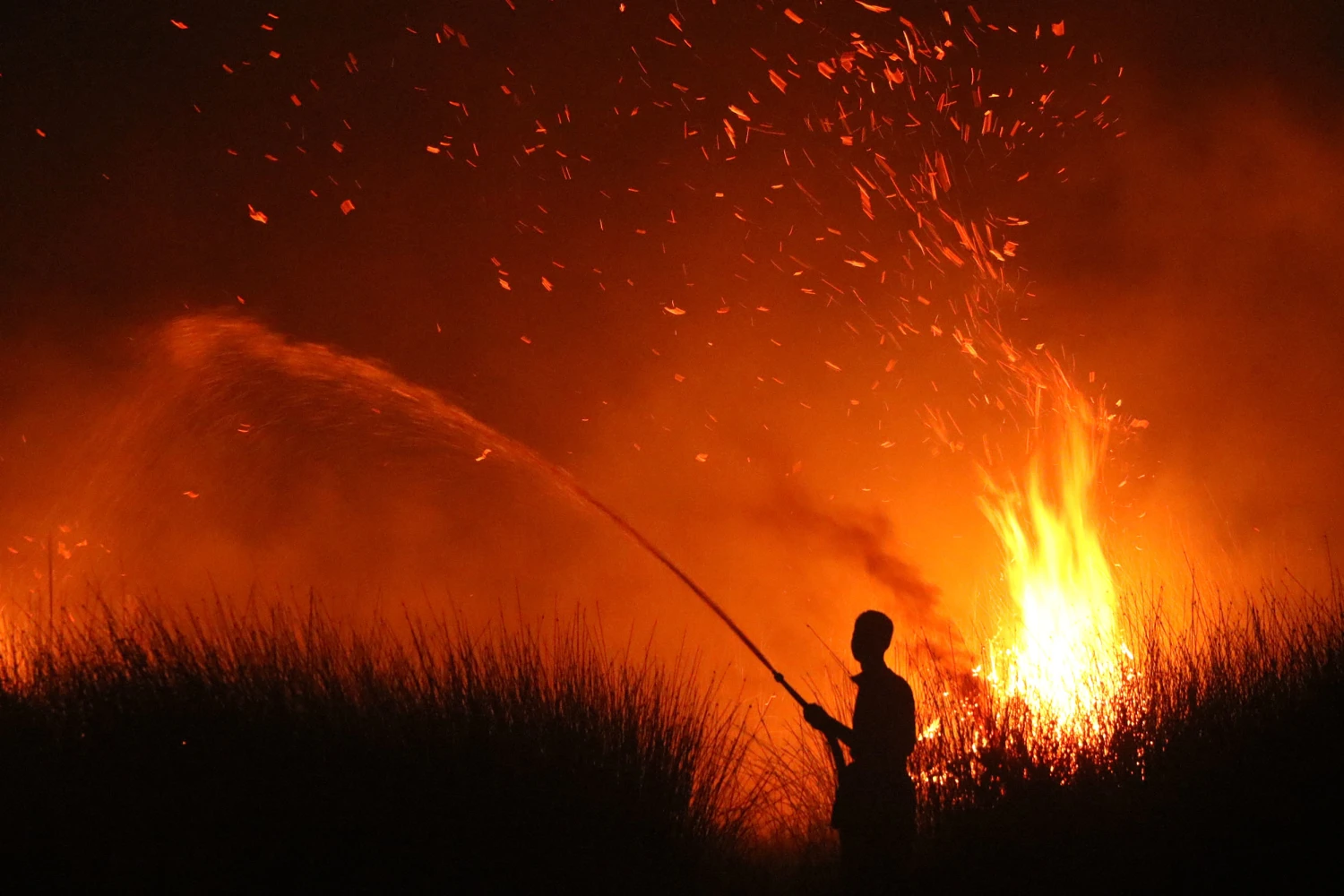
JAKARTA — Respiratory infections caused by hazardous wildfire pollution in Indonesia have more than doubled in just over a week, data from the country’s health ministry showed on Thursday. Fires have been blazing across vast stretches of forest and peatland throughout the Indonesian archipelago, causing hazardous emissions to surge, particularly in the hardest-hit provinces on the islands of Sumatra and Borneo. This year’s wildfire season is the most intense in 11 years as “super-El Niño” weather conditions drive up temperatures and cause punishing droughts. Fire emissions from the country now account for a third of the global total. The number of people suffering from wildfire-related respiratory illnesses rose to 113,336 as of September 9, up from 50,891 on September 1, according to figures presented by health ministry spokesperson Widyawati during a press conference. More than 12.5 million people have been exposed to haze caused by fires across seven provinces, said Widyawati, who goes by one name. Nearly a million masks and hundreds of oxygen concentrator units have been sent to help residents cope with the pollution, and thousands of medical workers have been deployed to affected areas, she said. “The process of deploying additional medical personnel and various supplies is ongoing. We will continue to monitor which areas require more healthcare workers and dispatch them there.” Singapore and Malaysia have also recorded unhealthy air quality levels because of transboundary haze. To help Indonesia battle the fires, Japan has sent three CH-47 Chinook helicopters and they began conducting trial flights on Thursday, said Berton Panjaitan, spokesperson for Indonesia’s disaster mitigation agency. The helicopters would aid the Indonesian military’s water bombing operations starting either on Friday or Saturday in West Kalimantan on Borneo, he said. Malaysia, which shares a land border with Indonesia on Borneo, has also offered to help with its aerial firefighting capabilities, according to a letter from the country’s environment minister to his Indonesian counterpart. Panjaitan said Jakarta was conducting inter-agency coordination to discuss Malaysia’s offer. From January to July this year, fires burned around 202,000 hectares (almost 500,000 acres) of land, government data showed. Environmental group YKAN has estimated that another 600,000 hectares were damaged by fire in August. Among the hardest-hit areas has been the city of Pontianak in West Kalimantan, where the air quality index was 394 on Wednesday, according to Swiss air quality monitoring firm IQAir. A reading of 300 is considered hazardous. Indonesia’s environment ministry told Reuters in a statement that it viewed the hazardous air quality readings in Kalimantan and elsewhere “with concern”.
Topics in this story
Gathered from external sources. Rights to this text belong to whoever originally published it.