Around 1910, after more than a decade of work, journalist Charles Lummis completed El Alisal, his hand-built stone home made with Arroyo Seco rocks near Los Angeles
Discover the fascinating story of Charles Lummis, a journalist who took 12 years to build El Alisal, his remarkable hand-crafted stone home in Los Angeles. Learn about the unique construction materials, historical significance, and how it stands as a testament to Lummis' dedication to his craft.
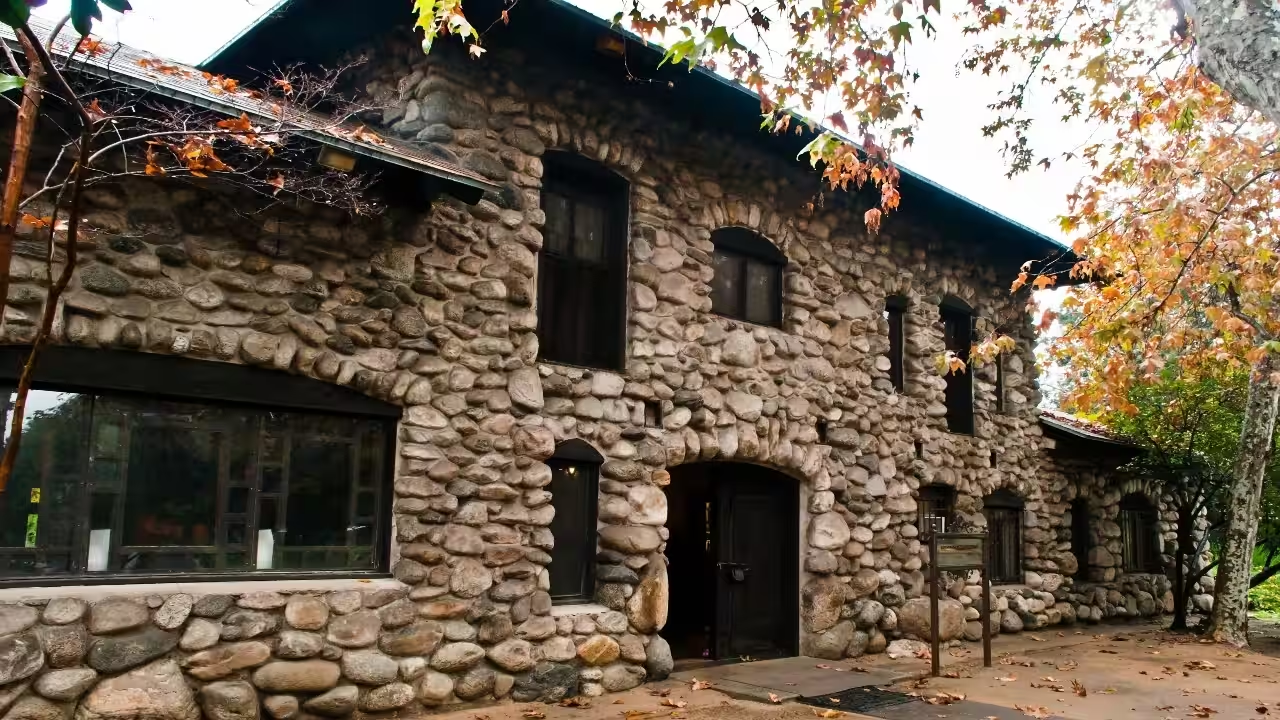
Los Angeles has many well-known homes, but most were designed by architects and built by labourers. Charles Fletcher Lummis was a newspaperman who enjoyed physical labor and took an unusual hands-on approach to building his home. He used stones from the Arroyo Seco and worked with Native American laborers, while also consulting architects about structural problems.Charles Fletcher Lummis, the first city editor of the Los Angeles Times, began building El Alisal beside the Arroyo Seco in 1897 and continued working on it until around 1910. The house is mainly formed of riverbed pebbles with mortar, and Lummis did a good deal of the work himself with a few Native American labourers. The same National Register nomination form describes the exterior walls as two to four feet thick and resting on deep concrete footings. How long it took is debatable; estimates vary from 12 to 15 years, and Lummis certainly didn’t do everything completely by himself. Still, the 4,000-square-foot house is real and remains in Highland Park, free to visitors.A walker who wanted a castleLummis (1859-1928) had initially become famous by walking from Cincinnati to Los Angeles in 143 days, sending out letters to newspapers along his route. Later, he became the Times’ first city editor, founded the Southwest Museum and the California Landmarks Club and served as the city’s librarian from 1905 to 1910. In 1895, Lummis chose a three-acre site beside the Arroyo Seco chiefly because of a mammoth, ancient sycamore, according to the California Office of Historic Preservation. That tree gave the house its name, but it has since died and has been replaced by four saplings.Construction started in 1897. Lummis erected a four-room camp house to live in before the main home and planted fruit trees and eucalyptus hedges around the acreage, according to the Homestead Museum's account in a 1900 Harper's Weekly profile. The same source claims that Lummis made the construction job his gymnasium, a balance to the sometimes ten hours a day he spent at his desk.Boulders, railway poles and doors handmadeThe walls are of riverbed boulders in cement, lime and sand mortar; The Society of Architectural Historians in its SAH Archipedia entry also notes that the concrete home is faced with river boulders collected on the site and in the adjacent arroyo. It states the doors and window frames were hand-built and finished using an adze. Recycled Santa Fe Railroad ties and telegraph poles were used in the house’s framing and roof, according to a Los Angeles Times account.The look is Mission Revival with a medieval flair. The front boasts a round turret and an entryway with a door in two sections, each weighing roughly 1,000 pounds, Angelus News reported. The building also expressed, early on, the Arts and Crafts philosophy that a house should be built by hand from local materials.The term “hand-built” does not mean Lummis worked alone. He consulted architects Sumner Hunt and Arthur Benton about structural problems, and historian Jane Apostol later uncovered a 1921 letter in which Hunt described their collaboration. Lummis also received help from Native American labourers. His children later recalled that workers brought from Isleta performed rough labor during construction. Anyway, Lummis was proud of the product, and liked to joke that any fool could write a book, but it required a genuine man to create a dovetail door.A house that withstood a motorwayLummis hosted gatherings he called “noises,” attracting writers, musicians, artists and other notable guests. After Lummis died in 1928, the mansion began to deteriorate. The Arroyo Seco Parkway was built between the house and the arroyo’s flood-control channel in 1940. El Alisal itself nearly faced demolition to make way for the parkway, but it was preserved and is now designated California Historical Landmark No. 531 and listed on the National Register of Historic Places.The mansion served as the headquarters of the Historical Society of Southern California from 1965 until the 2010s and is now run as a museum by the Los Angeles Department of Recreation and Parks. The home is at 200 East Avenue 43 in Los Angeles. Because published listings differ on visiting days and hours, check with the City of Los Angeles Department of Recreation and Parks before making a visit. Lummis wanted a home that reflected the region he spent his life promoting, and he worked on it for more than a decade. The Arroyo Seco Parkway runs just beyond the fence, but El Alisal remains a distinctive stone home built largely by hand.You use AI every day. Now get your AI Quotient. Take the AIQ test.
Topics in this story
Gathered from external sources. Rights to this text belong to whoever originally published it.