Celine Dion's small Canadian hometown has a boulevard named after her; after her Paris comeback, residents recall the youngest of 14 children who became a global star and still call her simply 'Céline' with pride
Long before Céline Dion became an international music star, she was the youngest of 14 children growing up in Charlemagne, a small town outside Montréal
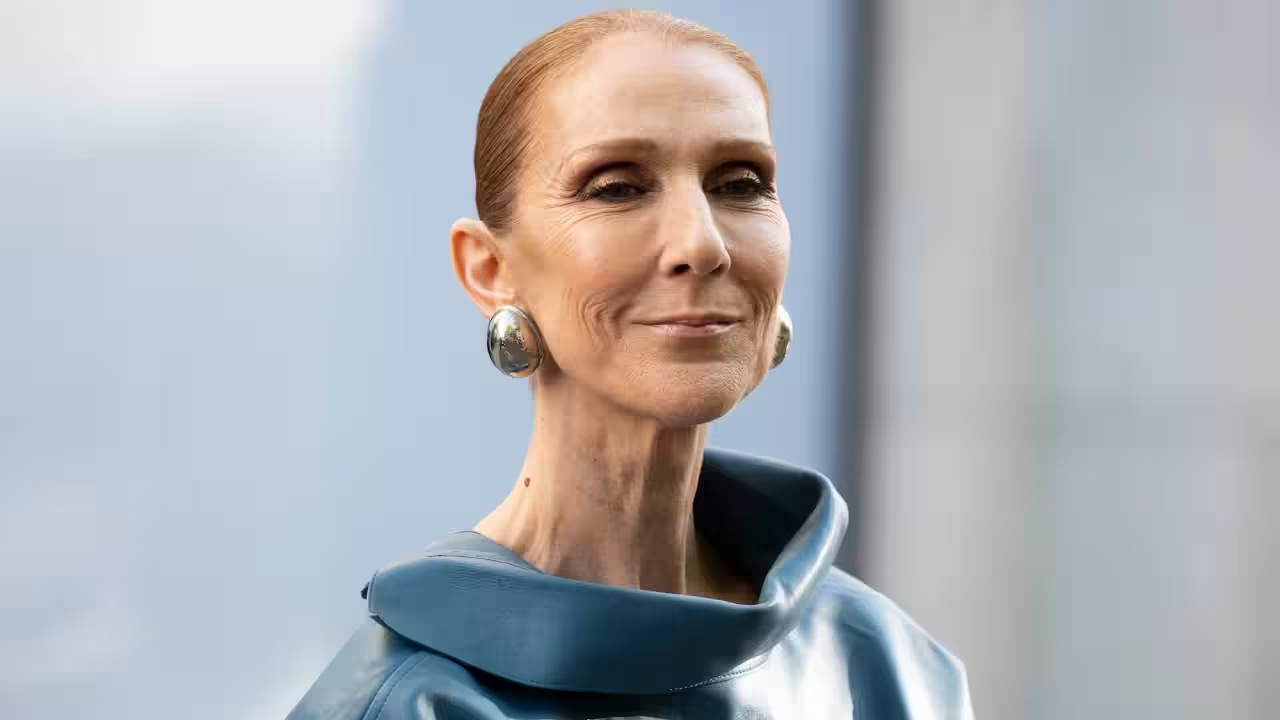
Long before Céline Dion became an international music star, she was the youngest of 14 children growing up in Charlemagne, a small town outside Montréal in Québec. Today, the Canadian municipality has a boulevard named after her, a tribute its council pushed through in 2007 despite objections from the provincial naming authority. Nearly two decades later, her return to the stage in Paris has brought renewed attention to the singer's journey. But in the town where her story began, Dion remains more than a global celebrity. For residents, she is still simply Céline, the local girl whose name travelled around the world.The town that named a boulevard after Céline while she was still aliveAs reported by the CBC News, Charlemagne's decision to name a street after Dion dates back to 2007, when the town council chose to honour the singer while she was still alive and performing regularly. The move was unusual under Québec's naming rules. Under the commission's naming guidelines, a person generally had to have been deceased for at least a year before a street could be named in their honour.The municipality renamed the 1.5-kilometre stretch of Autoroute 640 running through Charlemagne boulevard Céline-Dion, proceeding despite the provincial commission's refusal to approve the designation. Bernard Boudreau, then the municipality's director general, said the town did not want to postpone the tribute until after her death. He also pointed to the international attention she had brought to Charlemagne through her career.Céline Dion's early life in the small Canadian townAccording to her official biography, Dion was born on March 30, 1968, in Charlemagne. She was the youngest of 14 children born to Thérèse Tanguay and Adhémar Dion. The family did not have much money, and their home was crowded with children. Her mother reportedly had to improvise sleeping arrangements for the youngest member of the household, at one point putting her in a drawer.Music was a shared interest in the Dion household. Her parents and siblings performed together as a family group at local events, and Céline became involved from an early age. Her mother recognised her singing ability while she was still very young. Reportedly, by the time she was 12, Dion had written her first song, Ce n'était qu'un rêve, with help from her mother and brother Jacques. A recording was subsequently sent to music manager René Angélil, setting her professional career in motion.How a young singer from Charlemagne became a global nameHer early musical life was closely connected to Québec's French-speaking music scene. Dion began recording and performing as a teenager, gradually building a following beyond her immediate surroundings. In 1988, she represented Switzerland at the Eurovision Song Contest in Dublin, winning with the French-language song ‘Ne Partez Pas Sans Moi’. The victory helped introduce her to a much wider international audience.She later established herself as an English-language recording artist, reaching audiences well beyond Canada. Albums and songs including The Colour of My Love, Falling into You and My Heart Will Go On helped make her a familiar name internationally. The latter became closely associated with the 1997 film Titanic and remains among her best-known recordings.The town that defied naming rules to celebrate Céline DionThe 2007 boulevard decision offered a glimpse of how strongly the municipality wanted to associate itself with Dion. Québec's naming authority had turned down the original proposal in November 2006, citing the requirement that a person should have been deceased for at least a year before receiving such an honour. Charlemagne's council, however, was unwilling to follow that timetable.Bernard Boudreau explained that the town did not want to wait until Dion had died to recognise what she had achieved. The signs were installed despite the provincial commission's objection. Boudreau also credited her with taking Charlemagne's name far beyond its geographical boundaries through her music career. The episode was reported by CBC News on February 1, 2007.The decision was significant in another respect. Rather than treating Dion's association with the town as something confined to her childhood, Charlemagne made it part of its public identity. Her name was no longer just something residents associated with a famous former neighbour.Paris comeback brings Céline Dion's journey back into focusAs reported by Reuters, on September 12, 2026, she returned to full-length concert performances after a six-year absence, opening her Paris concert series at the Plenitude Arena in Nanterre. The performance marked her return following the period in which stiff person syndrome, a rare neurological condition, had kept her away from regular live shows.Reportedly, the initial concert series was expanded in response to demand, with further performances scheduled for 2027. Her return drew audiences from different parts of the world, bringing renewed attention to a career that had already spanned several decades.For Charlemagne, the Paris performances are another reminder of the distance travelled by the youngest child of a local family. The town's connection to Dion, however, is not based solely on her latest performances or international achievements. It began in the streets and homes where she grew up, long before audiences outside Québec knew her name.Disclaimer: This article is based on publicly available information, including Céline Dion's official biography, historical media reports and coverage of her September 2026 return to the stage. The Times of India has not independently verified every detail.You use AI every day. Now get your AI Quotient. Take the AIQ test.
Topics in this story
Gathered from external sources. Rights to this text belong to whoever originally published it.