Maryland landowners refused access to their properties for a 67-mile power-line project; appeals court upholds order allowing surveys before state approval
A US appeals court has upheld an order allowing PSEG Renewable Transmission LLC to access private properties in Maryland to conduct surveys for its
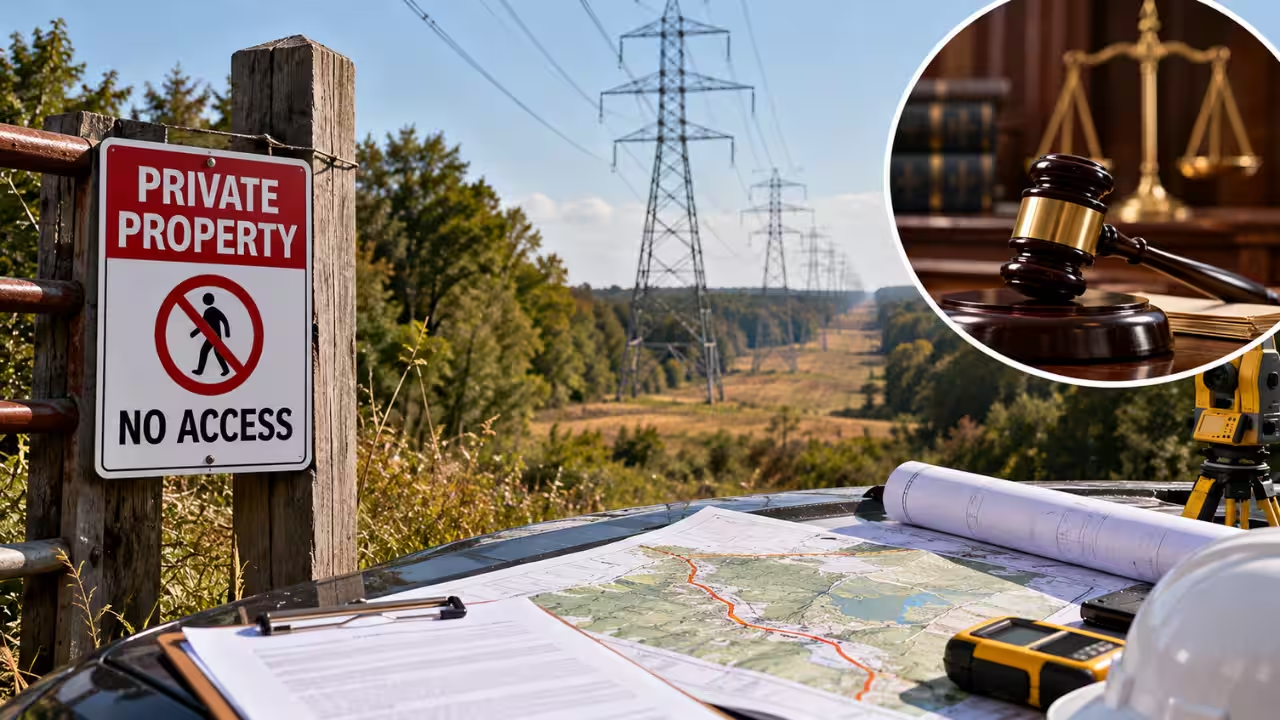
A US appeals court has upheld an order allowing PSEG Renewable Transmission LLC to access private properties in Maryland to conduct surveys for its proposed 67-mile Maryland Piedmont Reliability Project, despite opposition from landowners and pending state approval. According to the Fourth Circuit, the Arentz Family and 116 other property owners refused access. The project’s application for a Certificate of Public Convenience and Necessity remained administratively incomplete because required field studies had not been completed. The court backed survey access before final approval, while the Maryland Public Service Commission’s review of the project remained ongoing.Why Maryland landowners challenged access for a major power-line projectPSEG is developing the Maryland Piedmont Reliability Project, a high-voltage transmission line intended to supply electricity to Maryland and the surrounding region. According to the Fourth Circuit's judgment, the proposed line would extend approximately 67 miles across Baltimore County, Carroll County and Frederick County. The project was selected by PJM Interconnection, the regional transmission organisation, following a 2023 solicitation for proposals to address growing electricity demand and the retirement of power-generation facilities.The dispute involved the Arentz Family and 116 other defendant-appellants who refused to allow PSEG onto their properties. The court record states that the affected land included multi-generational farms, properties subject to forest and wetland conservation easements, and land used for commercial businesses. PSEG sought access to carry out surveys needed to assess the project's environmental and socioeconomic effects and support its application for state approval.Why Maryland flagged PSEG’s power-line applicationMaryland requires a transmission-line developer to obtain a Certificate of Public Convenience and Necessity (CPCN) from the Maryland Public Service Commission before construction can begin. PSEG submitted its application in December 2024, and the commission referred the question of completeness to the state's Power Plant Research Program (PPRP), part of the Maryland Department of Natural Resources.In March 2025, the PPRP reported that it lacked sufficient information to determine whether the application was complete. PSEG had submitted desktop studies based on secondary sources because it could not access the properties, but the programme said those studies could not be verified and that field studies were necessary. The application was consequently classified as “administratively incomplete”. The court record states that the PPRP estimated it would take approximately 30 months to assess a CPCN application after filing.You use AI every day. Now get your AI Quotient. Take the AIQ test.
Topics in this story
- Maryland Piedmont Reliability Project
- PSEG Renewable Transmission LLC
- Certificate of Public Convenience and Necessity
- power-line project surveys
- Maryland Public Service Commission
- high-voltage transmission line Maryland
- property owners opposition power line
- environmental impact studies
- electricity demand Maryland
- field studies power-line project
Gathered from external sources. Rights to this text belong to whoever originally published it.