In 2024, Florida paid $1.54 million for development rights to the Watson family’s 550-acre Gilchrist County farm; protecting its dairy, pastures and forests from development forever
US News: A fourth-generation Florida farm in Gilchrist County took a different path from the residential development that has reshaped parts of North Central F.
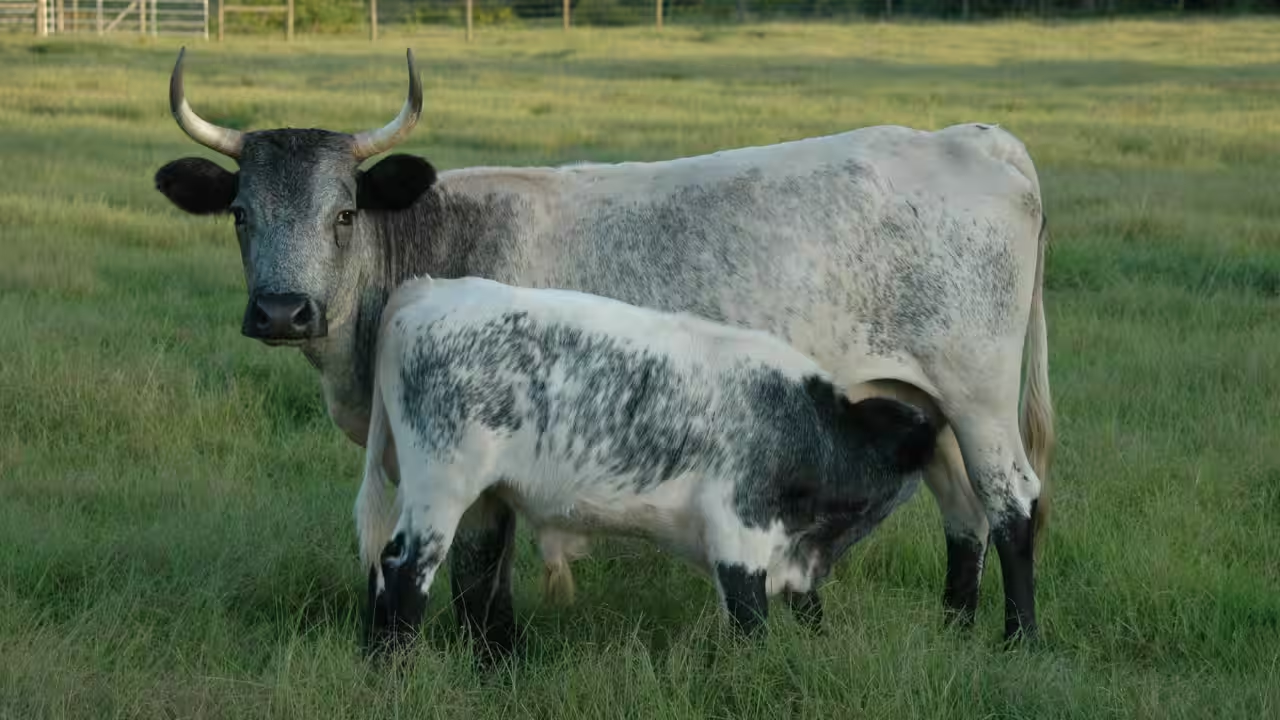
A fourth-generation Florida farm in Gilchrist County took a different path from the residential development that has reshaped parts of North Central Florida. In January 2024, the Florida Department of Agriculture and Consumer Services announced that the Watson Farm had been permanently protected through a rural land protection easement. The state paid $1.54 million for the development rights to the 550-acre farm and dairy operation. According to the Florida Department of Agriculture and Consumer Services, the Rural and Family Lands Protection Program purchases development rights through voluntary easements that prevent future development while allowing agricultural operations to continue.The Watson family continues to own and operate the property while accepting permanent restrictions on how the land can be developed. The land remains productive, but the development rights that could have allowed it to be subdivided to other uses are removed.The Watson family has farmed the property for generationsThe Watson family has owned and operated the property since the turn of the 20th century, according to FDACS. Its agricultural history has included vegetables, tobacco and watermelons, along with livestock production. The current dairy operation began in 1999, after the family shifted from beef cattle to dairy stock.Some of the property's former row-crop fields were converted to pasture to support the dairy. FDACS says the entire site is upland, with about two-thirds of the property consisting of improved pasture. Scattered forest stands contain hardwoods and pines, while smaller areas contain slash and loblolly pine plantations.The state describes the program as a way to keep agricultural land in production while protecting natural resources. The easements also keep the properties on local tax rolls and require owners to maintain their land and natural resources according to best-management practices.The farm sits in an important Florida springshedAccording to the Alachua Conservation Trust, the property lies within the Devil's Ear Springshed in Gilchrist County, which is an area connected to the groundwater system feeding one of Florida's first-magnitude springs. The trust says the 561-acre property was once used for phosphate mining before becoming an agricultural property. Its sandy soils are vulnerable to nitrate leaching, particularly during periods of heavy rainfall when irrigated row crops are being grown.The conservation agreement therefore does more than prevent houses from appearing across the property. The Watson family also agreed to gradually reduce some of the agricultural pressures on the land.Existing irrigated row crops are being transitioned toward non-irrigated pasture over a 10-year period, and funding from conservation partners is helping with that change. The arrangement provides a way to keep the property in agricultural use and also reduces the likelihood that it will eventually be divided among residential lots.Conservation does not mean the farm stops workingThe easement model allows the Watson family to continue using the property rather than turning it into a public preserve, which was one reason the project could address both conservation and the family's long-term interest in keeping the farm intact. The Alachua Conservation Trust said the Watson family approached the organization about protecting the property while also dealing with farming debt. The resulting partnership brought together the trust, FDACS, the Suwannee River Water Management District and Stetson University's Institute for Water and Environmental Resilience.Stetson described the property as a former dairy operation within the Devil's Ear Springshed and said the project would move the farm toward lower-impact agriculture over the following decade. The state did not need to buy the entire property to keep it from being developed. It could leave the land with the people already farming it while permanently limiting future uses by purchasing the development rights.The land stays in the familyFlorida's Rural and Family Lands Protection Program was created in 2001 as development increasingly put pressure on agricultural land, and the Watson Farm became one of several properties protected through the program in January 2024. FDACS announced the Watson, Kirkland and Hart properties together, saying that the three easements covered more than 2,300 acres of family farms. The agreement preserves a property that has remained in the family for more than a century. The result is not a farm removed from the economy, but one whose future has been tied more closely to agriculture than to subdivision.Catch the latest World News and Live updates. Download the TOI app.
Topics in this story
Gathered from external sources. Rights to this text belong to whoever originally published it.