She once cooked meals for 500 homeless people from her Atlanta apartment; now entrepreneur Jasmine Crowe's company has served 30 million meals and rescued food from landfills
Before she became the founder of a growing food recovery business, Jasmine Crowe was spending hours in grocery stores, cooking in her Atlanta apartment
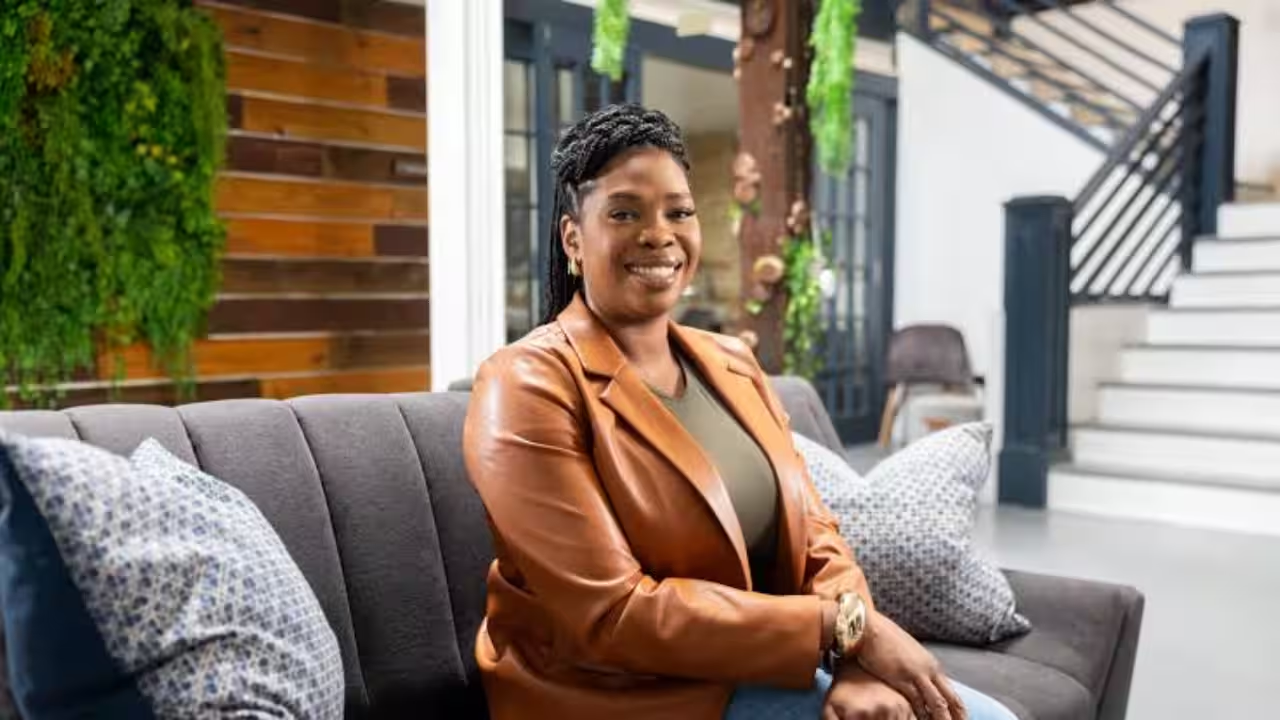
Before she became the founder of a growing food recovery business, Jasmine Crowe was spending hours in grocery stores, cooking in her Atlanta apartment and loading meals into her car for people who had nowhere else to turn. What began as a personal effort to feed hundreds of people gradually exposed a problem she had not initially set out to solve: businesses were throwing away perfectly edible food while families and homeless communities struggled to find enough to eat. As reported by Forbes, in 2017, Crowe turned that observation into Goodr, a technology-driven company that connects surplus food with people who need it. Its reported reach has since grown to millions of meals.Jasmine Crowe's Atlanta apartment became the starting point for Sunday SoulLong before Goodr became a business, Crowe was organising meals for people experiencing homelessness in Atlanta. Her initiative, called Sunday Soul, grew out of her desire to provide restaurant-quality dining experiences to people who rarely had access to them. Rather than simply handing out food, she wanted guests to sit down, enjoy a proper meal and be treated with dignity.The work was considerably more demanding than arranging a weekly dinner. Crowe would spend as many as 40 hours across three or four days shopping for ingredients, comparing prices, collecting coupons and preparing food. She sometimes cooked for as many as 500 people, working from her own kitchen before transporting the meals to locations around the city. The gatherings eventually extended beyond Atlanta, reaching communities in Washington DC and New Orleans.For several years, she continued organising these dinners largely through her own resources. The effort attracted attention after footage of one of her pop-up dining events circulated widely online. People watching the video were interested in how the meals had been arranged and, in particular, which restaurants or grocery stores had supplied the food.How Jasmine Crowe turned America's food waste problem into Goodr in 2017Crowe began examining how restaurants, supermarkets and large organisations handled food they could no longer sell or serve. She saw a disconnect between the amount of edible food being discarded and the demand for meals among people facing food insecurity.The problem, as she understood it, was not simply that communities lacked food. It was also that the existing systems were not particularly effective at moving surplus supplies to the places where they were needed. A restaurant might have prepared meals left over at the end of an event, while a nearby shelter or community organisation was looking for food to distribute.Crowe started considering whether technology and delivery systems similar to those used by food-ordering companies could be adapted for food donations. Instead of arranging individual collections herself, she wanted businesses to be able to report available food and have a system organise its collection and redistribution. She founded Goodr in January 2017 as a food-waste management business. The idea was to combine technology, transport and partnerships with community organisations rather than rely entirely on traditional charitable donations.The timing also reflected a wider challenge in the United States. The US Department of Agriculture estimated that 11.8% of American households experienced food insecurity in 2017. For Crowe, the contrast between food being thrown away and households struggling to obtain enough to eat was the problem Goodr was designed to address.From corporate food waste to community meals through Goodr's technologyGoodr's model gives participating businesses a way to arrange the collection of food they would otherwise discard. Through its platform, organisations can report surplus supplies, after which the company coordinates the process of getting suitable food to nonprofit groups and other distribution partners. The technology also provides a record of what happens to the donations. She wanted businesses to have more than an assurance that their surplus food had been collected. They needed information about where it went, how it was distributed and what impact the donations produced.When she first developed the platform, Goodr incorporated blockchain technology to create a record of the food's journey. The system was intended to give participating companies greater visibility into the movement of their donations, while providing documentation relevant to their charitable contributions and tax reporting.Among the early organisations associated with the business were Turner Broadcasting Systems, the Georgia World Congress Center and Hartsfield-Jackson Atlanta International Airport. These partnerships demonstrated how the model could operate beyond individual restaurants, particularly in places where large quantities of prepared food might otherwise go unused.From Sunday Soul to millions of meals served across the USThe scale of Goodr's work has changed considerably since Crowe was preparing meals in her apartment. An Atlanta Journal-Constitution report published in March 2025 described Goodr as operating across 15 states. It had also established more than two dozen free grocery stores, alongside its food recovery operations. A March 2025 report reveals, the company was reported to have diverted approximately four million pounds of food from landfills and provided 30 million meals to people in need.Goodr's website also lists 30 million meals served and four million pounds of food diverted from landfills among its headline impact figures. These numbers reflect a business that has moved well beyond the occasional collection of surplus restaurant food.The company's activities include pop-up grocery markets, neighbourhood food programmes and grocery delivery initiatives. These services address a problem that Crowe encountered while organising Sunday Soul: having food available does not automatically mean that everyone who needs it can reach it.The pandemic expanded Goodr's approach to food accessThe Covid-19 pandemic brought additional pressure on American households, particularly families dealing with job losses, school closures and interruptions to existing food assistance arrangements.For Goodr, the period also created a need to rethink how food could reach communities. With children losing access to school meals and families facing financial uncertainty, the company expanded its work beyond collecting surplus food from businesses.Crowe and her team began developing free grocery stores in schools, senior centres and lower-income neighbourhoods. These spaces offered people access to essential food supplies without requiring them to rely solely on conventional food distribution arrangements.By 2025, Goodr's network included more than two dozen such grocery locations, according to the Atlanta Journal-Constitution. The expansion showed how the original food recovery concept had developed into a broader operation involving food distribution, community partnerships and access to groceries.A business that grew from a question about discarded foodCrowe's journey from Sunday Soul to Goodr began with a relatively straightforward observation. She was spending considerable time and money preparing meals for people in need, while businesses around her were disposing of food that could potentially have been used.The first response was to find a way to connect those separate situations. Over time, that developed into a technology and logistics business with food recovery, community grocery programmes and partnerships across the United States.You use AI every day. Now get your AI Quotient. Take the AIQ test.
Topics in this story
Gathered from external sources. Rights to this text belong to whoever originally published it.