Lawyers rush to halt Indiana execution over state’s lethal drug supplier
Hours before Indiana was poised to carry out its first execution of the year, set for Thursday before sunrise, lawyers and supporters for the condemned man rallied to spare his life after new details emerged about the state’s secretive process of obtaining lethal injection drugs.
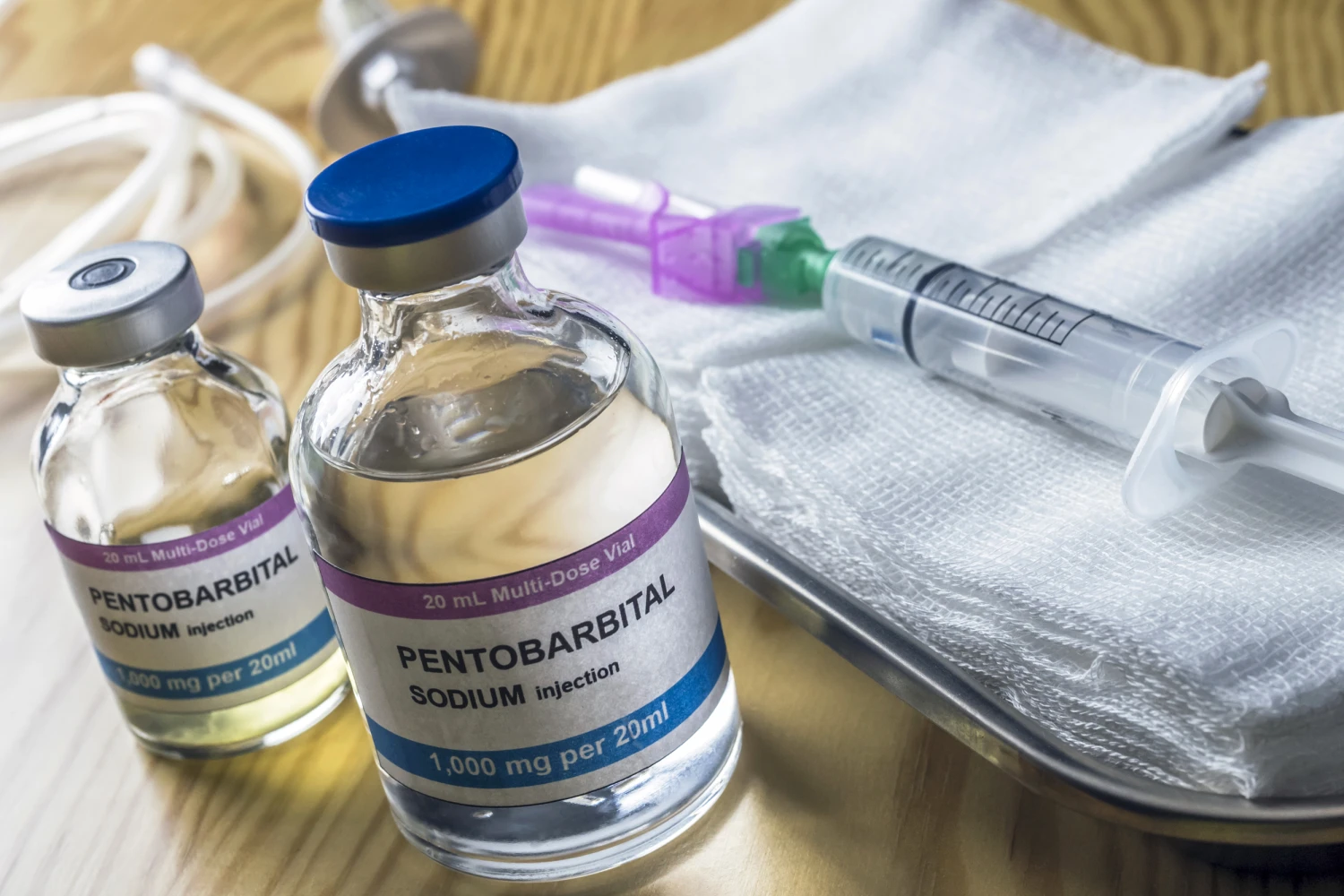
Hours before Indiana was poised to carry out its first execution of the year, set for Thursday before sunrise, lawyers and supporters for the condemned man rallied to spare his life after new details emerged about the state’s secretive process of obtaining lethal injection drugs. Attorneys for Jeffrey Weisheit, 50, called on Indiana Gov. Mike Braun to halt his lethal injection execution and order an independent review of the state’s procedures over allegations that the state obtained its chemicals from a pharmacy currently on probation and facing suspension of its license. “Laid bare, the apparent conduct here is patently unworthy of the public’s confidence in the solemn exercise of state power in taking a human being’s life in the name of the people,” Joe Perkovich, an attorney for Weisheit, said in a statement Wednesday. Weisheit, who was convicted in the 2010 murders of two young children in a house fire, did not contest his guilt but sought clemency from Braun for his sentence to be commuted to life in prison without parole. His attorneys are citing Tennessee’s failed lethal injection execution of Christa Pike on Sept. 30 in his new application to the governor seeking a reprieve, saying Indiana’s protocol is “more susceptible to catastrophic failures such as the one that placed Ms. Pike in a coma,” and that the pharmacy listed on a state Department of Correction invoice has a history of “rampant mishandling of drugs.” An updated inventory log provided to NBC News shows that the Department of Correction added six vials of the lethal drug, pentobarbital, to the prison supply on Oct. 29. An invoice included in the reprieve application says that the state paid $275,000 for those vials — far higher than the typical $15,120 to $16,250 price for commercially made injectable pentobarbital. The invoice is heavily redacted and shows neither the date nor supplier for the transaction. Indiana law shields the identities of participants, pharmacies and suppliers involved in carrying out executions. However, a September 2025 invoice for the same dollar amount that corresponds with the last time the state added vials of pentobarbital to its supply accidentally revealed the possible supplier of the drug, according to exhibits included in Weisheit’s application for a reprieve. The exhibits were produced by the Department of Correction in response to a records request related to Weisheit’s execution date. An address retrievable from beneath a black redaction corresponds to the address for Pharmaneek, an Indianapolis-based pharmacy. Pharmaneek is scheduled to appear before the Indiana Board of Pharmacy on Monday — four days after Weisheit’s scheduled execution — over allegations that the pharmacy violated its probation after failed inspections by the Indiana Professional Licensing Agency and the Food and Drug Administration. The inspections found that Pharmaneek stored drugs in unlabeled bottles, found bottles of expired drugs “on random inspection of active pharmacy shelves” and failed to keep consistent temperature logs for pharmacy storage areas. In a settlement agreement with the state, Pharmaneek said some inspection problems were due to remodeling. According to an FDA inspection report from March 2026, the “facility is not maintained in a good state of repair, creating unsanitary conditions whereby drug products may be contaminated with filth.” The FDA report says its findings do not represent a final agency determination of compliance. Indiana licensing records for Pharmaneek that correspond with details listed on the Department of Correction invoice show that the pharmacy’s license and controlled substance registration are on probation. According to a legal filing dated Sept. 24, the Indiana Board of Pharmacy, which investigates complaints and can issue penalties, ordered Pharmaneek to appear before its members on Oct. 5 to “show cause” why its pharmacy license “should not be suspended on an emergency basis or subjected to the imposition of further sanctions.” A motion from Pharmaneek’s legal counsel included in the reprieve application shows that a lawyer for the pharmacy asked that the appearance be moved to Monday. Pharmaneek did not respond to NBC News’ multiple requests for comment this week by phone. The Indiana Department of Correction also did not respond to requests for comment or an interview. The governor’s office declined to comment Wednesday on the allegations that the Department of Correction obtained execution drugs from a pharmacy on probation. While Pharmaneek is currently barred from mixing custom drugs — a process known as compounding — Weisheit’s reprieve application alleges the pharmacy is acting as a middleman for the Department of Correction, supplying it with manufactured pentobarbital the department is not permitted to purchase straight from traditional drug manufacturers. In court filings prior to the execution of Roy Lee Ward in October 2025, the state said the pentobarbital it planned to use was produced by a pharmaceutical company instead of a compounding pharmacy, and distributed “without any post-manufacturing customizations.” Major drug companies have explicitly warned states not to use their drugs for executions and have sued states for the return of their chemicals. Sagent Pharmaceuticals, one of two pharmaceutical companies that manufacture pentobarbital in the United States, did not respond to emailed questions about whether it has a relationship with Pharmaneek; however, the company’s policies do not allow its distributors or wholesalers to sell its products to prisons for use in lethal injection. The other, the drugmaker Hikma, said the company does not have a purchase agreement with Pharmaneek. “We have strict prohibitions and controls intended to prevent the use of our medicines in capital punishment,” said Steven Weiss, a Hikma representative. A spokesperson for Indiana Attorney General Todd Rokita told NBC News the office is “confident in the ability to safely and lawfully carry out the scheduled execution.” They added that Weisheit’s lawyers “have publicly identified a pharmacy that they claim is connected to Indiana’s execution-drug supply, despite state law requiring supplier information to remain confidential.” Weisheit has been on death row for 13 years after a Vanderburgh County jury convicted him of murdering Alyssa Lynch, 8, and her brother, Caleb, 5, the children of his then-girlfriend, Lisa Lynch. She had been at work while Weisheit was watching the children in their Evansville home. Prosecutors said Weisheit bound and gagged Caleb, then placed railroad flares in his clothing and near his body before setting fire to the home and fleeing out of state. Alyssa’s body was found in a closet. The children had died of smoke inhalation. Weisheit appealed his conviction, including on the grounds of ineffective counsel, but was denied relief. Last month, Weisheit appeared at a clemency hearing in front of the state parole board, during which his mental illness and other health struggles were discussed. He was unable to offer a reason for why he killed the Lynch children. “There is no excuse or explanation for what I did,” Weisheit said. Lisa Lynch asked the board to uphold his death sentence and keep the focus on her children. “Every birthday, every holiday, every landmark moment is marked by their agonizing absence,” she said. “Time passes, but the weight of losing them never fades.” The children’s father, Steven Lynch, told the board that he supported clemency and forgave Weisheit for his actions. The board ultimately recommended Braun deny clemency, which he agreed Monday not to grant. Lisa Lynch could not be reached for comment ahead of Weisheit’s scheduled execution. Steven Lynch told NBC News that he still hopes Weisheit can be shown mercy and said he was thinking of the convicted killer’s own family as they brace for a finite loss like the one he experienced when his own children were murdered. “No parent should have to outlive their child,” Steven Lynch said, adding that “mercy is extended to even the least of us.” Weisheit’s planned execution is one of three set for Thursday, with the others to be carried out by lethal injection in Alabama and Florida.
Topics in this story
Gathered from external sources. Rights to this text belong to whoever originally published it.