In 1969, an ornithologist began spending six months a year on a remote New York island; decades later, its tern colony had grown to more than 26,000 breeding pairs
US News: Discover how Helen Hays transformed Great Gull Island from an abandoned military site into one of North America's most significant seabird conservation areas, witnessing a tenfold increase in tern populations over 50 years.
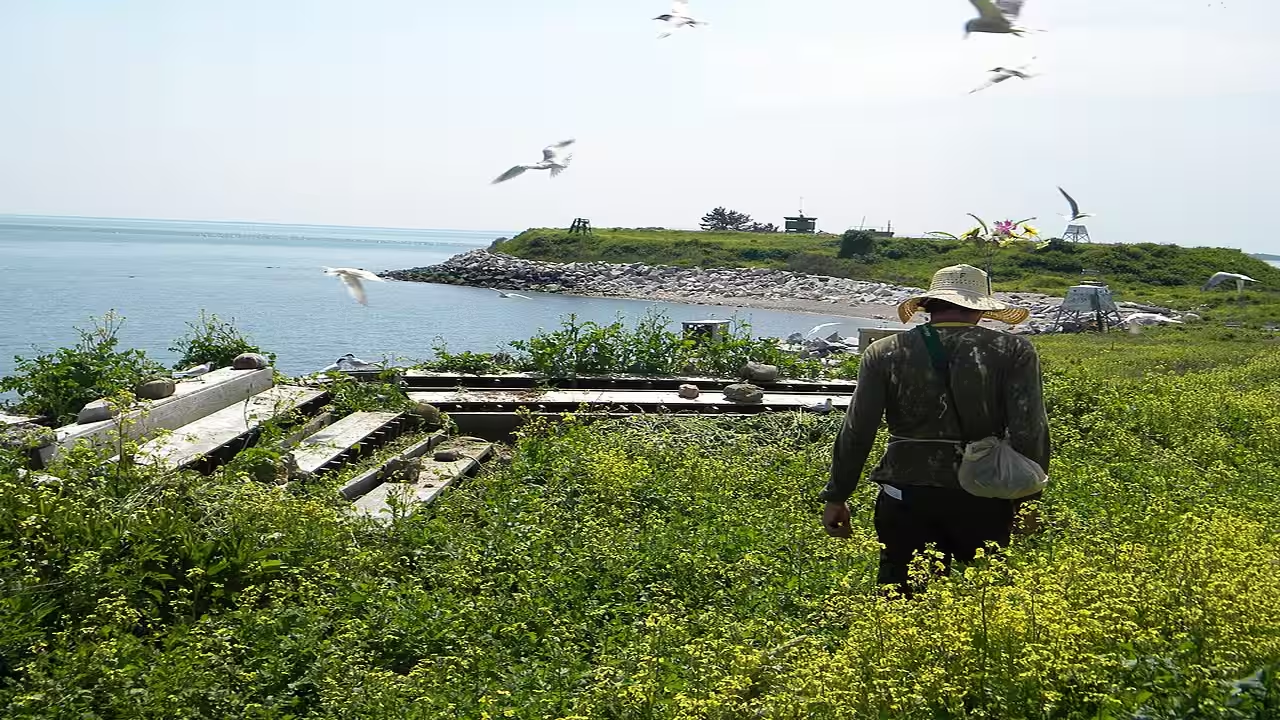
On a tiny island in Long Island Sound, an abandoned military outpost became home to one of North America’s most important seabird colonies. In 1969, ornithologist Helen Hays began spending roughly half of every year on Great Gull Island, living in former army buildings and working with volunteers to count, band and protect Common and Roseate Terns. More than five decades later, the island had become a major tern research and conservation site, with thousands of birds returning to breed each year.According to the American Museum of Natural History, Great Gull Island is a 17-acre former military outpost at the eastern end of Long Island Sound. The US Army occupied it as part of Fort Michie from 1897 to 1949, disrupting the island’s historic tern colony. After the fort was abandoned, the museum acquired the island in 1949 with the aim of restoring it as a breeding habitat for terns. The Linnaean Society of New York was tasked with preparing the island, removing parts of the abandoned military infrastructure and improving nesting areas. Terns returned in 1955, when 25 pairs of Common Terns were recorded, followed by Roseate Terns soon afterwards.From military outpost to tern sanctuaryAccording to the Linnaean Society of New York, the first clear sign that Great Gull Island could once again support a major tern colony came in 1955. Society member Irwin Alperin flew over the island and spotted 25 pairs of Common Terns nesting at its eastern end. Roseate Terns began nesting there soon afterwards. In 1963, Helen Hays visited the island with Catherine Pessino of the American Museum of Natural History and recognised its potential for long-term study of the two species. By 1969, Hays had recruited enough volunteers to spend the breeding season on the island and begin systematic monitoring of its tern populations.Conditions were far from comfortable for Hays and her team. The former military buildings were dilapidated, with leaky roofs, broken doors and windows, and cracked floors. Hays and her volunteers repaired what they could and converted the buildings into basic accommodation. She spent about six months on the island each year, from April to September, before returning to Manhattan for the rest of the year. Her work combined conservation with intensive field research. Volunteers banded chicks and captured adults for identification, allowing researchers to follow individual birds when they returned in subsequent years. The long-running programme generated information on population changes, nesting behaviour and habitat conditions, while bringing together volunteers, students and scientists.A growing colony and a scientific recordThe Linnaean Society of New York records a striking increase in the island’s tern population over the decades. At the beginning of the long-term project, Great Gull Island supported approximately 3,000 breeding pairs of Common and Roseate Terns. By 2014, more than 26,000 nesting pairs of Common Terns had been recorded on the island. Maintaining suitable nesting habitat required active management because the two species use the island differently. Common Terns favour open nesting areas, while Roseate Terns tend to select more sheltered locations, including spaces beneath rocks and specially provided nest structures. Vegetation can also make areas unsuitable for Common Terns, which prefer relatively open ground. Habitat management therefore became an important part of maintaining suitable breeding conditions, including the use of meadow voles to help control vegetation.The island’s long-term research has also documented environmental threats to the birds. According to the US Geological Survey, three Roseate Tern chicks found with congenital abnormalities at Great Gull Island in 1970 contained high levels of polychlorinated biphenyls (PCBs) and DDE, raising concerns about the effects of persistent chemical pollutants on the species. A later 1981 survey examined organochlorine residues in Roseate Tern eggs from major colonies and investigated whether contamination was associated with changes in eggshell characteristics.The combination of habitat management, long-term monitoring and research has given Great Gull Island an importance far beyond its small size. The Linnaean Society of New York describes it as supporting the world’s largest nesting colony of Common Terns and the largest Roseate Tern colony in the Western Hemisphere, making the former military outpost an important site for understanding and protecting these seabirds.A legacy built one summer at a timeThe island is small, but its importance extends far beyond its 17 acres. Its isolation and protected nesting habitat have helped make it suitable for large colonies of seabirds, while decades of monitoring have created a valuable record linking individual birds with their breeding sites and movements. Hays eventually ended her annual summer stays after spending roughly half a century working on the island. The programme she established, however, continued through the Linnaean Society of New York, volunteers and researchers.The American Museum of Natural History has also preserved materials from the project, including field notes and other documents, helping maintain a record of the long-running work. What began in 1969 with Hays and volunteers living for months in deteriorating former army buildings developed into one of the longest-running tern research programmes in the region. Great Gull Island remains both a protected breeding site and an important location for studying Common and Roseate Terns, including their population trends, breeding behaviour and movements.Catch the latest World News and Live updates. Download the TOI app.
Topics in this story
Gathered from external sources. Rights to this text belong to whoever originally published it.