An Arizona home's construction blocked a neighbour's mountain view; court rules homeowners have no automatic right to unobstructed scenery
An Arizona Court of Appeals has ruled that homeowners have no automatic legal right to an unobstructed mountain view across a neighbour’s property,
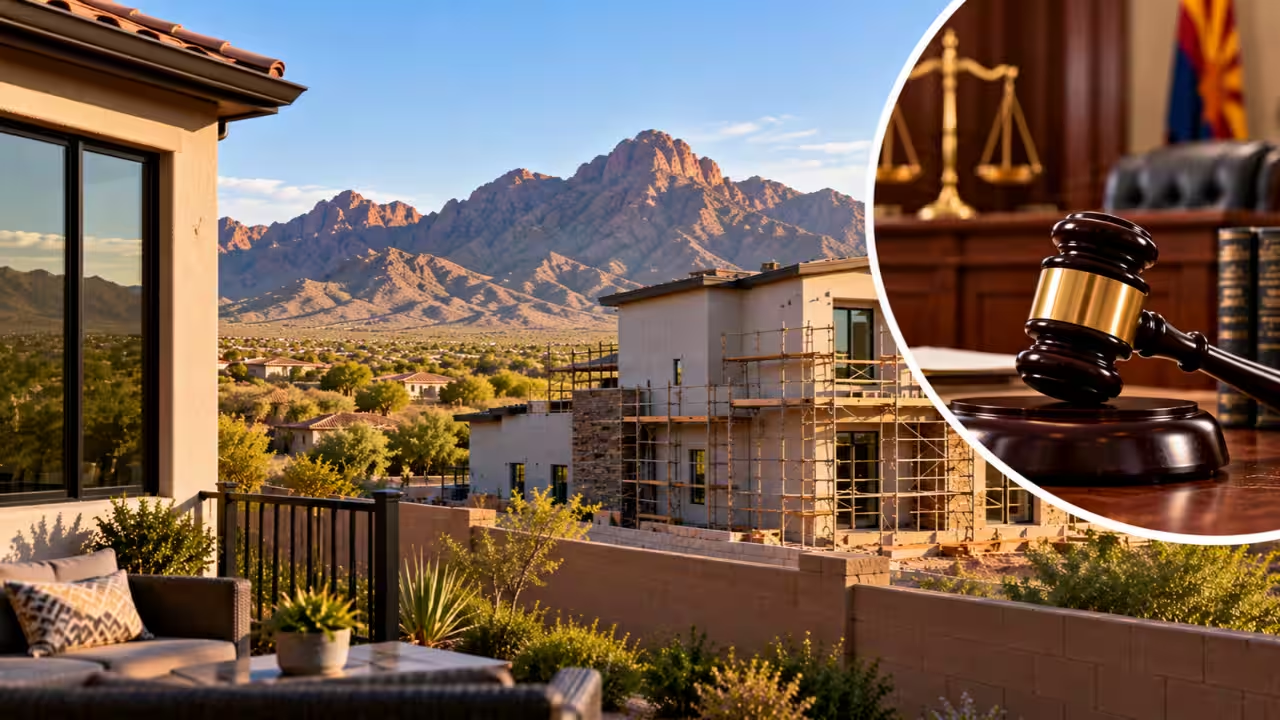
An Arizona Court of Appeals has ruled that homeowners have no automatic legal right to an unobstructed mountain view across a neighbour’s property, upholding the dismissal of a private nuisance claim. The case involved Tina and John Pavlak, whose neighbouring property in Mesa was approved for a house following a change to its building envelope. The couple argued that the proposed construction would obstruct their scenic view, reduce privacy and affect their property’s value. In its ruling, filed on 28 August 2026, the court found that Arizona law does not recognise loss of a view as grounds for a private nuisance claim.Why Arizona homeowners have no automatic right to a mountain viewAccording to the Arizona Court of Appeals’ judgment, Funk Family Enterprises LLC purchased Lot 10 in 2023. In 2024, the HOA and the City of Mesa approved requests to modify the building envelope, moving it uphill to improve the view from the proposed house on that property. Funk applied for a construction permit in March 2025. The Pavlaks subsequently brought legal action, seeking to prevent construction and challenging the proposed development on several grounds.The homeowners initially pursued claims including fraudulent schemes and artifices, unjust enrichment and fraudulent misrepresentation. After those claims were dismissed, they filed an amended complaint alleging violations of the Arizona Consumer Fraud Act and private nuisance. They argued that the proposed house would reduce their privacy, obstruct their view, diminish their property’s value and potentially cause rainwater runoff problems. They also alleged a $300,000 reduction in the value of Lot 11 and the loss of $287,107 in recent backyard improvements. The lower court denied their request for a preliminary injunction and dismissed their amended complaint. On appeal, the Pavlaks challenged the dismissal of their private nuisance claim.What Arizona's ruling means for blocked mountain viewsIn considering the appeal, the Arizona Court of Appeals examined whether the alleged obstruction of the view could support a private nuisance claim under state law. The court explained that such a claim requires more than a change in a neighbouring property’s use or appearance. Citing earlier Arizona decisions, it stated that the interference must be substantial, intentional and unreasonable under the circumstances and must cause significant harm. The court also noted that not every inconvenience or reduction in property value constitutes an actionable nuisance.The judgment addressed the legal position on scenic views directly. In paragraph 27, the court stated: “Arizona has never recognised a right to an unobstructed or scenic view across a neighbour’s property, and this court does not recognise such a right here.” It consequently concluded that the Pavlaks could not establish a nuisance claim based on the loss of a view caused by construction within the modified building envelope. The court also referred to decisions from other jurisdictions supporting the general rule that a lawful building does not become a private nuisance merely because it obstructs a neighbouring property’s view. It noted that a statute or easement could provide a different legal basis, but neither was at issue in this case.Arizona court dismisses claims over blocked views, privacy and rainwater runoffThe court also considered the Pavlaks’ concerns about privacy and potential rainwater runoff. On privacy, it found that Arizona had not recognised a private nuisance claim based on the kind of loss of privacy alleged in this case. The judges distinguished the dispute from cases involving more intrusive conduct, such as prolonged surveillance or the repeated direction of floodlights at a neighbour’s home. The court also noted that the Pavlaks had not alleged that Funk had modified the building envelope out of spite or malice.Regarding water runoff, the court acknowledged that interference with the flow of surface water could constitute a nuisance in appropriate circumstances. However, the Pavlaks had alleged only that the proposed house might alter rainwater flow and potentially cause water to enter their property. The construction had not yet taken place, and the alleged repeat water intrusion had not occurred. The court found these allegations insufficient to establish an actionable nuisance claim. It therefore affirmed the lower court’s judgment dismissing the claim and denied both parties’ requests for attorneys’ fees as sanctions on appeal. Funk was awarded taxable appellate costs, subject to compliance with the applicable court rules.You use AI every day. Now get your AI Quotient. Take the AIQ test.
Topics in this story
Gathered from external sources. Rights to this text belong to whoever originally published it.