In Serbia, a very different student movement just ousted another European strongman
Another one of eastern Europe’s authoritarian leaders has been vanquished by an upstart movement, with Serbia’s long-term president Aleksandar Vucic unexpectedly losing out to a student-led campaign.
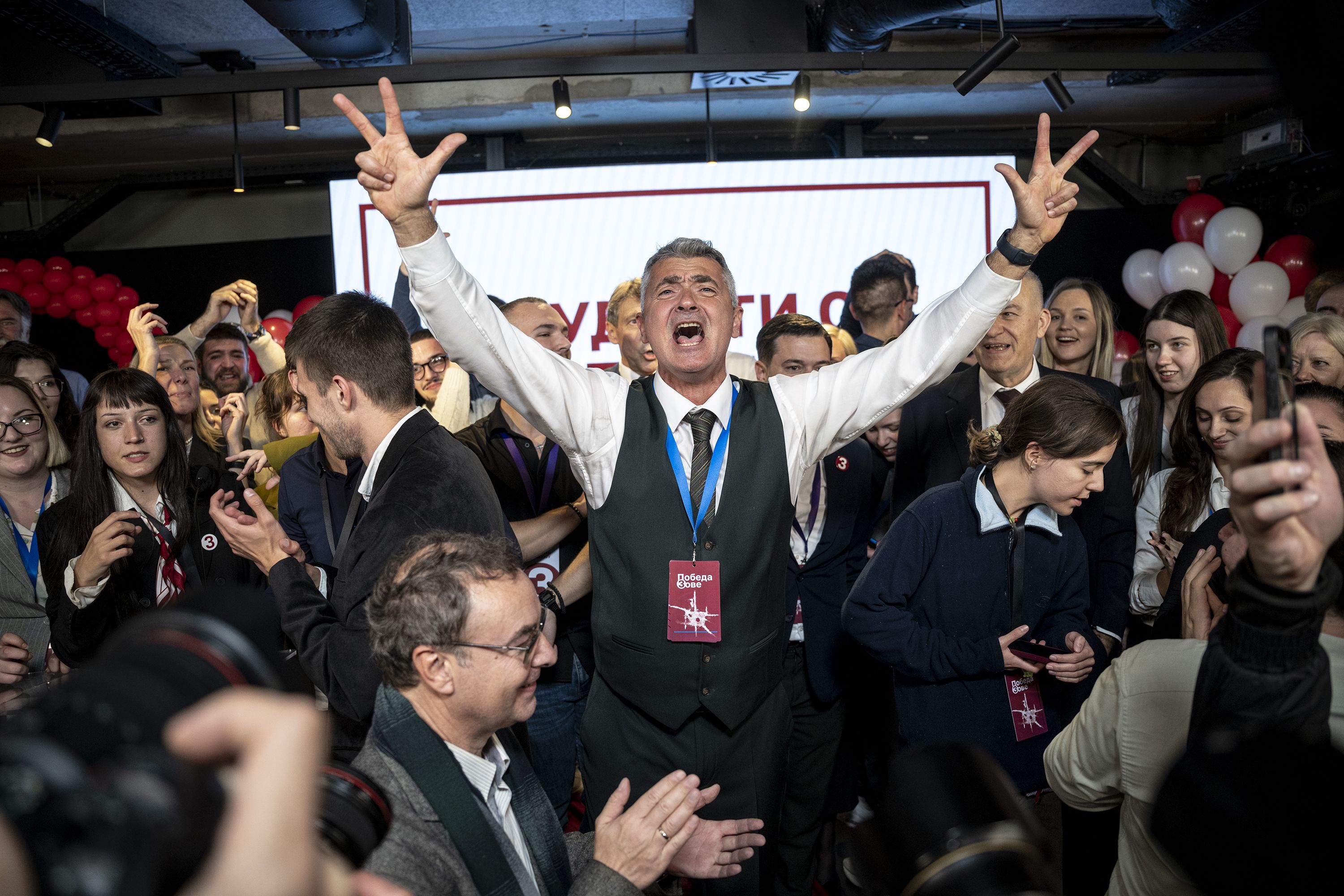
Another one of eastern Europe’s authoritarian leaders has been vanquished by an upstart movement, with Serbia’s long-term president Aleksandar Vucic unexpectedly losing out to a student-led campaign. While young people elsewhere in Europe, especially in France and Italy, have taken to the streets to demand better schooling and opportunities in recent weeks, the Serbian students’ movement had very different origins and goals – and remarkable staying power. It was also a movement more of students in their 20s, rather than their teens – though high school students also became involved. It was also well-disciplined. And despite the government’s efforts to suggest otherwise, it did not include a fringe that sought out confrontation – nor an element more interested in looting. The rise of the Serbian student movement began two years ago in the most unlikely of circumstances. A canopy at a railway station in the northern city of Novi Sad collapsed in November 2024, killing 15 people, including two children. The tragedy, caused by shoddy construction, triggered an outpouring of anger over corruption, the government’s lack of accountability and negligence. Humble origins The protests began with symbolic events. Each Friday the deaths were commemorated with a 15-minute silence, starting at 11:52 a.m. local time, the exact time when the canopy collapsed. When student vigils were harshly dealt with by police, the protests became a campaign. In March last year, more than 300,000 people filled the streets of the capital, Belgrade. In some ways, the student movement emulated US civil rights protests in the 1960s. In January last year, students from Belgrade decided to walk the 100-kilometer (62-mile) distance to join their colleagues from the University of Novi Sad in blocking three city bridges. “By carrying copies of the Constitution with them, the students sought to remind everyone of their fight,” wrote Katarina Beširević of the University of Belgrade, referencing a cycling campaign student demonstrators conducted where they carried copies of country’s Constitution. It was also very inclusive. “A key distinguishing feature of the student movement is its commitment to building civic solidarity across religious, ethnic and regional divides. This includes, for instance, the active inclusion of Muslim and Bosniak students, with respect for their religious identity,” wrote Marta Szpala at the Center for Eastern Studies in Warsaw. Long marches across the country also enabled the students to voice their cause in smaller towns and villages, where people were unaware of the protestors’ aims because of the state’s stranglehold on the media. The movement’s goals soon morphed into something greater. Having begun wanting justice for the victims of Novi Sad, it became about rescuing democracy and civil society from rampant corruption, from elections marked by intimidation and surveillance, and from stifling state control over the media. In that respect it was fundamentally different from student protests elsewhere in Europe. The demonstrations were then institutionalized through the creation of the Students’ List, which scored a stunning victory over Vucic’s Serbian Progressive Party at the polls on Sunday. Vucic’s downfall mirrors that of Hungary’s Orban There are strong parallels with Hungary, where strongman Viktor Orbán was defeated earlier this year. Both he and Vucic were in power for more than a decade, were friendly toward Russian President Vladimir Putin, and had gathered immense power through control of the media and corporations. Vucic indeed borrowed from Putin’s playbook, seeking to pivot from president to prime minister when prevented by the Constitution from running again - and playing heavily on Serbian nationalism. Last month, Ratko Mladić, a Bosnian Serb commander convicted of crimes against humanity during the Yugoslav wars, was given a funeral with military honors in Belgrade. There are also parallels between Serbia and Ukraine, where protests by tens of thousands of mainly young people in 2014 ultimately toppled pro-Russian President Viktor Yanukovych amid massive corruption and his refusal to sign an association agreement with the EU. That spontaneous movement feared Ukraine was drifting back into Moscow’s orbit and wanted the country’s identity to be European. It also saw a state that lacked transparency and accountability. Likewise, Serbian protesters asserted their program was “European” in demanding the development of democratic institutions, an independent judiciary, media freedom and the protection of civil liberties. Challenges ahead In Serbia’s case, the evolution of the students’ movement may carry lessons for others. “Volunteers organized into working groups to coordinate logistics, safety, legal aid and digital communications. IT students developed encrypted platforms for secure communication and coordination, while law students and attorneys created a legal-response network to assist detained protesters,” wrote Breza Race Maksimovic and Srdja Popovic in the Journal of Democracy last year. It resulted in a “decentralized yet highly coordinated nature,” they added. “This mobilization is leaderless by design. Student assemblies operate on a horizontal model, organizing nightly plenary meetings to propose, debate, and vote on tactics.” That may have worked well in the face of an authoritarian state; there were no leaders to arrest. But it will be hard to transform into government. And it’s a world apart from the tightly disciplined Hungarian opposition party under Péter Magyar. The challenges ahead for this neophyte movement are daunting. It has few candidates with any experience of governing. The list of candidates for the election was made up of little-known academics, lawyers, athletes, farmers and artists. It will, however,have the support of the European Union. Congratulating the List on its victory, Commission President Ursula von der Leyen said Monday: “We stand ready to support reforms on the rule of law, media freedom, the fight against corruption and strong democratic institutions.”
Topics in this story
Gathered from external sources. Rights to this text belong to whoever originally published it.