In 2015, Chicago-area communities needed protection from flooding and sewer overflows, so officials turned part of Thornton Quarry into a reservoir that can hold 7.9 billion gallons of water
Discover how the Thornton Reservoir, a key component of Chicago's flood management system, has successfully captured over 62 billion gallons of stormwater and sewage to prevent sewer overflows. Built in 2015, this vast reservoir serves numerous communities, showcasing innovative engineering solutions against flooding.
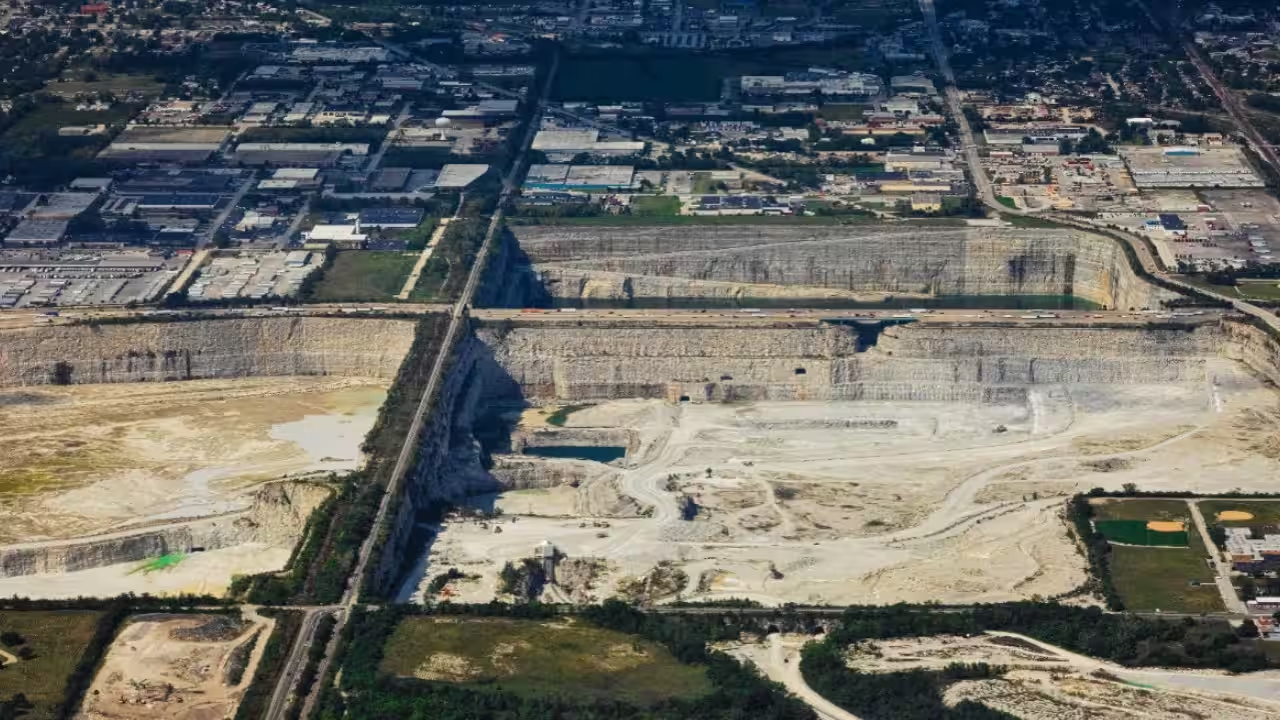
The Thornton Reservoir in Illinois was completed in 2015 and occupies the northern section of Thornton Quarry, providing service to Chicago’s Far South Side and 13 surrounding suburbs, according to the Metropolitan Water Reclamation District of Greater Chicago (MWRD). The project was established under the Tunnel and Reservoir Plan (TARP), also known as the Deep Tunnel, to collect excess stormwater and sewage before it could spill into rivers during heavy rainfall. After heavy storms in July 2026, it reached 94% of its 7.9-billion-gallon capacity and captured more than 7.3 billion gallons of water. Its capacity was expanded from an original 14,600 acre-feet to 24,200 acre-feet, per the US Army Corps of Engineers.How a former quarry became a flood-control facilityThornton Quarry dates back to the 1860s, when excavation began to obtain aggregate for road and building construction. The site was highly suited for a reservoir because of its shallow underlying bedrock, which was very close to the surface. Consequently, the facility was developed in two stages, starting with Thornton Transitional Reservoir, a temporary flood-control facility completed in March 2003.Before it was decommissioned in 2022, the transitional reservoir provided flood relief for nine communities and captured more than 58 billion gallons of floodwater across 83 filling events. On the other hand, building the permanent reservoir involved extensive excavation, tunnel connections, and sealing the surrounding rock. The excavation was completed in 2013, and the permanent facility entered into service in 2015.The reservoir is a key component of a 36.7-mile Calumet Tunnel System and serves a 91-square-mile area of combined sewers. These tunnels collect excess water and funnel it to the reservoirs, where it remains until it is processed by the treatment system. Furthermore, the engineering includes concrete plugs in former mining tunnels and a roller-compacted concrete dam underneath the tollway. There is also a grout curtain created by drilling deep holes around the reservoir perimeter to seal the reservoir and contain the stored water. In addition, the system has gates which isolate tunnels from the reservoir when required.Stormwater storage and the protection of waterwaysThe main objective of the reservoirs is to reduce flooding and prevent combined sewer overflows. In older combined sewer systems, rainwater and sanitary sewage flow through the same pipes, and during intense rainfall the volume can exceed the network’s capacity . As a result, both the untreated sewage and stormwater would enter waterways and worsen the basement flooding.The Tunnel and Reservoir Plan (TARP) diverts these excess flows through dropshafts and underground tunnels directly into the storage facilities. In a controlled manner, the water is then sent to the Calumet Water Reclamation Plant, approximately five miles north of the reservoir, where it is treated before being released into the Little Calumet River. The whole point of why the system stores excess water until treatment capacity becomes available is to reduce the pressure on local sewers during storms.As per the MWRD’s fact sheet, the system has prevented any sewer overflow since 2020. The Corps stated that about 35,090 structures benefited from the reservoir’s flood-protection measures. The scale of the facility is better understood through MWRD’s comparisons, which stated that the reservoir could accommodate six Soldier Field stadiums or hold the equivalent of 144 million rain barrels. The July 2026 storms showed the importance of maintaining available storage because, although the system can substantially reduce flooding and sewer overflows, its storage is finite. In essence, if the reservoir reaches capacity, sewers can still overflow into rivers, as they did before TARP was built.You use AI every day. Now get your AI Quotient. Take the AIQ test.
Topics in this story
Gathered from external sources. Rights to this text belong to whoever originally published it.