Trucks line up as long-delayed China-North Korea bridge officially opens
China and North Korea officially marked the long-delayed opening of their most significant land border crossing on Thursday, aiming to rejuvenate trade and commerce after years of soured ties and pandemic-related disruptions to cross-border exchange.
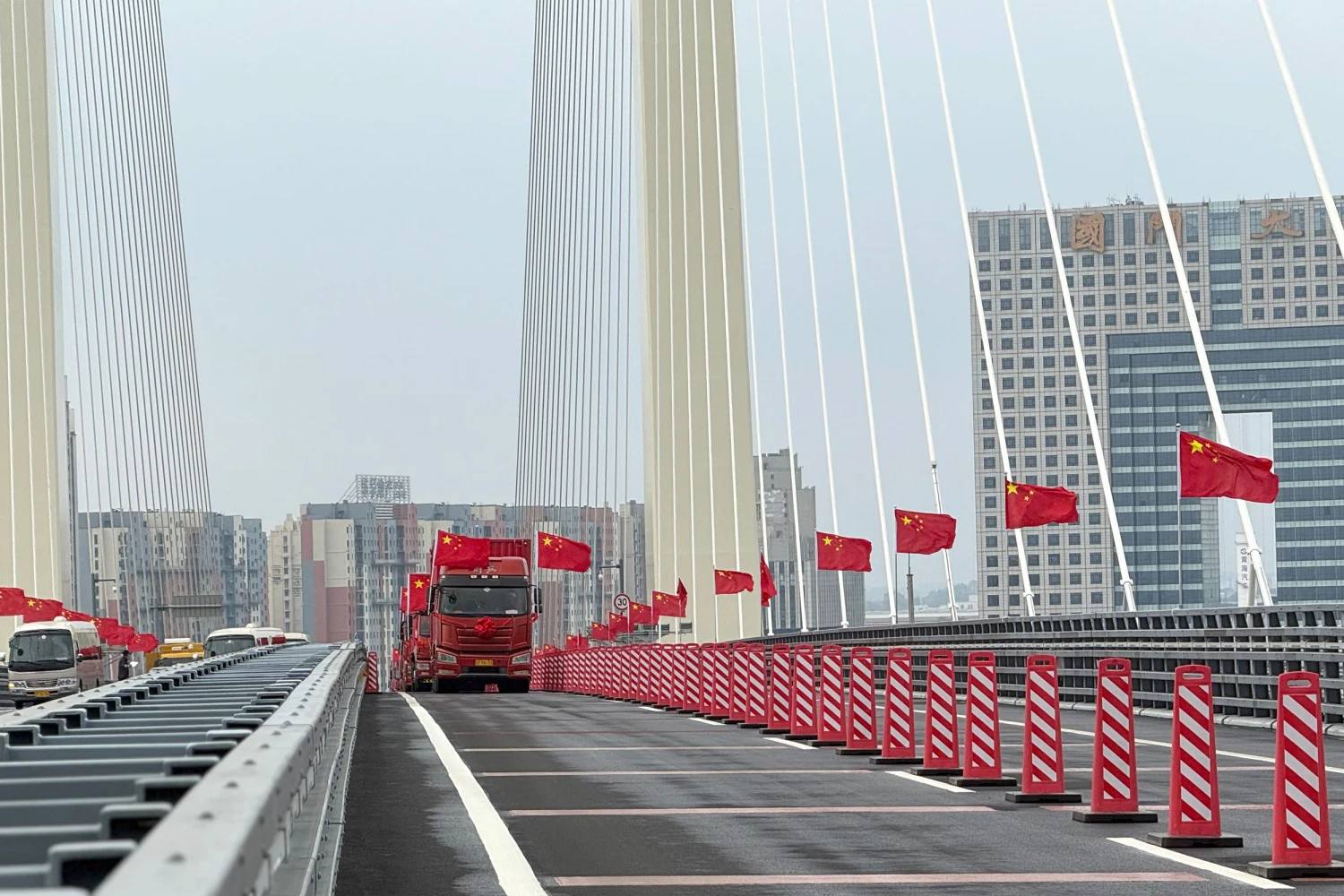
DANDONG, China — China and North Korea officially marked the long-delayed opening of their most significant land border crossing on Thursday, aiming to rejuvenate trade and commerce after years of soured ties and pandemic-related disruptions to cross-border exchange. The area around the New Yalu River Bridge saw increased activity over the past few days, with trucks adorned with Chinese flags waiting on the bridge ahead of a crossing on Thursday. Crowds also gathered on the Chinese side along a road overlooking the bridge. Chinese and North Korean flags also lined the cable-stayed bridge with towering pylons that had been completed in 2014 but remained unused, while approach roads and a customs compound on the North Korea end remained unfinished. On Thursday, the countries held an opening ceremony for the new bridge, according to Xinhua, China’s state-run news agency. North Korea’s state media have yet to report on the scheduled event. The opening signals progress in bilateral relations between Beijing and Pyongyang, marked by two summit meetings between their leaders in the past year. China is by far Pyongyang’s largest trading partner, even after a series of U.N. sanctions banned the flow of goods and workers to and from North Korea over the country’s defiant missile and nuclear weapons development. China and Russia, two U.N. Security Council permanent member states that voted to approve sanctions resolutions until 2017, have since questioned the legitimacy and efficacy of such bans. Analysts said North Korea, despite the potential economic boost from active trade, remains cautious of greater dependence on China. Russia is accused by countries such as the U.S. and South Korea of supplying sensitive military assistance to the North in return for Pyongyang’s help in fighting the war in Ukraine. “The bridge is unlikely to lead immediately to a full-scale return to pre-sanctions trade,” said Lim Eul-chul at Kyungnam University’s Institute for Far Eastern Studies in South Korea. But the bridge will help move heavy equipment, raw materials and energy products needed for North Korea’s development projects, he said. China’s exports to North Korea rose to a six-year high of $2.3 billion last year, a 25% increase over the previous year. That was still well below levels before U.N. sanctions were tightened in 2017.
Topics in this story
Gathered from external sources. Rights to this text belong to whoever originally published it.