A former military airfield in Berlin was saved from redevelopment; now people picnic, cycle and garden on its giant runways
Rest of World News: Cities throughout the world constantly grapple with what to do with land left behind by dying industries, closed military facilities and obsolete infr.
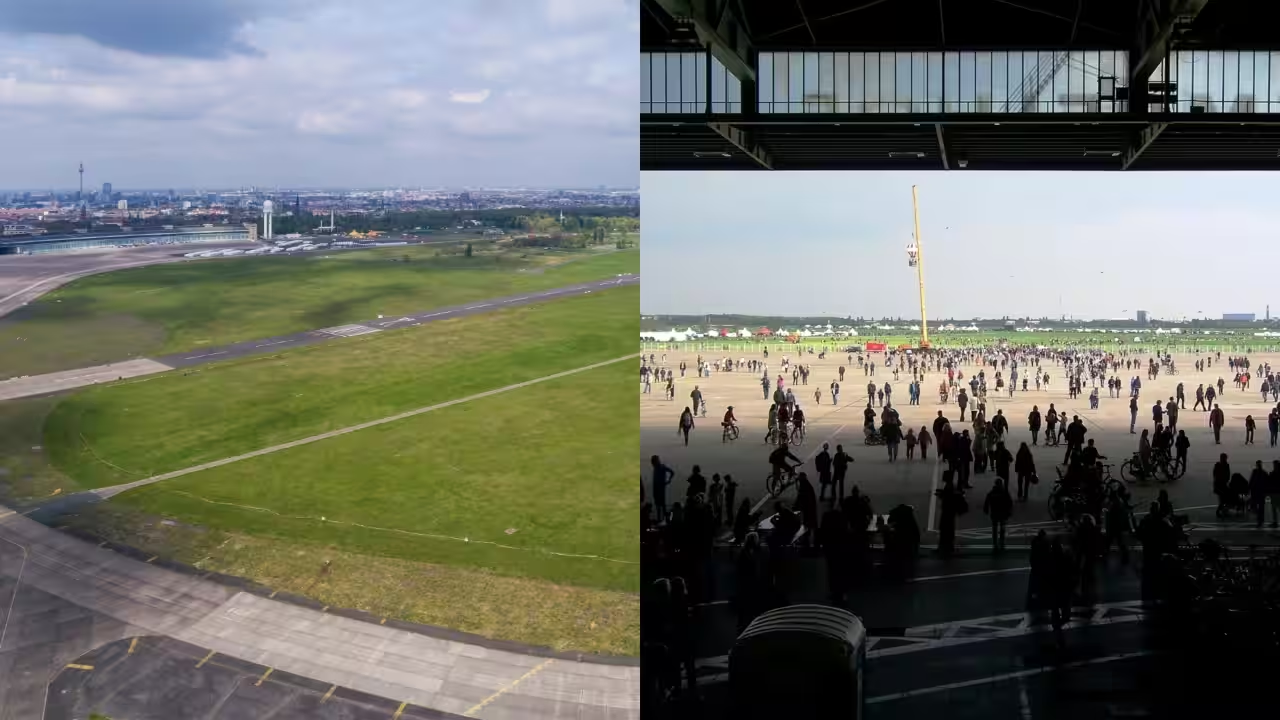
Cities throughout the world constantly grapple with what to do with land left behind by dying industries, closed military facilities and obsolete infrastructure. They often turn to housing or commercial development just because no better idea arrives in time. Berlin was facing precisely that conundrum after one of its most historically significant sites, a large Cold War-era airport in the centre of the city, stopped running flights altogether, igniting a protracted and often contentious debate about what should replace it.Tempelhof Airport opened in the late 1920s and quickly became one of Europe’s busiest airports. It took on international importance during the Berlin Blockade of 1948 and 1949, when Allied aircraft used its runways to supply the isolated western part of the city, landing as frequently as every 90 seconds at the height of the airlift. The airport continued to operate for decades after that, through hijackings and changing political borders and the building of newer airports elsewhere in the city, until commercial flights were finally stopped in October 2008 to consolidate air traffic at Berlin's new international airport.An area in the middle of the cityIn 2010, instead of shutting down the unused airfield, city officials opened the property to the public, allowing local residents to freely explore its wide-open runways and grassy verges for the first time in the area’s history. According to Tempelhofer Feld, the park’s official visitor information, it is now around 300 hectares in size, an area comparable in size to Central Park in New York, among the larger open spaces found in any major European city centre. That much open land soon caught the attention of city authorities looking for space to ease Berlin's tight housing market.Officials said much of the field could be left open and development could begin, and proposals for new residential neighbourhoods, commercial structures and a massive public library along the boundaries of the land circulated. In 2011, a grass-roots organisation, 100% Tempelhofer Feld, was formed to resist any construction, stating that the value of the land as open public space exceeded the benefits of construction on the edges. The group spent several years collecting support for a city-wide referendum on the question.Balloting settled the questionThat campaign resulted in a referendum held in May 2014, where locals were asked to vote on whether any part of the field may be developed. Official results from the Berlin state parliament indicated that 739,124 Berliners, about 64 percent of those who voted, backed keeping the whole pitch just as it was, clearing the 25 percent turnout quorum required under German referendum law and easily beating the development options put forward by city officials. The decision was legally binding under German referendum law, meaning the outcome prompted the city to abandon its development plans and instead establish specific legislation conserving the site permanently.In the weeks following the vote, a law was passed, officially called the Law for the Preservation of Tempelhof Field, which is still in effect today and specifically prohibits large-scale development projects on the field but allows carefully supervised community projects to continue to operate within its bounds. It is a rare example of a popular vote directly binding an official municipal development plan in a major European capital.Runways to picnicsThe former airfield is now one of the most popular public spaces in Berlin. Cyclists use the long runways, kite fliers enjoy the open skies, and families have picnics on the grass that previously lined active taxiways. On the eastern edge of the site is the Allmende Kontor, an intercultural community garden where hundreds of residents grow vegetables, herbs and flowers in more than 250 raised beds. It remains one of the site's most visible community projects.What started as a planning dispute became a case study in how residents can shape decisions about their own public land. The debate over the field’s future has sometimes re-emerged since 2014, but for now the runways where planes once hauled supplies into a besieged city are precisely what voters intended them to be: open, vacant and fully public.Catch the latest World News and Live updates. Download the TOI app.
Topics in this story
Gathered from external sources. Rights to this text belong to whoever originally published it.