British company turns plasterboard waste into tiles with more than 95% recycled content, without kiln firing
A Manchester-based materials company is developing tiles that avoid the high-temperature kiln firing normally associated with ceramic manufacturing.
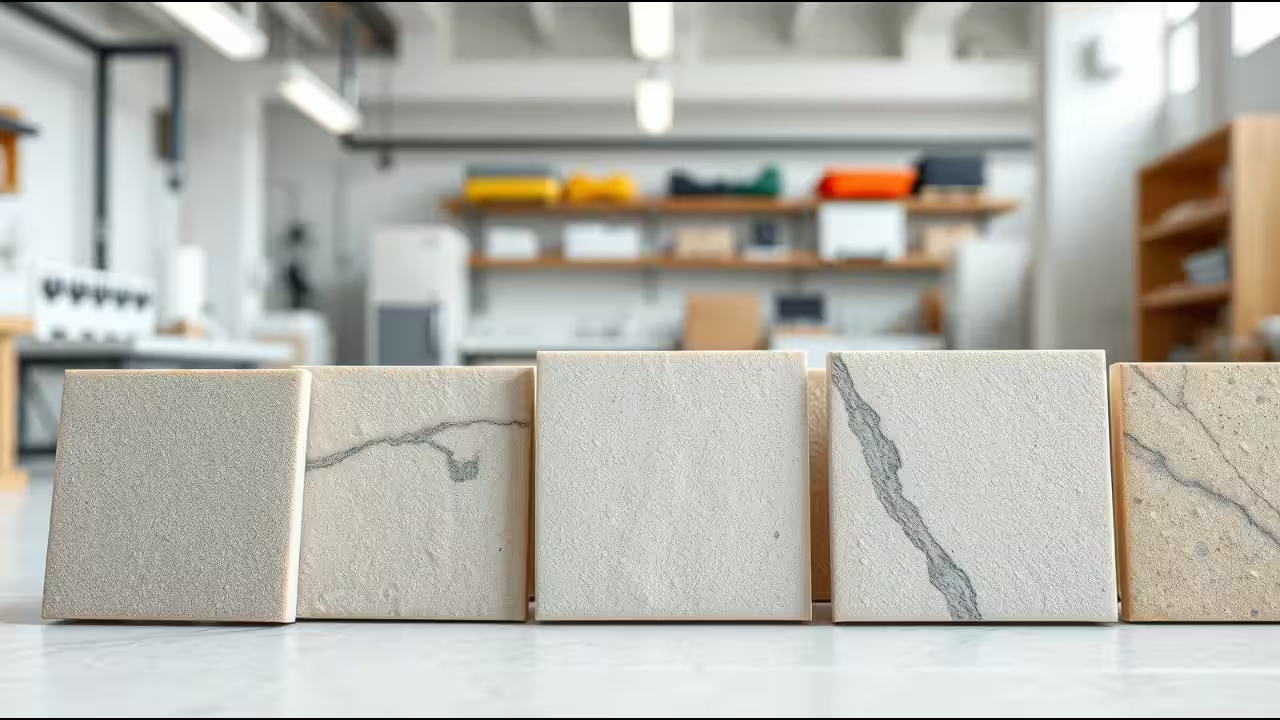
A Manchester-based materials company is developing tiles that avoid the high-temperature kiln firing normally associated with ceramic manufacturing. DeKiln's BioSintering technology uses waste gypsum plaster, a material commonly recovered from plasterboard, together with a bio-based binder to produce its Eralith tiles. DeKiln says the tiles contain more than 95% recycled content and are cured at low temperatures rather than fired in a kiln. The company describes conventional ceramic production as requiring kiln temperatures of roughly 850°C to 1,250°C and says firing and drying account for about 80% of the ceramics industry's emissions. Its current product information states that BioSintering can reduce energy consumption by up to 90% compared with conventional ceramic manufacturing. The technology is still being scaled for industrial production, however, so these environmental figures should be understood as reported comparisons rather than evidence that the process has already replaced conventional tile manufacturing at large scale.How recycled gypsum replaces conventional tile materialsThe material at the centre of the process is waste gypsum plaster, or calcium sulphate dihydrate, which can be recovered from plasterboard and other construction waste. DeKiln estimates that the UK produces about 980,000 tonnes of plasterboard waste each year and says its process can turn this waste stream into a useful manufacturing input. The company first processes the waste gypsum into a base material with properties suitable for tile production. It then combines the recycled material with a proprietary bio-based active ingredient to create a precursor designed to behave similarly to conventional ceramic tile powder. DeKiln says its Eralith tiles currently contain more than 95% recycled gypsum plaster or recycled content, depending on the product information used, while its broader technology pages describe the recycled material as primarily waste gypsum plaster combined with a bio-based ingredient. The important point is that the process replaces most of the conventional mineral feedstock with recovered material rather than relying primarily on newly extracted raw materials.Tiles are pressed normally, but do not go through a kilnAfter the recycled material and binder are mixed, the precursor is compressed using standard tile presses. This allows the company to use familiar manufacturing equipment rather than requiring a completely different production system. The major difference comes after pressing: instead of sending the formed tiles into a high-temperature kiln, BioSintering uses a low-temperature curing stage. DeKiln's technology page describes curing at 30°C, while its 2026 partnership announcement with Johnson Tiles describes the tiles being hardened on a drying rack at 35°C. DeKiln's newer manufacturing information more broadly describes its process as operating 90 °C below, reflecting different stages or configurations of the technology as it is being developed. The company has therefore demonstrated a kiln-free route to hardening its ceramic-like tiles, but the exact curing temperature can vary according to the particular process description. In May 2026, DeKiln announced a pilot manufacturing project with Johnson Tiles in Stoke-on-Trent to help scale the technology.The company reports major reductions in emissions and energy useDeKiln says its BioSintering process produces 94% lower carbon dioxide emissions and 99% lower particulate air pollution than conventional ceramic tiles. Its current product information says these figures are supported by an independent life-cycle assessment, which gives the Eralith tiles a reported global-warming potential of 0.81 kilograms of CO₂-equivalent per square metre. DeKiln also reports energy savings of up to 90%, attributing much of the reduction to eliminating the high-temperature firing stage. The company says its tiles can achieve flexural strength of up to 25 megapascals, compared with a 12-megapascal minimum requirement it cites for ceramic tiles, and reports water absorption below 10%. These performance figures describe the company's current Eralith products and should not be interpreted as meaning that every possible application has already been certified. DeKiln currently recommends the tiles for indoor wall applications in dry environments, while continuing to develop their range of uses and certifications.The technology is now moving from development towards industrial scaleBioSintering is designed to work with conventional tile manufacturing equipment, with DeKiln saying producers can use existing presses and other equipment without the kiln, requiring only limited modifications and retraining. The company has worked with organisations including the University of Manchester, Teamwork Italy and Johnson Tiles, while its technology has received support through UK innovation and engineering programmes. In 2025, DeKiln received funding through the Royce Industrial Collaboration Programme for the SPARK project, which aimed to move BioSintering from laboratory batch production towards pre-pilot-scale manufacturing. In 2026, the company announced a partnership with Johnson Tiles to establish a pilot manufacturing site in Stoke-on-Trent. The Royal Academy of Engineering has also selected DeKiln founder Aled Roberts as a 2026 Green Future Fellow, with the Academy describing the technology as producing tiles from more than 98% recycled gypsum without kiln firing. The developments show that DeKiln is moving beyond laboratory research, but the company is still working through the scale-up process needed for widespread industrial production.You use AI every day. Now get your AI Quotient. Take the AIQ test.
Topics in this story
Gathered from external sources. Rights to this text belong to whoever originally published it.